


Republicans on the House Oversight Committee are working Wednesday to markup and push through legislation that would require a question about U.S. citizenship status to be included in future census surveys.
According to the Committee H.R. 7109, better known as the Equal Representation Act, will "amend title 13 to add a citizenship inquiry to the decennial census and exclude noncitizens from the apportionment base for the 2030 census and any future decennial census," and "the bill would also exclude from the apportionment base 'individuals who are not citizens of the United States' for the 2030 census and any future decennial census."
Are you a citizen of the United States?
— Rep. James Comer (@RepJamesComer) April 10, 2024
Yes or no.
It’s simple.
Requiring the Census Bureau to include a citizenship question is common sense.@GOPoversight is advancing legislation that will ensure the collection of accurate data on the population.pic.twitter.com/a9KdAHQOrW
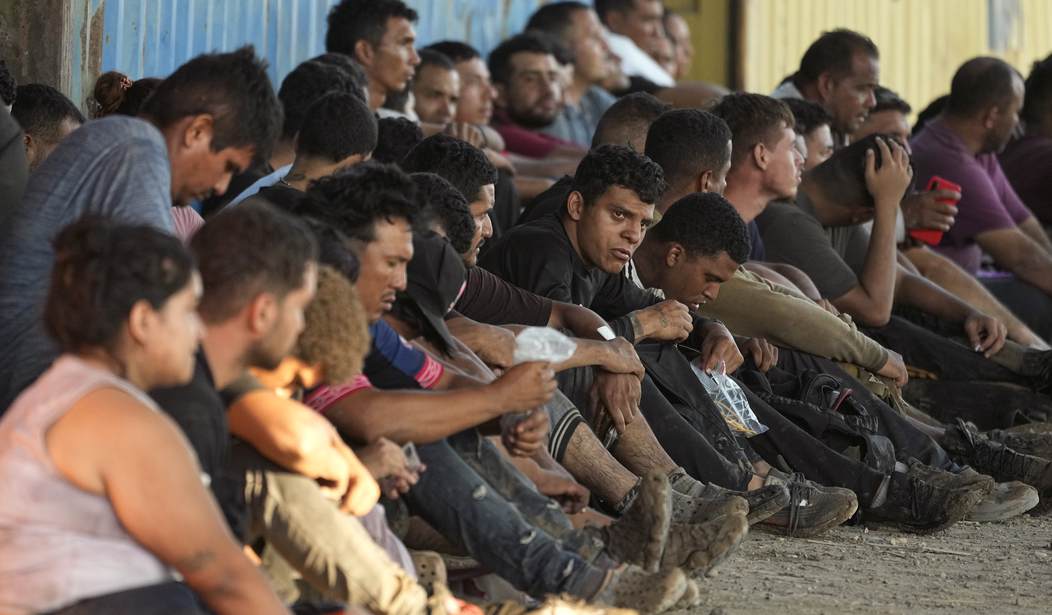
The move comes after activist Democrats worked to nix the question from the 2020 census survey, resulting in illegal immigrants being counted for congressional representation in the U.S. House of Representatives.
A case about the question being included under current law -- which House Republicans are trying to change - prompted the Supreme Court to rule against the inclusion of the question.
Recommended

Illegal immigration is a crime. Why are we awarding those who break our laws with Congressional representation? pic.twitter.com/LzfdvovlHq
— Oversight Committee (@GOPoversight) April 10, 2024
Since President Biden took office in January 2021, 15 million illegal immigrants have entered the country. Without a change in the law, they will be counted in the next census for representation in Congress.
From Census.gov:
The apportionment calculation is based upon the total resident population (citizens and noncitizens) of the 50 states. In the 2020 Census, the apportionment population also includes U.S. Armed Forces personnel and federal civilian employees stationed outside the United States (and their dependents living with them) that can be allocated back to a home state. These segments were also included in the apportionment population in the 1970, 1990, 2000, and 2010 censuses. The population of the District of Columbia is not included in the apportionment population.
The Constitution provides that each state will have a minimum of one member in the U.S. House of Representatives, and then the apportionment calculation divides the remaining 385 seats among the 50 states. Congress decides the method used to calculate the apportionment.
The method for calculating the apportionment has changed over time. The methods used through most of the 20th century and into the 21st century are based upon the use of a mathematically determined priority listing of states. Adopted by Congress in 1941 and used each census thereafter, the method of equal proportions also results in a listing of the states according to a priority value--calculated by dividing the population of each state by the geometric mean of its current and next seats--that assigns seats 51 through 435.













Join the conversation as a VIP Member