




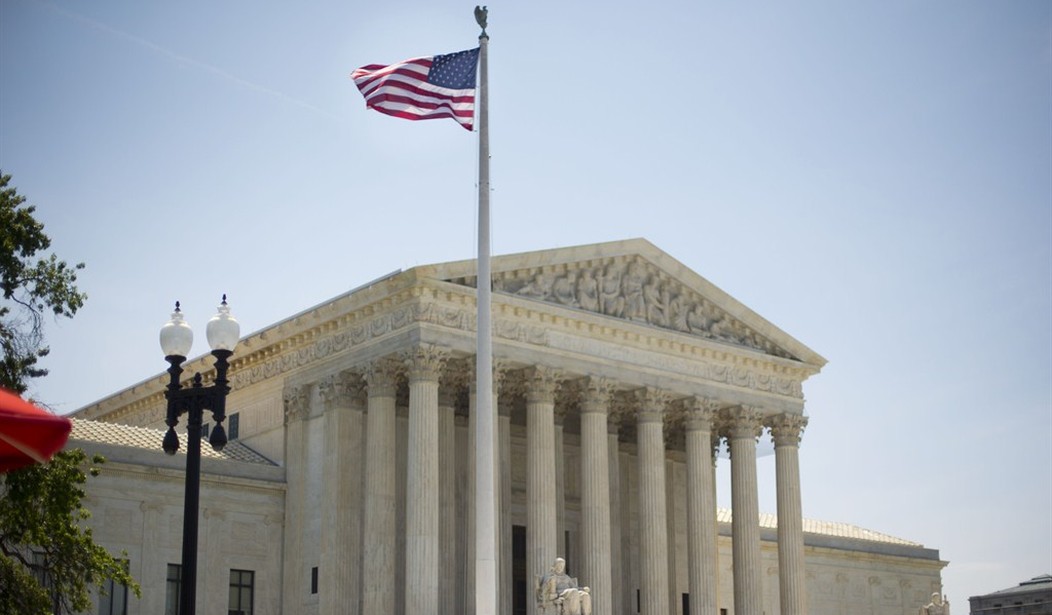
The court had a point, but only if you accept the analogy between polygamy and murder. Likewise, critics of this week's Supreme Court decision concerning religious objections to Obamacare's birth-control mandate have a point, but only if you accept their argument that declining to pay for something is the same as "blocking access" to it.
The contraceptive case, Burwell v. Hobby Lobby, involves the Religious Freedom Restoration Act (RFRA), a 1993 law that prohibits the government from "substantially burden(ing) a person's exercise of religion" unless it is the "least restrictive means" of furthering a "compelling governmental interest." The court concluded that the federal rule requiring employers to offer health insurance that covers 20 kinds of birth control, which was challenged by businesses whose owners view four of those methods as morally equivalent to abortion, failed RFRA's test.
Dissenting from that decision, Justice Ruth Bader Ginsburg cited cases in which business owners objected for religious reasons to serving black customers, hiring "fornicators and homosexuals," and taking pictures of a lesbian commitment ceremony. In the face of claims like these, Ginsburg wondered, "How does the court divine which religious beliefs are worthy of accommodation, and which are not?"
It was because of such concerns that the Supreme Court, after a series of rulings in which it closely scrutinized laws that impinged on religious freedom, reversed course in 1990. In a case involving members of the Native American Church who were denied unemployment benefits after they were fired for using peyote, the court decided that neutral, generally applicable statutes are consistent with the First Amendment's guarantee of religious freedom, regardless of their practical impact.
Recommended
Three years later, Congress responded with RFRA, which passed almost unanimously, reflecting a bipartisan consensus that the court's new, deferential approach did not provide enough protection for religious freedom. In 2006, when the court unanimously ruled that RFRA gave a religious sect the right to use ayahuasca, a psychedelic tea that contains the otherwise prohibited drug dimethyltryptamine, the decision likewise was welcomed across the political spectrum.
The Hobby Lobby case has been much more contentious, both on the court and off, because it involves a law supported by most Democrats and opposed by most Republicans. This partisan divide both illustrates and obscures the broader issue of whether and when it is appropriate to exempt people from generally applicable laws on religious grounds.
Murder is easy. The government clearly should not allow the ritual killing of nonconsenting humans, no matter how important it is to someone's religion. More generally, religion should never be a license to violate people's rights.
If people had a right to free birth control, allowing some employers to violate that right because of their religious beliefs could hardly be considered just. Because there is no such right, it seems to me that letting some people escape this unjustified mandate is better than forcing everyone to comply.
Similarly, religious (and medical) exceptions to drug prohibition make some people freer without making anyone else less free. Although I do not think adults should need a government-approved reason to consume psychoactive substances, it is hard for me to see how arresting people for sacramental use of peyote or ayahuasca advances the cause of liberty.
Still, there is something undeniably troubling about making criminal or civil liability hinge on a person's religious beliefs (or lack thereof). If Americans were not so blinded by partisan commitments, this situation would spur a discussion of which actions are properly prohibited or compelled. When it seems reasonable to contemplate a religious exception to a generally applicable law, that is a pretty good reason to question the law itself.









Join the conversation as a VIP Member