







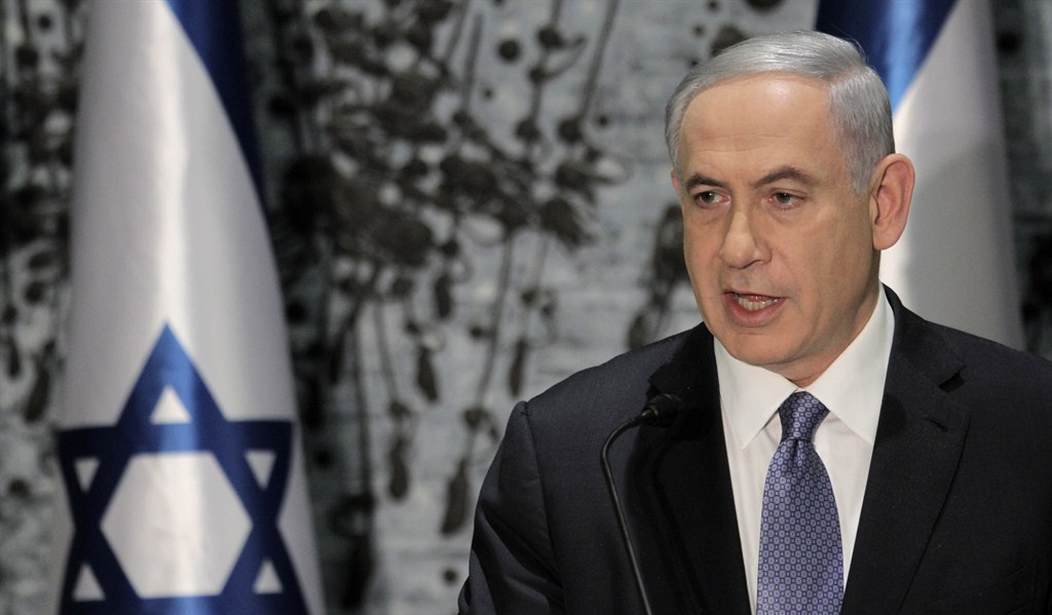
Israeli Prime Minister Benjamin Netanyahu made the rounds on yesterday's Sunday morning talk circuit to make the case against the initial nuclear framework announced by Iranian representatives and P5+1 Western negotiators last week. Netanyahu ramped up his criticism of what he called a bad deal
Advertisement
"Not a single centrifuge is destroyed," Netanyahu notes, ticking down a list of serious flaws within the would-be pact. "Not a single nuclear facility is shut down, including the underground facilities that they built illicitly. Thousands of centrifuges will keep spinning, enriching uranium." All true. He also points out that because international nuclear sanctions would be lifted at the front end of the deal, many billions of dollars would "flow into the Iranian coffers," which Netanyahu says would be used to "pump up Iran's terror machine" around the world. The lifting of sanctions and abolishment of UN resolutions is likely to prove irreversible, unlike many of the temporary limits placed on Iran's nuclear program. The Israeli leader also makes mention of the fact that this agreement leaves Iran's rogue long-range missile program unscathed, and does nothing to address the regime's global meddling and terrorism (except to free up huge sums of money to help fund Iran's malignant projects). CNN's Jim Acosta asks a good question just after the three-minute mark, wondering if a failed deal and increased sanctions pressure will only redouble the regime's determination to build the bomb, with very limited Western capacity to conduct inspections or keep tabs on their behavior. Netanyahu responds by admonishing against counting on an inspections regime to deter outlaw regimes, citing Iran's history of cheating, as well as the
Appearing on CNN, Senator Dianne Feinstein, a leading Democratic voice on foreign affairs, said she did not believe the agreement threatened Israel, and had harsh words for Netanyahu. "I don't think it's helpful for Israel to come out and oppose this one opportunity to change a major dynamic which is downhill, a downhill dynamic in this part of the world," said Feinstein.
Advertisement
The announced framework is far more permissive than President Obama's own rhetorical red lines about what would constitute an acceptable resolution -- both at the onset of talks, and after the interim agreement was struck in late 2013. Following the publication of a State Department fact sheet, on which much of this analysis was based, "there appeared to be sharp disagreement over the details in the package," according to the Los Angeles Times, citing public rebukes from Iranian officials. President Obama said he'd seek a "constructive" role for Congress if and when a finalized deal is hammered out on paper, but he's threatened to veto bipartisan legislation designed to guarantee the legislative branch an up-or-down vote on the accord. I'll leave you with this -- relax, Israel:
A State Department official dismissed a plea Friday from Israeli Prime Minister Benjamin Netanyahu that the Iran nuclear agreement include clear recognition of his nation's "right to exist," declaring negotiations are "only about the nuclear issue." State Department spokeswoman Marie Harf, in a terse response to a question about Netanyahu's concerns, told reporters, "This is an agreement that is only about the nuclear issue" -- a comment that indicates the Obama administration is not looking to enshrine Israel's security into a final agreement.
Advertisement
One more: Read Matt Continetti asking why we should trust Obama on this highly consequential deal in light of his track record.


Join the Conversation
VIP members get the ability to comment on articles.