This Answer From ActBlue's CEO Threw This GOP Rep for a Loop
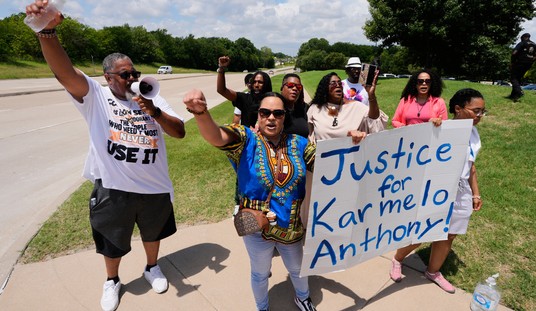
Here's What Karmelo Anthony's Mother Said Outside the Courthouse Following Her Son's Guilt...
Why the GOP Baseball Team Told Biden He Could Visit Their Dugout Whenever...
California Just Showed Why Gun Control Is Racist
You Won't Believe the Sentence This Former Mayor Got for Sleeping With a...
Trump Blasts 'Radical Left Dumocrats' for Taking National Security Hostage Over FISA
Trump's State Department Is Cracking Down on This Birthright Citizenship Scam
Rep. Ro Khanna Just Went All-In on Graham Platner
A Hilton-Pratt Dream Team? Steve Hilton Says He's All In.
President Trump Just Revealed What the United States Is Doing With Seized Iranian...
Trump DHS Moves to Expedite the Deportations of Illegal Aliens Found to Have...
Democrats' Struggle With Men Reflects a Deeper Cultural Disconnect
Philadelphia Teachers Just Admitted the Real Reason Behind the Failure of the Public...
Jasmine Crockett's Take on Karmelo Anthony's Conviction Is As Insane As You'd Expect
ICE Is Now Officially Fully Funded As Trump Signs 'Secure America Act'
Tipsheet

A Secularist Talks Morality

A Secularist Talks Morality
Last week, in this column, I argued that if traditionalists were going to be successful in arguing against gay marriage, they would need to develop a public argument that explains why private sexual behavior can, sometimes, be a public matter.   In other words, they needed to develop a moral and public policy case for defining marriage as an institution reserved for one man and one woman, unrelated and above a certain age.  As I pointed out, in this day and age, that's not easy. 
Advertisement


This piece about a prominent secularist's new book helps explain why.  Austin Dacey is the author of "The Secular Conscience," where he argues that secularists have sought to preclude religious and moral claims from public conversation, through the following reasoning:

[S]ecular liberalism has come to hold that because conscience is private or personal, its moral conclusions must be subjective, and because conscience should be free from coercion, its moral conclusions must also be free from public criticism.

He argues that in doing so, secularists have made a terrible mistake.  Sounds like an interesting book, and a valuable one.
Join the conversation as a VIP Member

Recommended

Trending on Townhall Videos