





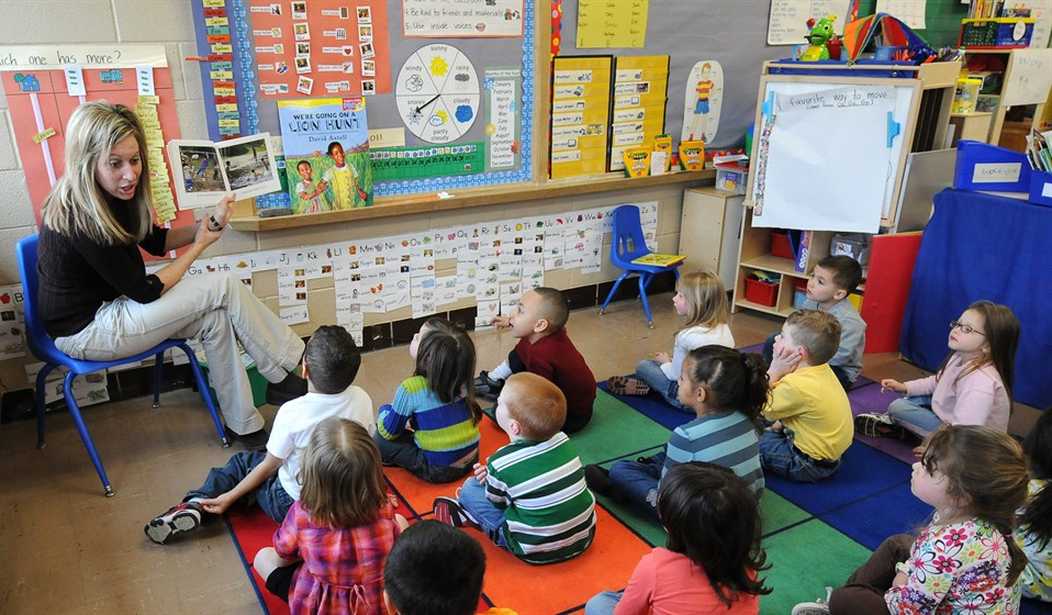
A new study out of Tennessee is indicating that the universal preschool program in the state may be a complete waste of money that doesn't actually benefit the children enrolled and may actually harm them. This study has similar conclusions as one in Quebec that examined low-cost daycare programs, as well as studies that suggest that Head Start has little to no academic benefits for the children who enroll in the program.
From Vox:
At the end of pre-K, the results look pretty much as you would expect: Teachers rates the children who went through pre-K as "being better prepared for kindergarten work, as having better behaviors related to learning in the classroom and as having more positive peer relations."
The problem is those results dissipate by the end of kindergarten — by then, the group that attended pre-K is no better off than the group that didn't — and then begin to reverse by the end of first grade. By the end of second grade, the children who attended the pre-K program are scoring lower on both behavioral and academic measures than the children who didn't.
Curious.
This is a very compelling argument against universal pre-k/preschool. There's no real way to ensure/pay for a pre-k classroom has high standards (see: what happened in Quebec), and in many cases, putting a child into a low-standards pre-k classroom led to a worse outcome than a child who didn't receive any care.
Children are unique, and (shockingly) one-size-fits-all educational programs don't work for all children. A more holistic approach (or, alternatively, letting parents decide what's best for their child) would likely have a better outcome than shuffling them into yet another program designed to "help" them.


Join the Conversation
VIP members get the ability to comment on articles.