





The Federalist Papers, written by James Madison, John Jay and Alexander Hamilton, is the document most frequently referred to when trying to get a feel for the original intent of the framers of the Constitution. One such intention is found in Federalist 56 where Madison says, "...it seems to give the fullest assurance, that a representative for every thirty thousand inhabitants will render the (House of Representatives) both a safe and competent guardian of the interests which will be confided to it."
Excellent research, shows that in 1804 each representative represented about 40,000 people. Today, each representative represents close to 700,000. If we lived up to the vision of our founders, given today's population, we would have about 7,500 congressmen in the House of Representatives. It turns out that in 1929 Congress passed a bill fixing the number of representatives at 435. Prior to that, the number of congressional districts was increased every 10 years, from 1790 to 1910, except one, after a population census was taken.
We might ask what's so sacrosanct about 435 representatives? Why not 600, or 1,000, or 7,500? Here's part of the answer and, by the way, I never cease to be amazed by the insight and wisdom of our founders: James Madison, the acknowledged father of the Constitution, argued that the smaller the House of Representatives relative to the nation's population, the greater is the risk of unethical collusion. He said, "Numerous bodies ... are less subject to venality and corruption. " In a word, he saw competition in the political arena as the best means for protecting our liberties. If Madison were around today to see today's venal and corrupt Congress, he'd probably say, "See, I told you so!"
In addition to venality and corruption, restricting the number of representatives confers significant monopoly power that goes a long way toward explaining the stranglehold the two parties have and the high incumbent success rates. It might also explain the power of vested interest groups to influence congressional decisions. They only have to bribe, cajole or threaten a relatively small number of representatives. Imagine the challenge to a lobbyist, if there were 7,500 representatives, trying to get a majority of 3,813 to vote for this or that special privilege versus having to get only a 218 majority in today's Congress.
Recommended
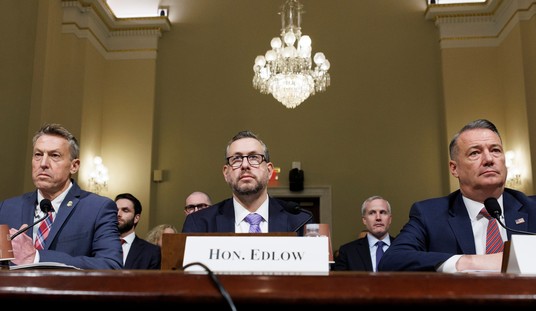
Another problem of a small number of congressmen, with large districts, has to do with representing their constituents. How in the world is one congressman to represent the diverse interests and values of 700,000 people? The practical answer is they don't and attempt to be all things to all people. Thus, a congressman who takes a principled stand against the federal government exceeding its constitutional authority -- whether it be government involvement in education, business welfare and bailouts and $2 trillion dollars worth of other handouts -- is not likely to win office.
Appealing for the votes in a district of 700,000 is a more difficult challenge than appealing for the votes in a district of 40,000 or 60,000 people. Larger sums must be raised requiring a congressman to be wealthy or raise money from vested interest groups. Who is going to give a congressman money and not expect something special in return?
One should not be optimistic about increasing the size of Congress to make it more representative of the American people. There are powerful forces that benefit from the status quo. Fannie Mae and Freddie Mac lobbyists get Congress to look the other way. Hundreds of other lobbyists get Congress to rig the market, or confer special privileges, to benefit one class of Americans at the expense of another class. I guarantee you that the vested interest groups, who now have a strong grip on Washington, at the detriment of the nation's well-being, wouldn't as easily get their way if they had to scrounge for 3,813 votes as opposed to 218.







Join the conversation as a VIP Member