





The other day, a citizen went before a House committee and urged its members to stop their burdensome interference with her business. "At its most basic level," said Annie Duke, "the issue before this committee is personal freedom, the right of individual Americans to do what they want in the privacy of their homes without the intrusion of government."
I know what you're expecting: At that point, the politicians all had a good laugh and told her to get lost so they could get back to meddling in people's lives.
But no. Not only did they hear out the winner of the National Heads-Up Poker Championship, they did exactly what she suggested. The committee voted to lift the federal ban on Internet poker and other online gambling, while approving a measure to tax and regulate it.
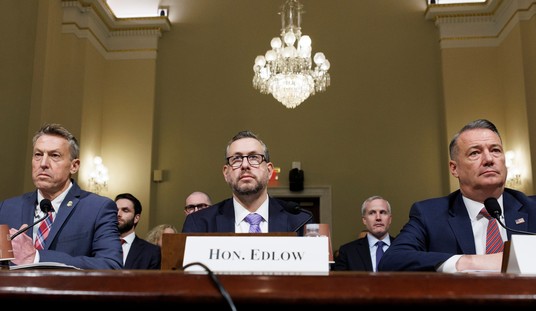
This happened over the objections of Rep. Spencer Bachus, R-Ala., who expressed shock that his colleagues would "open casinos in every home and every bedroom and every dorm room, and on every iPhone, every BlackBerry, every laptop."
There are two good responses to that complaint. The first came from Financial Services Committee Chairman Barney Frank, taking a position one rarely associates with Massachusetts Democrats: "Some adults will spend their money foolishly, but it is not the purpose of the federal government to prevent them legally from doing it."
The second is: The casinos are already wide open everywhere you look. As Duke noted, unlimited online gambling already awaits "any American with a broadband connection and a checking account." Law or no, the United States is the biggest online betting market on the planet. Americans wager an estimated $6 billion a year in cyberspace.
Four years ago, Congress tried to stamp out online betting by forbidding banks from transferring funds to Internet gambling sites. But it was spitting into a gale. "Gamblers have used online payment processors, phone-based deposits and prepaid credit cards to circumvent the ban," reports The New York Times.
Recommended
It's an old problem: When lots of people are eager to enter transactions with other people that do no direct harm to anyone else, the government can't realistically hope to prevent them. All the ban accomplishes is to push the industry offshore, leaving U.S. customers more vulnerable to fraud.
Well, that's not all it accomplishes. It also encourages Americans to do their gambling elsewhere: going to casinos (now found in 33 states), wagering at off-track parlors or buying lottery tickets peddled by state monopolies. The lotteries are a motive for governments to oppose legalization of online gambling, since it might take away customers looking for better odds.
In a country where other types of gambling are permitted, there is no moral argument for excluding this kind. But gambling critics depict the Internet as a dark abyss leading the unwary to their doom -- "the 'perfect storm' of harm," according to the group Stop Predatory Gambling. By making access so easy, we are told, virtual wagering will create hordes of new gambling addicts.
It's easy to forget that in the old days, opponents denounced casinos for luring bettors into dimly lit bunkers where they would fall victim to card sharps, leggy waitresses and rivers of booze. Now the same opponents suggest that Luxor Las Vegas is far safer than that den of vice you call home.
But the fears about online wagering are demonstrably bogus. Britain legalized Internet betting in 2005, and the government's 2007 survey found that while 68 percent of Brits place bets each year, only 0.6 percent of the population falls into the category of "problem" gamblers. That number has not budged since 1999.
In the end, there is no good reason for the federal government to prohibit citizens from engaging in a peaceful, popular and enjoyable activity that almost all of them can handle responsibly. Nor is there any point, since those citizens are going to do it anyway. Congress would be wise to accept that age-old reality and settle for harvesting the tax revenues Internet betting can generate.
Maybe it would be the start of something even bigger. After all, it's not every day you hear congressional Democrats making the case for more freedom and less government. When Barney Frank acts on the view that "most actions the government should stay out of," it would be a shame to stand in his way.




Join the conversation as a VIP Member