


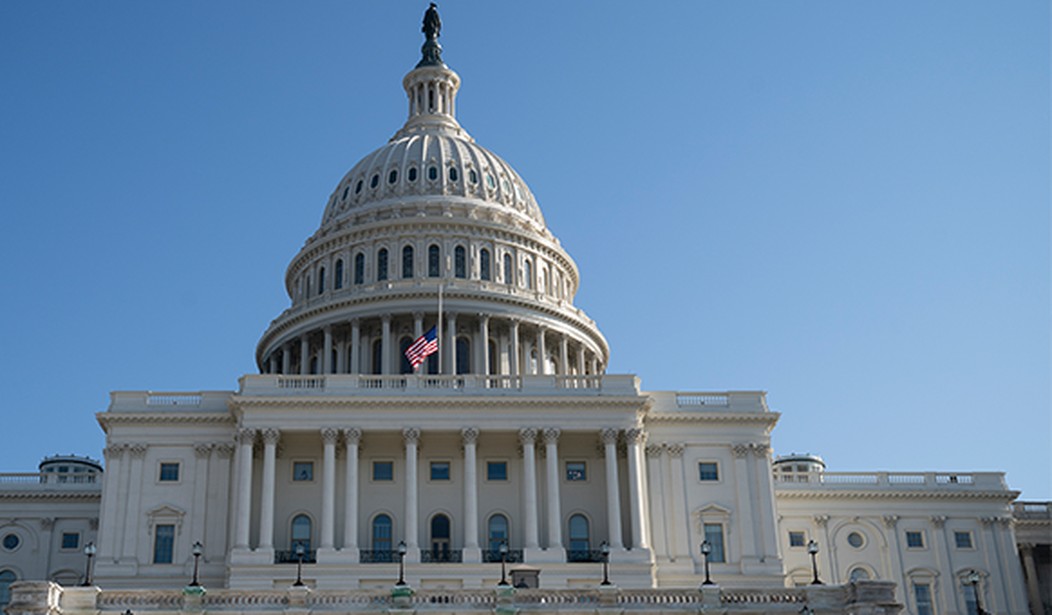
In official Washington and the nation's political media world, the partial shutdown of the federal government is a crisis dominating the arrival of a new Congress this week.
That perception is certainly understandable when you consider what a company town Washington, D.C., has become. Just about everyone in political circles has friends and acquaintances who are directly impacted by the shutdown. On top of that, the local economy clearly suffers when hundreds of thousands of workers are furloughed and have less money to spend at local businesses.
When you look out across the nation, however, an entirely different picture emerges. The shutdown has had a major impact on only 6 percent of voters. A much larger number -- 21 percent -- don't even know there's a government shutdown at the moment.
For voters, there are bigger concerns. A month ago, the Job Creators Network/ScottRasmussen.com Weekly Pulse found that 56 percent of voters rated the economy as good or excellent. Now, it's down to 44 percent. That 12-point decline means that for every person impacted by the shutdown, there are two who have lost confidence in the economy.
Additionally, health care, compared to the shutdown, has a far bigger impact on a much larger number of people. Thirty-eight percent of voters have put off a doctor's visit due to the costs involved. That figure jumps to 47 percent among those earning less than $75,000 a year. Thirty-five percent have been unable at some point to schedule a doctor's appointment when they needed one; 33 percent have failed to fill a prescription due to cost concerns; and 26 percent have been unable to find a doctor covered by their insurance company.
Recommended
Most depressing of all, if struck with a sudden illness, 19 percent are not confident that they could quickly get in to see a doctor that they trusted. That's three times the number impacted by the shutdown. As a result, there's likely to be little lasting impact from this political impasse.
Still, voters want it to end. Like parents dealing with unruly children, voters throughout the country are exasperated that their political leaders can't resolve their differences through the normal processes of governing. By a 2-to-1 margin, voters say that ending the shutdown is a higher priority than fully funding the border wall. They want their elected politicians to grow up and address real concerns on topics like health care and the economy.
On health care, voters have a pair of top priorities. First, they want Congress to protect those who have pre-existing conditions. Second, they want more choices and control over their own health care decisions. As a starting point, voters want a wider range of health insurance options, including lower-cost plans offering more basic coverage.
On the economy, 70 percent believe that it would be better for our nation to have less government control. As for specifics, 35 percent believe that the best thing the federal government could do to help the economy is cut spending. Only 4 percent favor the approach that is most popular in official Washington -- increasing government spending and deficits.
The way that the politicians deal with these issues will matter far more than the resolution of the partial government shutdown.
Scott Rasmussen is the publisher of ScottRasmussen.com. He is the author of "The Sun Is Still Rising: Politics Has Failed But America Will Not."








Join the conversation as a VIP Member