






As 2009 drew to a close, the Office of Congressional Ethics ended its investigation of Rep. John Murtha (D-Pa.) and several other congressmen associated with PMA Group, a lobbying firm. The Office recommended against a full-fledged House ethics investigation.
At issue? A pattern whereby Congressman Murtha, Norm Dicks (D-Wash.), and James Moran (D-Va.), earmarked hundreds of millions of tax dollars to clients of PMA Group and then, magically, millions of dollars in campaign contributions from PMA and its clients found their way to Murtha’s campaign account, and the campaigns of others involved.
Some will fret that the ethics process is not doing its job. That’s probably true, if not in this particular case, surely in scores of other cases that have resulted in light wrist-slapping, a harshly worded letter or no punishment at all.

But let’s suppose that what Murtha and others in Congress are doing — gathering up our hard-earned tax dollars and distributing them to friends and cronies in hopes of spurring economic growth — is fully legal. Is it right? Is it good? Does it build a strong country and enhance our individual liberty?
Stop laughing.
Wonder as we may about backroom deals and hard-to-find quid pro quo corruption, what about the obvious corruption right smack dab in front of our face? You know, the kind that tends to be fully legal.
Perhaps corruption is too strong a word. But whether the action is an illegal bribe or just a smart, savvy method of parochial, self-interested pork politics — whereby an incumbent uses the public treasury to win friends and influence people — it sure seems crooked.
Recommended
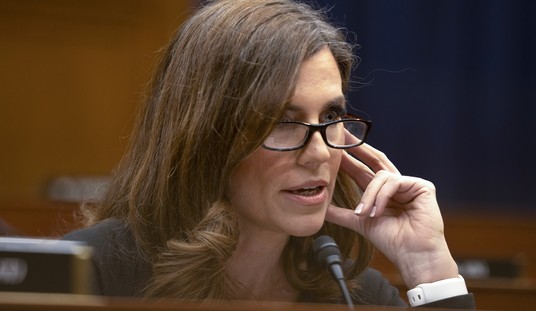
Murtha argues his earmarks are creating jobs, revitalizing the depressed local economy. It’s not about him; it’s about his constituents. Never mind the earmark-built and maintained John P. Murtha Airport in Johnstown, Pennsylvania, where three flights a day take off for Washington under a giant, smiling picture of the congressman.
Murtha’s job creation racket doesn’t create many jobs. According to a Washington Post report, “For all the billions in federal contracts the congressman has steered to the region in the past ten years, now at a rate of $100 million a year, joblessness in his distressed district has not improved.”
Moreover, some of the jobs generated have cost a million dollars — or twice that. For example, Planning Systems, Inc. in Uniontown, Pennsylvania, created four jobs using $7 million in earmarks.
Another company to receive Murtha earmark help was Caracal, Inc., To great hoopla, Murtha delivered the ton of tax dollars to Caracal, claiming, “Today’s ribbon-cutting ceremony is yet another indication that our investment in this region’s economic revitalization is paying off.” After receiving more than $150 million in taxpayer help, the company went under. That’s zero sustainable jobs.
With Caracal out of business, the operative question might be, “‘Paying off’ for whom?”
That “whom” now seems to cover a lot of people, for our earmark culture is not limited to Congress. It’s growing. The same economic model behind Murtha’s earmark use underpins last year’s stimulus spending and a likely follow-up round this year. The idea intrinsic to earmarks and government job creation is that politicians and bureaucrats can spend our money better than we can. We just waste our money; they are the great and wise spenders. Though absurd on the face of it, the notion has much to recommend it . . . if you are on the taking end of the practice.
The earmark culture in Congress, so well represented by Congressman Murtha, the new King of Pork, isn’t merely symptomatic of the problem in Washington, it is also emblematic.






Join the conversation as a VIP Member