






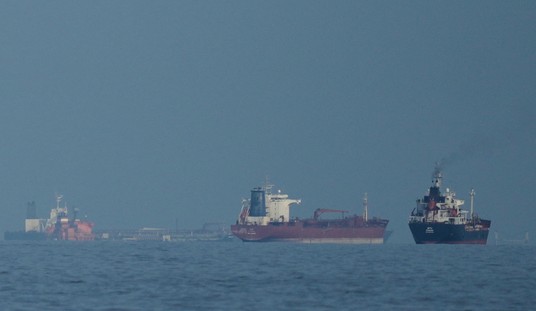
Less than five years after George W. Bush wrecked his presidency through his limp response to a natural disaster in Louisiana, Barack Obama has escaped largely unscathed from his similarly feckless response to a man-made disaster in precisely the same part of the country. Republicans have gained scant traction for their attempts to tag the massive oil spill off the Louisiana coast as “Obama’s Katrina.” Is this a clear-cut case of media bias, or an appropriate contrast in press coverage of two very different calamities?
In one of the few prominent criticisms of Obama’s crisis management, the New York Times explicitly acknowledged a resemblance between the bumbling reaction of the Obama and the Bush administrations to their respective Gulf Coast catastrophes. In a stinging May 1st editorial, the nation’s Journal of Record declared that “the administration should not have waited, and should have intervened much more quickly on its own initiative… The timetable is damning….What we do know is that we now face a huge disaster whose consequences might have been minimized with swifter action.”

Nevertheless, neither the Times nor its counterparts in mainstream media followed up aggressively in emphasizing the administration’s incompetence for one principal reason: the lack of televised imagery showing human victims. The loss of the eleven oil company workers who perished in the first moments of the crisis could hardly be blamed on President Obama, who couldn’t possibly rescue people from the path of a disaster that struck with no warning. By contrast, Bush critics insist that the president had plenty of notice to remove Gulf Coast residents from the path of an onrushing hurricane. Legitimate GOP efforts to blame mistakes on the utterly inept Democratic authorities in the City of New Orleans and the state of Louisiana worked less effectively than Obama administration attempts to pin primary responsibility on the petroleum company, BP. Gulf Coast officials, no matter how bumbling, remained more sympathetic than the big, bad (and British) petroleum Company.

Moreover, most people (other than demented animal rights activists) react more emotionally to the suffering of human beings than the suffering of oil-soaked seabirds. The Bush administration inspired national indignation because it looked like it responded slowly and indifferently to the televised pain of hordes of people who, for good measure, also happened to be poor and black. The devastation from the oil spill, no matter how cataclysmic to wildlife or the fishing industry, has yet to produce scenes of mass misery to rival the indelible imagery of the desperate hordes waiting for deliverance from Katrina’s wake.
In other words, the vastly more intense press focus on Katrina makes sense even beyond the deep-rooted media instinct for bashing Bush and excusing Obama.
Other recent contrasts, however, allow no such reasonable explanation. On Saturday night May 1st, Obama delivered a series of mildly amusing and well-received jokes at the White House correspondent’s dinner some two hours after New York authorities discovered a botched car bomb in Times Square.
Surely, his national security advisors had already informed the president of the foiled terrorist strike, so it’s reasonable to question Obama’s decision to press ahead with his comedy routine in spite of a high profile threat to the homeland – especially in light of the bitter ridicule of President Bush for spending seven extra minutes reading to school children after receiving notification of the September 11th attacks. He also drew intense fire for a joke at that same correspondents’ dinner in 2004, suggesting that he was still looking for “weapons of mass destruction” under White House desks. Meanwhile, President Obama produced no outrage with his own jibe about using “predator drones” to punish the Jonas Brothers if they messed with his daughters – making light of devastating weapons which, unfortunately, have claimed the lives of scores of Afghan and Pakistani civilians, as well as appropriately annihilating terrorists.
The failure to subject Obama to meaningful criticism over the timing and tastefulness of his after-dinner jokes can only be explained with reference to the abiding press affection for the 44th President, just as the over-the-top hostility toward Bush over his own humorous performance largely reflects the underlying contempt of the press corps.
Media bias may account for much of the contrast in ongoing coverage of the Bush and Obama administrations but when it comes to the failure to treat the oil slick as an administrative fiasco as consequential as Katrina, some double standards actually make sense.






Join the conversation as a VIP Member