





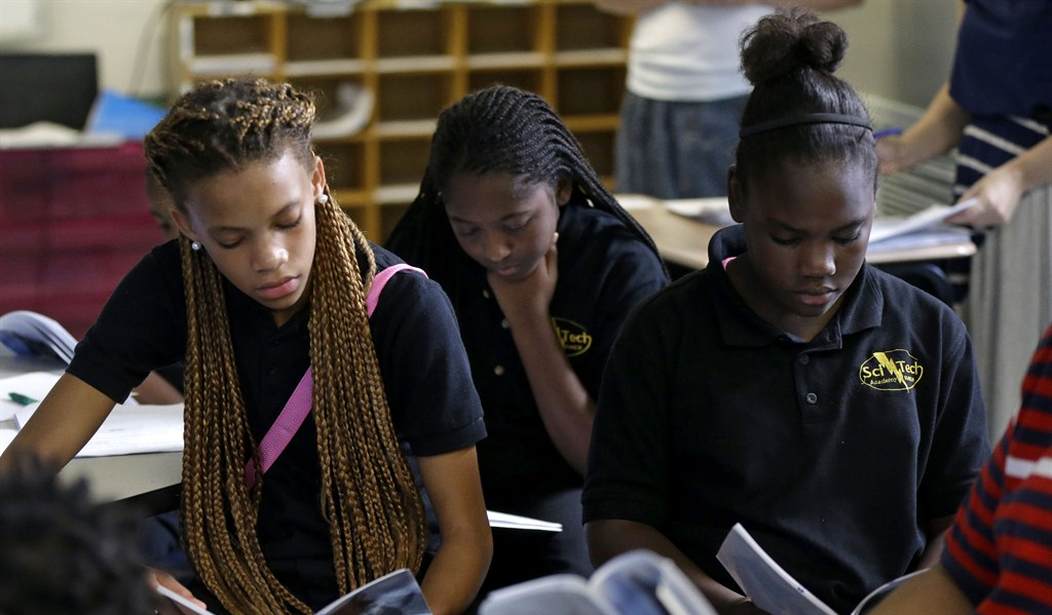
The biggest narrative coming out of the toplines of the 2016 election is that Americans voted for change. When it comes to traditional K-12 education, though, many voters showed they’re voting for some of the same status-quo policies that have left so many American parents and children behind.
In Massachusetts and Georgia, two major school reform measures were put directly to the voters – and rejected wholesale. Massachusetts’ measure would have increased the artificial cap on the number of charter schools allowed in the state, while Georgia’s would have given the state government flexibility to relax rigid rules on failing schools. The voters in those states turned them down, despite the track records of success that indicate that education outcomes would have improved.
A 2013 study from Stanford’s Center for Research on Education Outcomes found that Massachusetts charter school performance outpaces traditional public schools. While not all charters are better than traditional public schools, “in both reading and math, a majority of charter schools have positive academic growth. For reading, the proportion is over 59 percent and for math it exceeds 70 percent.” CREDO found that charters in the Boston area are particularly commendable, and that charter schools disproportionately benefit minority students from poverty backgrounds.
Yet despite the evidence, Massachusetts voters went to the polls to reject an increase in the number of charter schools, and the number of choices that parents have for their children’s educations.

Georgia’s voters rejected their school reform initiative as well, voting to retain school rules that won’t allow the state the flexibility for reform. The proposal is less tested than charter schools, and more innovative, but similar initiatives have been in place elsewhere - most prominently, in Louisiana. Louisiana’s Recovery School District program was put in place before Hurricane Katrina in order to help turn around failing schools.
The program has been a resounding success, according to the Louisiana Department of Education. They found that proficiency in Recovery School Districts has risen rapidly, and is almost at the state average. RSD schools went from 25 percent proficient in state tests to 56 percent proficient in the first 10 years of the program. Louisiana public schools at large improved as well - from 58 percent proficient to 68 percent proficient - but the improvement in RSD schools is absolutely remarkable.
Evidence supports both of these kinds of programs - charter schools and emergency recovery district rules. They have succeeded in improving educational outcomes, particularly for disadvantaged and minority populations. Voters in Massachusetts and Georgia rejected reform, but the fight is far from over.
Choice and flexible schooling programs are winning the argument, even if they aren’t always winning at the ballot box. Parents who actually do get the experience of sending their kids through charter schools find it to be an overwhelmingly positive one, and those who get the opportunity try to take advantage of it. Waitlists for choice programs are at all-time highs across the country. Outcomes matter, and parents have been by and large thrilled with the ways that nontraditional schooling has helped their children. The future belongs not to failing public schools, but to innovative approaches that give students the best chance at future success.







Join the conversation as a VIP Member