





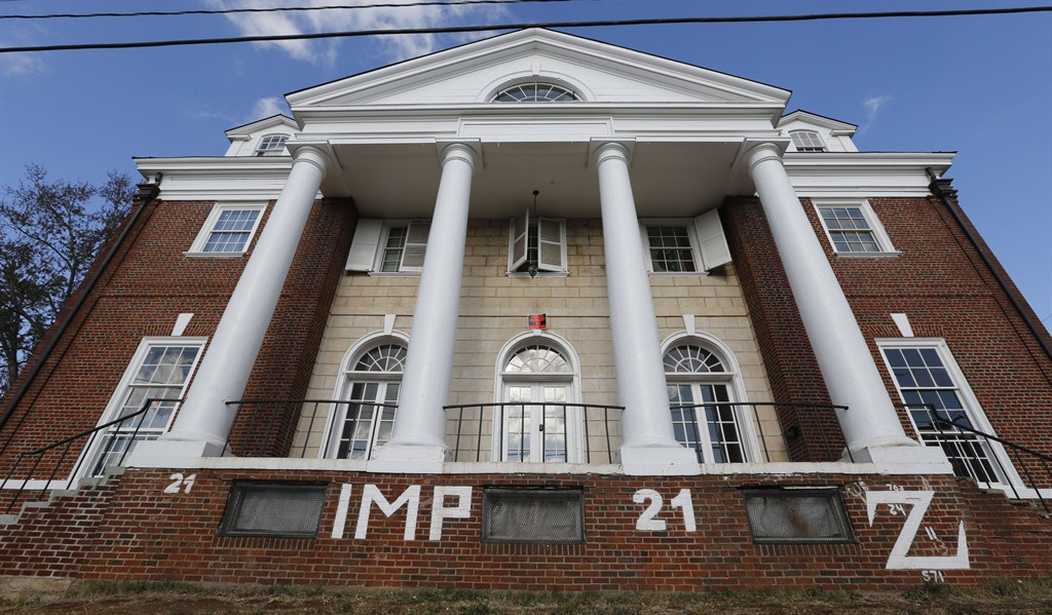
Rolling Stone screwed up.
In most media scandals, it's unfair to paint with such a broad brush. When Stephen Glass concocted his fables at the New Republic, he went to antiheroic lengths to conceal his deceptions from his colleagues. Janet Cooke, who famously won a Pulitzer for her Washington Post series about an 8-year-old heroin addict, "Jimmy's World," lied to her editors.
That's not the case with Rolling Stone's publication of "A Rape on Campus," the story of the brutal gang rape of a student named "Jackie" at the University of Virginia that turned out to be false. Its failure was a group effort, from editor-in-chief Jann Wenner on down.
The best thing you can say about this fiasco is that there was little deliberate lying involved. According to an exhaustive report by the Columbia Journalism School, the article's author, Sabrina Rubin Erdely, and her editors didn't purposefully publish falsehoods.
Of course, this is faint praise. The field of journalistic ethics can get ridiculously Talmudic. But it's all based on a very simple rule: Tell the truth. If the truth is unclear, tell what you know and give both sides (or as many credible sides to a story as might exist) an opportunity to make their case. (For opinion journalists, like yours truly, the rule is even easier: Don't say anything you don't believe.)
Rolling Stone ignored this basic rule. At every stage, editors and reporters knew what they should do: Talk to the accused rapists, confirm the identities and testimony of alleged witnesses, give the University of Virginia and the leadership of the Phi Kappa Psi fraternity, where the rape allegedly occurred, a fair opportunity to rebut the charges, nail down corroborating details, etc.
And, at almost every turn, they collectively went another way, caving to Jackie's refusal to help confirm her story.
The Columbia report, requested by Rolling Stone and written pro bono by the journalism school's dean, Steve Coll, and colleagues, has a single major failing. It's dispositive on the who, what, when, where and how the system broke down, but it's remarkably weak on the question of "why?"
"The problem of confirmation bias -- the tendency of people to be trapped by pre-existing assumptions and to select facts that support their own views while overlooking contradictory ones -- is a well-established finding of social science," Coll & Co. write. "It seems to have been a factor here."
"Seems to be a factor" strikes me as the mother of all understatements. Erdely says she went looking for a case study that perfectly exemplified what she set out to find. At UVA, carefully selected as the kind of school she wanted to expose, she asked activists for a Jackie-like story and they gave her exactly what she was looking for.
I didn't believe the story the first time I read it, and said so in this space early on, to the outrage of many. I'm not in the practice of casting doubt on rape stories (nor are the other skeptics who declined to be swept up in the hysteria the story generated), but it just seemed obvious in myriad ways that this story was too "good" to be true.
Rolling Stone, however, instantly believed Jackie's incredible story about a group of men brazenly plotting a felony, never mind a horrendously evil act. Erdely and her editors also convinced themselves that university administrators would callously ignore such an act and that the atmosphere was so poisonous at UVA that even Jackie's friends cared more about attending frat parties (where brutal gang rapes allegedly were part of initiations) than calling the police. When the story began to unravel, Erdely told skeptics not to get "sidetracked" from the "overarching point of the article." What mattered to Erdely, the editors and the activists was the "rape crisis" narrative, not the facts. Put the system on trial, damn the evidence. Perhaps that's why, even now, Erdely won't apologize to the fraternity members she slandered -- they're still the villains (though fear of a lawsuit might be a factor, too).
As with CBS anchor Dan Rather's legendary self-beclowning and countless other media screw-ups, the real culprit here is ideological groupthink in service to a political agenda. According to the report, the editors were "unanimous" in their insistence that their procedures work just fine (though they've since backtracked). Wenner says he will not punish or fire anyone. Erdely will write for Rolling Stone again. Why? Because in their hearts they're sure they were right, and that's all that matters.


Join the Conversation
VIP members get the ability to comment on articles.