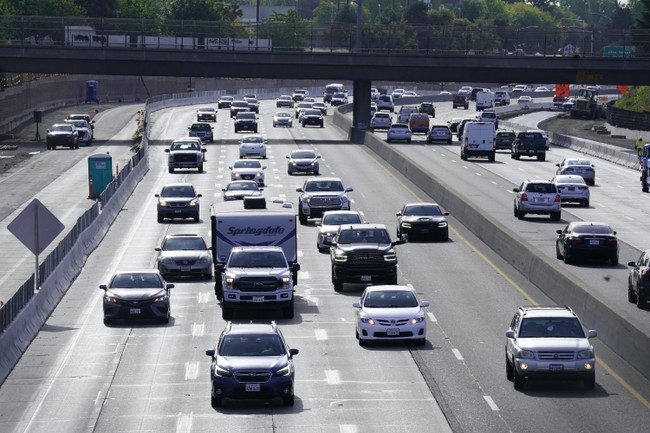
If there’s one priority we can all agree to in this country, it’s getting us free from the use of gasoline in our automobiles. But how do we get there?
The energy problem is not new. For the past thirty-five years, seven presidents, beginning with Richard Nixon, have called for the U.S. to free ourselves from dependence on foreign oil.
If I were the King of OPEC so to speak, I would immediately increase oil supply to the world. Why? Because OPEC has not increased oil supply for thirty years which has resulted in an out of whack supply/demand curve.
On January 1 of this year, the first Baby Boomers became eligible for early retirement Social Security benefits—the first drop in an inevitable demographic flood.
That was one of Newt Gingrich’s most important messages in a brilliant speech delivered to the Conservative Political Action Conference in Washington last month.
Americans may not agree on much between now and November, but we have reached a consensus about the importance of at least one issue: health care.
Ultimately, true economic freedom stands in stark contrast to the populist instinct to encourage government meddling in the economy.
As we stand on the cusp of 2008, the Republican Party remains stuck in the throes of an identity crisis. Most Republican voters have an intuitive sense of this—even if they don’t quite know what to do about it.
Taking on the educational establishment is like picking a fight with someone who buys ink by the barrel—it simply isn’t done.
At first glance, it might seem easy to sympathize with Yahoo. If the Chinese government subpoenas information from a business operation in China, one might think that the company is obligated to comply—and that was exactly Yahoo’s argument.
At a time of great difficulty for Republicans, one might think that self-reliance, long a hallmark of the Grand Old Party, would fall out of favor with the American people.
In a field of strong candidates with bold ideas, one candidate stands out from the rest: Mitt Romney.
The Aspen Institute is certainly no stranger to efforts to assist the Middle East; it has been the focus of some of their most valiant policy efforts.
If you're like most Americans you probably don't spend much time thinking about Voice of America (VOA), our country's international broadcasting arm.
Public diplomacy remains such a shadow in American foreign policy. As the threat of radical Islam grows by the day, we remain woefully unprepared to carry our message of freedom, equality and tolerance to the world. Into this void step the enemies of freedom, who seek to falsely define America as imperialistic, intolerant and morally bankrupt.
The American brand is in trouble. Anecdotal evidence has led many of us to draw this conclusion for some time now, but a new Pew Global Attitudes Project poll confirms it—favorable opinion about America has declined in 26 of the 33 countries tracked by Pew since 2002.
Recent polls in two crucial primary states--Iowa and New Hampshire--show that Mitt Romney has leapfrogged John McCain and Rudy Giuliani to claim momentum in the race for the Republican nomination for president.
When Ed Feulner and I set out to write Getting America Right in 2005, we did so because we thought America—and the conservative movement that has done so much for her—had strayed off course.
Tax Freedom Day arrived two days later this year than last, and Americans aren’t happy about it. Fifty-eight percent of those surveyed in a Tax Foundation poll said that the amount of federal income tax they pay is too high. Respondents also expressed dissatisfaction with estate, gasoline, and property taxes, among others.
Estimates about the number of madrassas in Pakistan vary, but we can safely assume that at least 20,000 and perhaps as many as 45,000 currently operate in the country.