





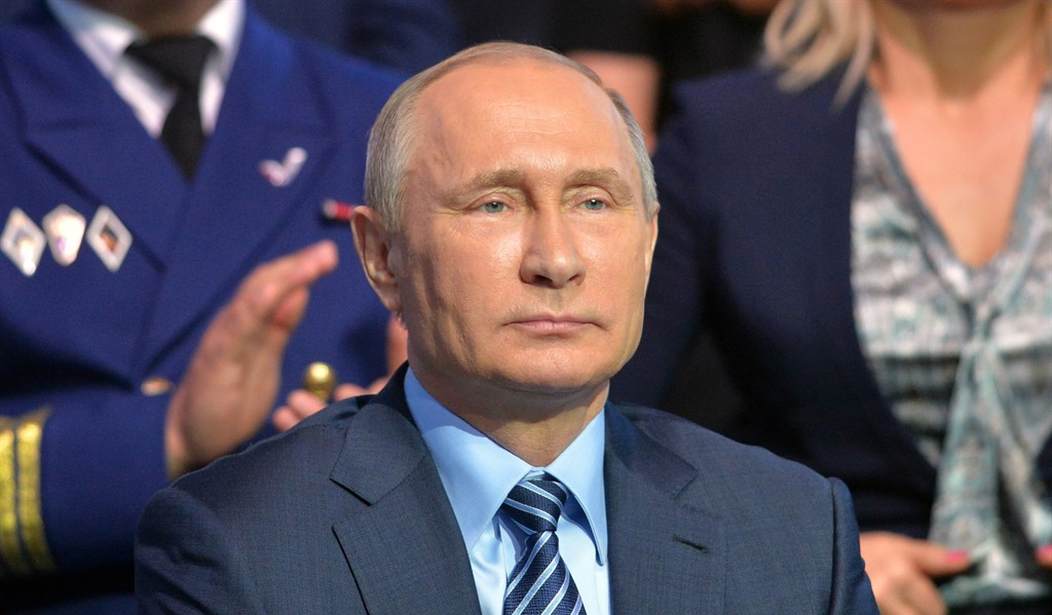
While Russia’s foreign policy was frequently discussed during this election year, Russian policy at home merits similar scrutiny by the American people and the incoming administration. President Putin signed a package of laws in July that includes the most repressive legislation since the Soviet era against the right of freedom of religion or belief. Under the pretext of fighting terrorism, the package includes a particularly chilling measure, especially for evangelical Protestants and others who actively share their faith. The new measure makes it a crime to engage in religious activities that range from preaching and teaching to religious publishing, anywhere in Russia besides government-approved sites.
After Putin signed the package into law, the U.S. Commission on International Religious Freedom (USCIRF), on which we serve as commissioners, condemned its enactment. The United States, its people, and the world community should do likewise today.
Unfortunately, this is hardly the first attempt during the Putin era to equate peaceful religious behavior with terrorism or extremism. For nearly a decade, Russian authorities have targeted innocent people of faith by deploying against them an anti-extremism law that requires neither using nor advocating violence for actions to be labeled “extremism.” Under this law, authorities have arrested people ranging from peaceful readers of Turkish Muslim theologian Said Nursi to the pacifist Jehovah’s Witnesses for distributing their literature. Convicted individuals face up to four years in prison.
The new anti-terrorism package builds on this shameful legacy by increasing the prison terms included in the extremism law.
In addition, the new law targets “missionary” activity in several ways.
It allows only religious organizations that officially have registered with the Russian state to engage in such work. Many religious groups, particularly evangelical Protestants, do not register because registration is against their faith or because Russian authorities simply refuse to register them.
The new law also restricts the kinds of beliefs that will be honored or can be shared with others. For example, it bans even discussion of “refusal on religious grounds of medical assistance,” which could be used against Christian Scientists or Jehovah’s Witnesses due to their views on medicine. The law also bans “motivating citizens to refuse to fulfill their civic duties set by law." Such a ban may be used against those who conscientiously object to military service based on their religion.
Finally, the new measure limits missionary activity to land and buildings that registered religious associations own, as well as to their pilgrimage sites, cemeteries, and those educational institutions used for religious ceremonies.
Thus, door-to-door discussion of beliefs could be banned, as could the sharing of beliefs in residential buildings. Since evangelicals attend house churches, many will fall under the law’s reach.
Along with possible prison terms, individuals deemed to have violated the law could face fines approaching 1 million rubles. The fine for organizations ranges from 100,000 to 1 million rubles ($1500 to $15,000). Since unregistered groups are considered illegal entities, individual members also could be prosecuted.
Prosecutions already have begun.
On July 22, Aleksei Telius, a Baptist pastor who organized a children’s summer camp in Noyabrsk, was fined 5,000 rubles. On August 14, Donald Ossewaarde, an American Baptist, was fined 40,000 rubles for holding religious services in his own home in Oryol.
Why are Putin and his allies promoting such laws?
They wish to extend authoritarian control by subjugating alternative sources of authority. Under the guise of national security, they allege that certain groups pose a cultural as well as physical threat to Russia. They deem the Russian Orthodox Church’s Moscow Patriarchate the nation’s cultural and religious repository and treat most other religious groups as rivals and dangers to Russia’s unity.
Such actions violate the universal right to freedom of religion guaranteed in international documents such as Article 18 of the 1948 Universal Declaration of Human Rights.
Before the new law was enacted, significant public opposition arose within Russia’s Protestant, Muslim, and human rights communities and tens of thousands of Russians signed a petition against its passage. Now that it has passed, it’s time for the world — starting with the American people, the U.S. government, and the next U.S. administration — to raise its voice against this latest retreat to a dark Soviet past.


Join the Conversation
VIP members get the ability to comment on articles.