



My first job in journalism was as a copyboy at the NBC News Bureau in Washington, D.C. In my early 20s, I asked Bill Corrigan, the newsroom manager, "What must I do to get on the air?" He replied, "Get a college degree and a minimum of five years writing experience with a newspaper or wire service."
In those days every reporter at NBC News and the other two networks came from print because television was relatively new and as network news president Reuven Frank noted in his book "Out of Thin Air," we were making it up as we went along.
I got the college degree, but avoided the wire service and newspapers (until later) and have managed to enjoy a decent career in broadcast and print journalism.
The rules of the road to journalistic success have changed dramatically, as has the definition of journalist. Today, one can self-identify as a journalist without any background or experience.
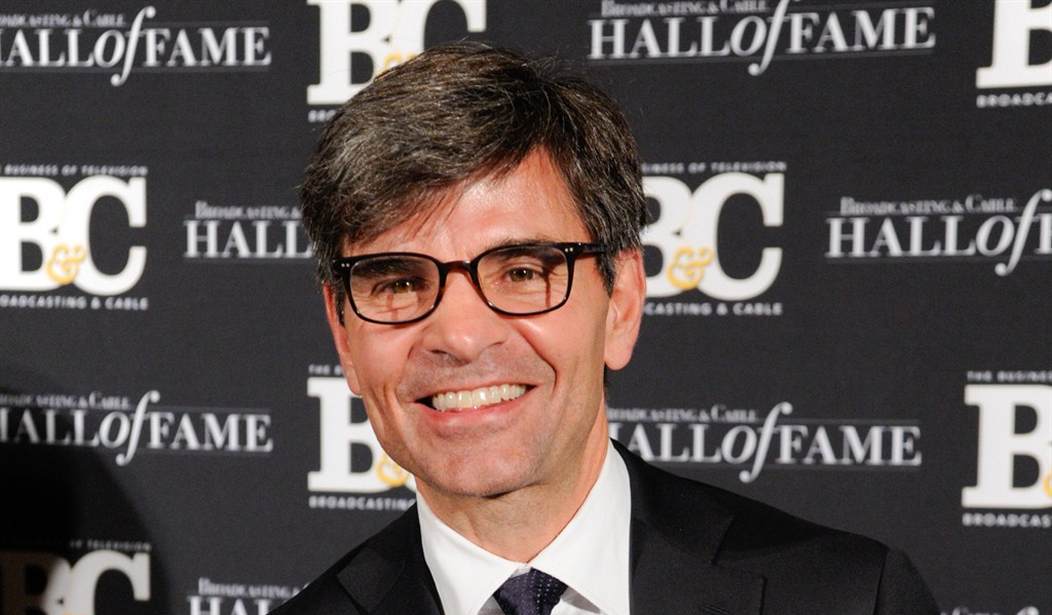
Which brings me to George Stephanopoulos, the ABC News anchor and co-host of "Good Morning America." Stephanopoulos donated $75,000 to the Clinton Foundation, but neglected to disclose that information while interviewing Peter Schweizer, author of "Clinton Cash," a book critical of the foundation and the Clintons.
Stephanopoulos apologized and his bosses at ABC News said no disciplinary action is planned, except that he has removed himself from moderating or appearing on any debate panel during the 2016 election cycle. It doesn't matter because anyone who replaces him will likely have the same worldview -- Republican candidates bad; Hillary Clinton good.

Following this revelation, Politico reported that dozens of media organizations donated money -- from the thousands to the millions of dollars -- to the Clinton Foundation. With so many established charities that have done good work for years overseas, why would these media groups give money to the Clintons? Could it have something to do with buying favor or access should Hillary become president?
A 2014 Gallup poll found that "Americans' confidence in the media's ability to report 'the news fully, accurately, and fairly' has returned to its previous all-time low of 40 percent. Americans' trust in mass media has generally been edging downward from higher levels in the late 1990s and the early 2000s."
The major networks don't seem to care; they plod on as though they have no problem, blaming cable news and other factors for their ratings decline. No other business treats its customers and potential customers this way.
Many of today's "journalists" do not have to run the gauntlet I and others of my generation had to run. Many don't have to pull all-nighters on a stakeout, cover local school board and city council meetings, or rush to the ER to report on the aftermath of a gun or knife fight, all while earning low pay.
These assignments honed our talent and judgment; they forced us to grow up. These qualities were once considered vital for creating good journalists, but today, it appears that if you are blonde, have great legs, or worked in the White House and can read a teleprompter, bammo, you are a journalist.
George Stephanopoulos had no journalism background when he joined ABC News. He has a degree in theology, which might be appropriate given the media's self-worship and sense of its own importance. If he had come up through the ranks, he might have been more attuned to the ethical problem of donating money to a foundation headed by people for whom he used to work and whose policies he promoted as a top White House aide, and then not disclosing the donation while engaged in an interview with someone critical of that foundation.
Most media outlets have printed codes of ethics. It would be a good idea for journalists and journalistic pretenders to re-read and practice them.






Join the conversation as a VIP Member