






Some Americans have strong, sometimes unyielding preferences for Mac computers, while most others have similarly strong preferences for PCs and wouldn't be caught dead using a Mac. Some Americans love classical music and hate rock and roll. Others have opposite preferences, loving rock and roll and consider classical music as hoity-toity junk. Then there are those among us who love football and Western movies, and find golf and cooking shows to be less than manly. Despite these, and many other strong preferences, there's little or no conflict. When's the last time you heard of rock and roll lovers in conflict with classical music lovers, or Mac lovers in conflict with PC lovers, or football lovers in conflict with golf lovers? It seldom if ever happens. When there's market allocation of resources and peaceable, voluntary exchange, people have their preferences satisfied and are able to live in peace with one another.
Think what might be the case if it were a political decision of whether there'd be football or golf watched on TV, whether we used Macs or PCs and whether we listened to classical music or rock and roll. Everyone had to comply with the politically made decision or suffer the pain of fines or imprisonment. Football lovers would be lined up against golf lovers, Mac lovers against PC lovers and rock and rollers against classical music lovers. People who previously lived in peace with one another would now be in conflict.
Why? If, for example, classical music lovers got what they wanted, rock and rollers wouldn't. Conflict would emerge solely because the decision was made in the political arena.
The lesson here is that the prime feature of political decision-making is that it's a zero-sum game. One person's gain is of necessity another person's loss. As such, political allocation of resources is conflict-enhancing, while market allocation is conflict-reducing. The greater the number of decisions made in the political arena, the greater the potential for conflict. It would not be unreasonable to predict that if Mac lovers won, and only Macs could be legally used, there would be considerable PC-lover hate toward Mac lovers.
Most of the issues that divide our nation, and give rise to conflict, are those best described as a zero-sum game where one person's or group's gain is of necessity another's loss. Examples are: racial preferences, school prayers, trade restrictions, welfare, Obamacare and a host of other government policies that benefit one American at the expense of another American. That's why political action committees, private donors and companies spend billions of dollars lobbying. Their goal is to get politicians and government officials to use the coercive power of their offices to take what belongs to one American and give it to another or create a favor or special privilege for one American that comes at the expense of some other American.
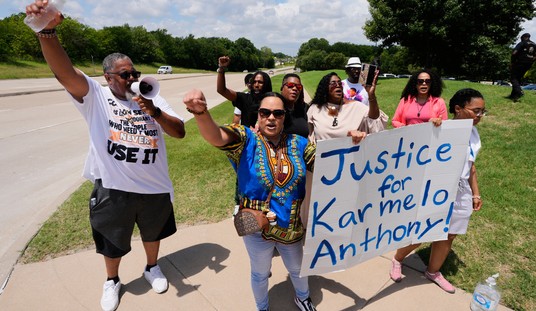
You might be tempted to think that the brutal domestic conflict seen in other countries can't happen here. That's nonsense. Americans are not super-humans; we possess the same frailties of other people. If there were a catastrophic economic calamity, I can imagine a political hustler exploiting those frailties, as have other tyrants, blaming it on the Jews, the blacks, the conservatives, the liberals, the Catholics or free trade.
The best thing the president and Congress can do to reduce the potential for conflict and violence is reduce the impact of government on our lives. Doing so will not only produce a less-divided country and greater economic efficiency, but bear greater faith and allegiance to the vision of America held by our founders -- a country of limited government. Our founders, in the words of Thomas Paine, recognized that, "Government, even in its best state, is but a necessary evil; in its worst state, an intolerable one."







Join the conversation as a VIP Member