



Barack Obama seemed puzzled. Angrily puzzled. The apostle of hope seemed flummoxed by the audacity of the question. At the April 16 Philadelphia debate, George Stephanopoulos, longtime aide to Democratic politicians, was asking about his longtime association with Weather Underground bomber William Ayers.
The Weather Underground attacked the Pentagon, the Capitol and other public buildings; Ayers was quoted in The New York Times on Sept. 11, 2001, as saying, "I don't regret setting bombs; I feel we didn't do enough."
It was at Ayers' house that Obama's state Senate candidacy was launched in 1995; Obama continued to serve on a nonprofit board with Ayers after the Times article appeared.
Obamaites live-blogging the debate were outraged. The press is not supposed to ask such questions. They are supposed to invite the candidates to expatiate on how generous their health care plans are. Or to allow them to proclaim that "we are the change that we are seeking." Or to once again bash George W. Bush.
There was some of that in this debate. But Obama was asked about his association with the Rev. Jeremiah Wright, his remarks about wearing an American flag lapel pin, his comment that "bitter" small town Pennsylvanians "cling to guns and religion" and his "friendly" relations -- "friendly" is his campaign adviser David Axelrod's word -- with William Ayers.
Did Obama expect that this would never come up in the campaign? He certainly gave that impression. The normally poised candidate looked irritated and weary. "This is a guy who lives in my neighborhood, who's a professor of English" -- actually, it's education -- "in Chicago, who I know and who I have not received some official endorsement from. He's not somebody who I exchange ideas from on a regular basis. And the notion that somehow as a consequence of me knowing somebody who engaged in detestable acts 40 years ago when I was 8 years old, somehow reflects on me and my values, doesn't make much sense, George."
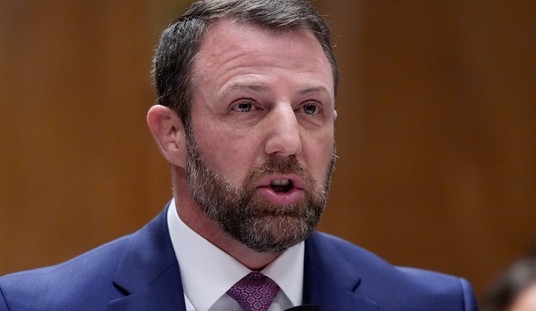
He compared Ayers to Sen. Tom Coburn, who has advocated the death penalty for abortionists. But of course Coburn has never advocated bombing their houses or clinics.
"A guy who lives in my neighborhood." Debates are held not just to learn the details of the candidates' health care plans -- which given the complexity of the issue will probably be considerably altered if they are ever actually put on the table -- but also to learn who the candidates are. And that includes learning about which guys who live in their neighborhood they chose to befriend. About Obama almost all Americans knew next to nothing when he got up on the podium of the 2004 Democratic National Convention and instantly made himself presidential candidate material.
His gracefully written autobiographical "Dreams From My Father" -- we could learn, if we could get through all 464 pages -- is a story not of transcending racial barriers but of developing a black and African identity.
The presidency is a uniquely personal office, and each incumbent puts his individual stamp on it. Obama's choice to join Rev. Jeremiah Wright's church and his choice to befriend William Ayers were not those most Americans would make, and Hillary Clinton was quick to declare, perhaps opportunistically, they were not choices she would have made.
This doesn't mean that Obama is responsible for Wright's outrageous statements or for Ayers' criminal acts (the charges against him were dropped because of government misconduct). But Obama's choices to associate with Wright and Ayers tend to undercut his appealing message -- very appealing after 15 years of Bill Clinton and George W. Bush -- that we must strive to overcome the racial and cultural and ideological divisions which have dominated our politics They are something that voters are entitled to weigh as they make their decisions.
Obama fans are upset that ABC News' Stephanopoulos and Charlie Gibson broke the unwritten rule that you are not supposed to ask Democratic candidates about these things. Associations with unrepentant radicals and comments made to contributors at a San Francisco fund-raiser in a billionaire's mansion are supposed to be kept indoors. Only the face that the candidate wants to place before the public should be seen.
Beliefs that most activist liberals share should be kept under wraps if they are unpopular with most of the voting public. That is how mainstream media have operated for the last generation or more. But not at Philadelphia's Constitution Center on April 16. The rules had changed. And Barack Obama was not well prepared.






Join the conversation as a VIP Member