Ken Klukowski
Defending Chief Justice Roberts

SHARE THIS:
Share

In recent months, at least three major newspapers have carried columns attempting to push Chief Justice John Roberts into voting to uphold a grossly unconstitutional federal law. But their cheap distortions and Chicken Little yammering will fail. The chief justice will do his job, and the country will be better off for it.

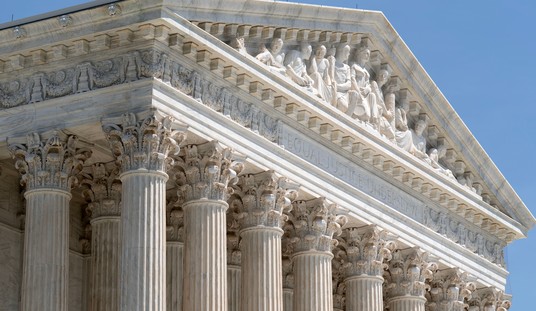
On Sept. 9, the U.S. Supreme Court reheard arguments in the landmark campaign finance and free speech case, Citizens United v. FEC. At issue in this case is whether the McCain-Feingold Bipartisan Campaign Reform Act (BCRA) could ban documentaries about candidates when Election Day is approaching.

This case was originally heard in April. But in June the Court called for a rare rehearing of the case, with the parties specifically arguing whether two Supreme Court precedents from the past that had upheld major restrictions on speech should be overruled, Austin v. Michigan Chamber of Commerce and part of McConnell v. FEC.

Ordinary people often have to pool their donations in corporations like public-interest groups to have enough money to get their message out on TV and radio. Perhaps too focused on how corporations in the past were mammoth operations like G.E. or General Motors with massive money to push agendas, and public-interest groups were rare, the Court held in these earlier cases that, when organizations speak, they have less First Amendment protection than the rest of us.

That’s to say, if people pooled their resources into corporate groups to speak for them, they enjoyed less free speech protection and could be more heavily regulated.

Oral arguments in Citizens United did not go well for the Obama administration, as Solicitor General Elena Kagan was clearly outmatched by her opponent, former Bush Solicitor General Ted Olson.

What makes this case unusual is that the swing vote is not Justice Anthony Kennedy. That’s because Kennedy wrote strongly-worded dissents in both of the precedents that the Court is considering overturning, so he’s on record as believing those cases are wrong.

So the attention shifted instead to Chief Justice John Roberts, especially since Roberts is the most stringent adherent to precedent on the Court, making him the most reluctant justice to overturn the two cases.

The Far Left is evidently terrified that Chief Justice Roberts will live up to the assurances he gave the country during his 2005 confirmation hearings. There, he said that he would give due regard to precedent, and saw a judge’s role as a modest one, applying the law to facts without regard to agendas, parties or outcomes. In doing so, he also acknowledged that sometimes precedent must be overruled.

Ken Klukowski's Biography
Ken Klukowski is Townhall’s correspondent at the U.S. Supreme Court and the coauthor of the new #1 bestselling book The Blueprint: Obama’s Plan to Subvert the Constitution and Build an Imperial Presidency, on sale now.
 
TOWNHALL DAILY: Sign up today and receive Townhall.com daily lineup delivered each morning to your inbox.
Join the Debate
37 Comments So Far
« Previous12Next »
OhioHistorian Wrote: Nov 08, 2009 5:42 PM
is that the status quo will be overturned, and his buddy George Soros will no longer run the Democrat political coffers.
Don't Tread On Me Wrote: Nov 08, 2009 10:59 AM
Jack Napier-
Agree with your point judges often cite precedent just to get them to where they wanted to go anyway.
I think of the VMI decision that created a doctrine out of thin air that states can't establish single-sex institutes of higher learning. There was no Constitutional mandate; the "Equal Rights Amendment" did not pass. And there was some 200 yrs of precedent FOR state-funded single-sex colleges & academies!

Dredd-
You may recall that when M-F was still a bill being railroaded thru, spineless weenies couldn't oppose this thing either because they fear their constituents getting unapproved info, or because newspaper eds will say nasty things about them. They were being assured the Court would strike it down anyway, or Pres. Bush might unexpsctedly grow a spine & veto it, which he didn't. As I've said before, I sometimes think that earlier case in which the Court declined to strike down M-F was basically a message, a warning shot reminding Congress & PotUS that SCotUS was not put there to cover their posteriors.

If ScotUS is supposed to nullify enforcement of laws that are unConstitutional, Congresspersons & the PotUS also have Constitutional duties to oppose unConstitutional bills in their own proper spheres.
Don't Tread On Me Wrote: Nov 08, 2009 10:39 AM
Good point as to how (other than the statutes) to pick & choose orgs & persons who should be magically exempt from M-F. That's a silly idea.

M-F, like the "Fairness Doctrine" was intended to squelch basically conservative PoV's.

M-F did NOTHING about lobbying government people, what it restricts is bypassing the ruling elite & taking messages directly to the people. Who should be scared of that? So what if (e.g.) Exxon, or the Unification Church, or PETA, or the NAACP, or insurance co's, or the Ku Klux Klan, or the NRA, or "climate change deniers," or the UN, buy TV time to make their case? At the end of the day, the PEOPLE have to judge the content of the message & the veracity of the messenger! That the elite, incl'g the Republican Party, fear someone besides their pals or people they control doing that says something very scary about what they are & where they come from.

The statute exempts "news organizations." What is & isn't a news org? M-F doesn't say. Can we go out & form "news orgs" & be exempt from M-F? The NRA for one looked into doing that.

Here's a hilarious possibility: SCotUS could try positing a standard of objectivity & non-bias. Could you imagine NBC, CBS, ABC who cheered this crap suddenly finding themselves defending their objectivity & lack of bias lest they get hammered under M-F? It's dangerous itself, I don't like or advocate it, but the thought such a thing might be created & then bites the metroleftist elite networks is amusing.
Jack Napier Wrote: Nov 08, 2009 7:12 AM
Insighting: "We are a nation of law."

In name only. In the real world, we are governed by a band of black-robed Ba'athists.

IT: "This is not a democracy. It matters not what an excitable and often irrational electorate votes for. The courts are obliged to void the results of any referendum, or the product of any legislature that violates the law."

With "the law" being whatever they want it to be. Exactly how do you square Hans v. Louisiana with the plain text of the Eleventh Amendment and its legislative history? YOU DON'T!!! Hans was judges making law, under the fraudulent guise of interpreting it.
Jack Napier Wrote: Nov 08, 2009 7:09 AM
doc/Rich: " We are NOT a nation of law
I am an originalist. As such, I cannot help take offense at the prior post reciting the tired "we are a nation of law", which is often cited but seldom substantiated."

Christ on a crutch! Even Larry Tribe claims to be an originalist.

Truth be told, the only time a judge follows precedent is when it takes him exactly where he wanted to go in the first place. It has gotten so bad that we can't even rely on the hidebound precedent of SCOTUS as a guide for ordering our affairs.

The short definition of "originalism" can be found in contract law: Courts are obliged to interpret a contract in accordance with the intent of the parties. In every contract, the various parties have certain reasonable expectations, which are supposed to be fulfilled in the transaction.
Jack Napier Wrote: Nov 08, 2009 7:02 AM
Mick: "Does it strike anybody else that the BEST way to get Big Rich People out of the Business of buying Government is to make Government not worth buying?"

Imagine a country with 10,000 representatives (which would be the case, if Madison's First Amendment had been passed), and those 10,000 appointing our President. Money would almost disappear from politics overnight: economies of scale would make television advertising a pointless endeavor. We would actually get a competent Prime Minister like Tony Blair, as opposed to bozos like Bush. And, to borrow the words of Solon, even Exxon-Mobil couldn't buy them all.

Now, that would be a revolution worth having.
Dredd Wrote: Nov 07, 2009 11:39 PM
As Justice Frankfurter wrote, "Wisdom too often never comes, and so ought not be rejected, merely because it comes Late."

Upholding McCain-Feingold was one of the absolute worst decisions the US Supreme Court has ever made, and that's saying some. The opportunity to fix that mistake should not be missed.

I also believe McCain-Feingold was a major factor in McCain's defeat, which got us Obama.

Just my opinion . . .
Take Back the Government Wrote: Nov 07, 2009 7:08 PM
The same guy who controls Obama is the same guy behind healthcare legislation and McCain-Feingold.

http://www.huffingtonpost.com/2008/04/10/mccain-camp-lashes -soros_n_96154.html

http://www.freerepublic.com/focus/f-news/1360852/posts

http://www.wnd.com/index.php?fa=PAGE.view&pageId=56177

http://www.aim.org/aim-column/mccain-soros-and-the-new-glob al-order/
gungy Wrote: Nov 07, 2009 6:28 PM
Just wondering if RINO McCain filed an amicus brief with the court in support of the Obama's Admn position.
Virginia Daddy Wrote: Nov 07, 2009 5:56 PM
Is that it often makes things up as it goes alond and can just as easilly blow with the political winds as anyone.

They are slightly more immune to it all, but to say they are free from public influence is a sham. Abortion, free speech, and on down the line are decisions that contradict earlier decisions. Even when they do not overrule a case, they leave the prior case behind. Abortion is a good example. If anyone has ever studied the line of cases in this you really get the feeling the justices have no idea what they are doing.

I really like Scalia's dissents in a number of those cases-- basically, should never have gotten involved in Roe because that is a legislative decision and there is no such thing as a fundamental right to privacy. And watching the court's subsequent decisions, it really looks like they are making it up as they go along.

And free speech, not quite as arbitrary, but probably more subject to political pressure. There is absolutely time where it opens and then closes what is allowed. I'd expect for campaign finance we'll see a retreat from the tight measures recently implemented.
The Big Mick Wrote: Nov 07, 2009 4:47 PM
that the BEST way to get Big Rich People out of the Business of buying Government is to make Government not worth buying?

If the GDBastids had almost no power (Jefferson's Governs Best Governs Least) as the Founders obviously intended then the Big Rich would find more useful places to put their Protection Money.

mick
Don't Tread On Me Wrote: Nov 07, 2009 3:54 PM
Roberts never promised to never overturn a precedent, & stare decisis is not an excuse to blatantly violate the Constitution. Not every precedent is valid & applicable to all situations. I would say that if a case comes to the Court, in which following the trajectory of an apparent precedent results in an obvious violation of the Constitution, then that precedent is ipso facto not applicable & invalid for that case.

The 1st Amendment doesn't have a clause saying "If a dollar changes hands in the production and publication/broadcasting of that speech, the freedom of speech is void and this Amendment is not applicable."

It is telling that the statists & the left want this thing so badly. They know that the biggest threat to their agenda is the ability of people to communicate about it & them unimpeded. The "news organization" loophole ensures their own message can be broadcast freely.

The real shame is that this thing was the product of the statists in the Republican Party, including John McCain. It wouldn't BE the high court's problem if the Repubs in Congress & Pres. Bush had upheld THEIR oaths!

The Republican Party jumped the shark w/ McCain-Feingold. If it does not disown M-F and McCain pronto, it is headed for Whigsville, w/ no regrets. The GOP of M-F is worse than useless, a pseudoparty that serves only to trap, block, & frustrate conservatism.
doc, aka Rich Wrote: Nov 07, 2009 2:42 PM
I agree with your comments on Scott and Plessy.

You used the phrase "originalism, as generally defined". I don't believe we hold a common definition of originalism. In over a dozen books on constitutional law, I find numerous conflicting definitions, typically reflecting the writer's POV on the topic. Clearly, definition of positions cannot be defined from those who argue against.

Regarding what Scalia believes one should use his own authored text entitled "A Matter of Interpretation", not someone else's. I don't recall Scalia calling himself a Hamiltonian in that text. From his own words you'll find a very different POV.

There's an excellent book of essays truly covering all sides of the debate on originalism from the new Federalist Society entitled "Originalism - A Quarter-Century of Debate". The way you define originalism seems to be more consistent to how critics of originalism define it than originalists.

cheers
qhoratius (formerly povidus) Wrote: Nov 07, 2009 1:49 PM
I apologize if my contention was not clear earlier. My claim is that originalism, as generally defined, and the living constitution are flip sides of the same coin in opposition to the proper textualist and contextualist interpretation that served this nation well for 150 years. Originalism gives justices the excuse, based on their own divine knowledge of what wen through the founders' heads, to read the constitution however they want. This is contrary to reading the plain language of the constitution, making originalism no better than any left-leaning theory of constitution interpretation.

Regarding Scalia, he is a self-avowed Hamiltonian, and as such an enemy of limited government.
doc, aka Rich Wrote: Nov 07, 2009 1:29 PM
Courts can set precedent all day long in common law. That's what common law is. But when justices take oaths to uphold the constitution as the fundamental law of the land, constitutional language cannot be reversed by supreme court decision. Justices are just people, and people make mistakes (this is being kind to supreme court justices who hold juvenile understanding of constitutional law and their responsibilities to uphold it in their own oath of office). When prior supreme court decisions have been wrong, they need to be reversed, and the supreme court has famously reversed itself more times than most citizens know.

Permitting clear language of the constitution to be assigned new meaning puts us at contradiction (is the constitution really fundamental law or is the latest newly discovered supreme court meaning the fundamental law of the land when it contradicts language clearly expressed in the constitution itself?).

This is fundamental law:
"Congress shall make no law respecting an establishment of religion, or prohibiting the free exercise thereof; or abridging the freedom of speech, or of the press; or the right of the people peaceably to assemble, and to petition the Government for a redress of grievances."

McCain-Feingold, hate crime legislation, the former fairness doctrine, sedition acts under Adams and later under Wilson, and any number of other laws restricting free speech must ALL be struck down as unconstitutional. To not do so violates the premise that the constitution is fundamental law. If you don't like the constitution you can't simply write a new law which contradicts, any more than you can set contradictory precedent by a supreme court. Don't like something in the constitution? Change it ... Article V instructs in how to do it.
doc, aka Rich Wrote: Nov 07, 2009 12:58 PM
For the most part I concur with your "Huh?" post, except your understanding of the column (or your "I don't understand the purpose of this article"). Perhaps even to over-state your statement ("Precedent has, for the entire history of American jurisprudence, had the effect of law."), I'd go so far as to suggest that precedent having the effect of law IS the base concept of common law, which goes back much further than the history of American jurisprudence).

As one who seems to understand the nuances of judicial interpretation, consider that statutory law (which includes constitutional law) is quite different than common law. The effect of judicial interpretation of statutory language as setting precedent is wholly equivalent to judicial legislating (which is a power explicitly authorized to congress ... not courts). As formed by Marshall, judicial review (statutory interpretation) focuses on constitutionality (shall the legislated law stand or be struck down).

Precedent in common law is itself a precedent! This is merely a phrase acknowledging that common law is composed of the history of judicial legislating via precedent over a non-statutory landscape. However, in my beliefs setting precedent in statutory interpretation represents a fundamental violation of the constitution itself.
doc, aka Rich Wrote: Nov 07, 2009 12:33 PM
I perceive from your reply that you know something of the topic. But I can think of no reason whatsoever how you could think you know the nuances of what I believe. Yes, Justice Scalia's own book on originalism enumerates his own view on how he practices originalism tempered with pragmatism. You need to study Scalia's views and his position on issued decisions (were they in the majority or minority) if you believe he favors federal expansion. On the contrary, he's clearly expressed in his own book how pragmatism holds his hand from advocating the dissolution of institutions unconstitutionally created over the preceding 80 years.

The suggestion that judicial pragmatism leads originalists to a living constitution is in contradiction to dozens of expressions on constitutional interpretation I've studied. What you write is only a thesis put forward in numerous rejections of originalism by those who believe in the doctrine of the living constitution (the one that comes to mind most notably is the one that Stevens argues). For the most part, one cannot simultaneously hold truths of originalism and living constitution at the same time (at least not in any reasoned interpretation).

As in most things in life, one needs to decide what one believes and what one rejects. Originalism and the doctrine of the living constitution cannot both be correct, either one or both are wrong. I've studied the topic extensively and in my humble opinion the living constitution is a "crock" ... it's a doctrine where any desired result can be rationalized even in direct contradiction to clear language. In such a condition, there IS no rule of law. Indeed, our constitution was officially in exile (rejected by our own Supreme Court) for almost 60 consecutive years from 1937 through 1995. I hope you appreciate the significance of those boundary events.
Ms Kelly Wrote: Nov 07, 2009 12:32 PM
is the man I think he is, then he doesn't even read opinion pieces about court cases he is about to rule on.

As for the statement that over turning this precedent would "“surrender control of our democracy to corporate interests"...The control of our democracy was surrendered to activist judges decades ago and the left had nary a word to say about it.
Virginia Daddy Wrote: Nov 07, 2009 12:01 PM
The Supreme Court has and will overturn itself many a time in the future.

This particular case is very interesting, because it extends to the voices of us as individuals. Its not just groups that have their voice limited, but that the people that make up these groups will be limited. These groups then are not GE or Ford or Microsoft... All too often, these groups can be made up of the individuals whose voice they wish to protect. But because they form a group, their voices will be silenced...
D.T.O.M. Wrote: Nov 07, 2009 11:58 AM

No, you need to learn to read. Then you would know that your comment has nothing at all to do with the article at hand.

Enthusiasm is fun, but try to keep to the subject
2nd Fundamentalist Wrote: Nov 07, 2009 11:51 AM
The NRA and its members need to know which candidates stand for the 2nd Amendment and which do not! NRA officials should not be threatened with huge fines or jail for informing its members.
D.T.O.M. Wrote: Nov 07, 2009 11:43 AM

It sounds like what the writer is saying is:

1. That the Court has ruled twice in the past that groups have less free speech than individuals.

2. That the Court is now considering a ruling that might overturn the two earlier rulings.

3. That the left is seeking to effect this reversal, and Chief Justice Roberts, out of judicial conservatism and a hesitance to break precedent, may block it.

Am I correct?

If I am, I don't understand the purpose of this article. If the left is having a rare moment of sanity, and is, for once, militating for freer speech, what's the problem?

The fact seems to be that Roberts, in his regular studied and deliberate way, is giving full consideration to the existing precedent before voting on the possibility of changing it.

GOOD!

The function of the Court is NOT to make law, but to clarify it. Precedeent has, for the entire history of American jurisprudence,had the effect of law. Understanding it before changing it, and being loathe to change it without compelling reason is EXACTLY what the Court is supposed to do.

The problem here is that the precedent is possibly contrary to freedom of speech for all people. If Roberts finds that it is restrictive of that Contitutionally guaranteed freedom, then he must vote to strike it down. Until he makes that determination, however, the precedent is the law of the land, and Roberts is bound to uphold it.

qhoratius (formerly povidus) Wrote: Nov 07, 2009 11:39 AM
Dred Scott and Plessy were the correct decisions.

Dred Scott: in 1857, there was no constitutional provision, no statute, or nothing in the common law for Mr. Scott to hang his hat on that he was not chattel or that he was an American citizen, or that any constitutional guarantee extended to non-citizens. Is slavery and treating people as chattel terrible . . ? Of course. This does not mean that Dred Scott was decided wrongly

Plessy: Brown v. Board of Education is the prime example of judicial overreach. Nothing in the 14th Amend. says that people should forced to intermingle. While segregation is terrible, the 14 Amend. only guarantees that government will not treat people differently when dispensing legal powers--nothing more.

qhoratius (formerly povidus) Wrote: Nov 07, 2009 11:32 AM
The originalism you have fealty to is "judicial pragmatism" and results in a living constitution. Originalism leads to as much judicial activism as any other liberal standard. As an originalist, you are free to make up what the founding fathers thought as justification for some broad reading of the Constitution. Justice Scalia has used this justification over the last two decades to grant more and more power to the federal government.

Contextualism and plain meaning worked well for this country for its first 150 years because the government's reach was held at bay (the exception being Lincoln's and Theodore Rex's power grabs).
doc, aka Rich Wrote: Nov 07, 2009 11:06 AM
I am an originalist. As such, I cannot help take offense at the prior post reciting the tired "we are a nation of law", which is often cited but seldom substantiated. The majority of the Supreme Court has been held by an unbroken majority supporting belief in doctrines of Judicial Pragmatism and the Living Constitution since 1937. These are nothing more than hollow codewords whose meaning is that we, as a nation, do NOT follow the our own laws, but rather rationalize that the law justifies (within the limits of believability) whatever the current supreme court majority wishes them to. For 80 years that Supreme Court majority has wished them to rationalize expansion of federal authority in direct contradiction to the clear language of the constitution.

Almost as offensive as hearing "we are a nation of law" is hearing executives, legislators, and justices swearing oath to "uphold the constitution". Belief in judicial pragmatism and the doctrine of the living constitution is nothing more than swearing such an oath with your fingers crossed. Such an oath is nothing more than a lie.
« Previous12Next »