





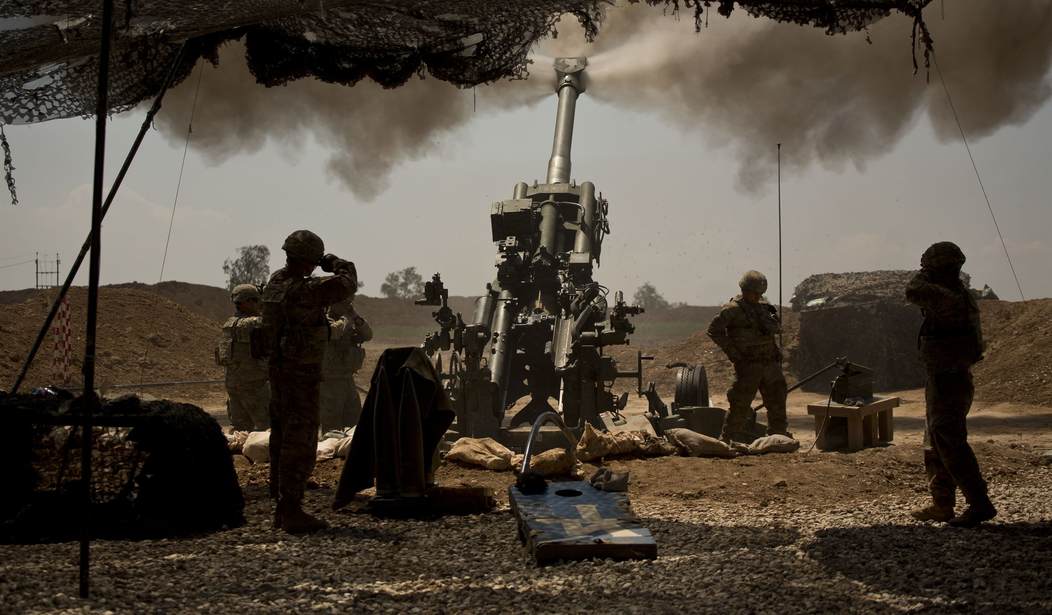
According to the Department of Defense, "Iran malign militia groups conducted two unsuccessful attacks on U.S. forces in Iraq and Syria" on April 22 — the first such attacks on coalition forces since February 4. Underscoring that "[t]hese attacks put coalition and Iraqi personnel at risk," the DoD called on Iraq's government "to take all necessary steps to ensure the safety" of American service members in the region against such attacks. "If these attacks continue, we will not hesitate to defend our forces, as we have done in the past."
The attack on the base in northeastern Syria was "launched from inside Iraq" and was comprised of five rockets, according to Task & Purpose. The other attack saw coalition forces shoot down two drones near the Ain al-Asad air base — where U.S. service members are present — in western Iraq's Anbar Province.
Shortly after Iran-backed Hamas terrorists launched their October 7 massacre, a collection of other Iranian terror proxies under the "Islamic Resistance in Iraq" banner began launching attacks on bases with U.S. personnel. Scores of attacks — 165, to be exact — were carried out and dozens of American service members were injured while three were killed in a late January attack on a base in northern Jordan. In response, more than 80 retaliatory strikes including a drone strike that took out a terrorist commander responsible for attacks on American forces were carried out by the U.S. in February, halting the attacks — until this week.
"For weeks, the Biden administration failed to respond with strength, essentially inviting those attacks to continue," emphasized Bradley Bowman, Senior Director of the Center on Military and Political Power at the Foundation for Defense of Democracies (FDD). "That’s exactly what happened, and three Americans ultimately lost their lives."
"The White House should learn from that experience and not wait weeks this time before responding with decisive force," admonished Bowman. "We need to build a pattern of responses that encourages those contemplating attacks on our forces to think twice."
As of this week, there doesn't seem to be an effective deterrent to prevent America- and Israel-hating terrorists from resuming their attacks — just as the Biden administration's "deterrence" failed to stop Houthis from attacking shipping traffic, Iran from launching a direct attack on Israel, or Putin from invading Ukraine.


Join the Conversation
VIP members get the ability to comment on articles.