





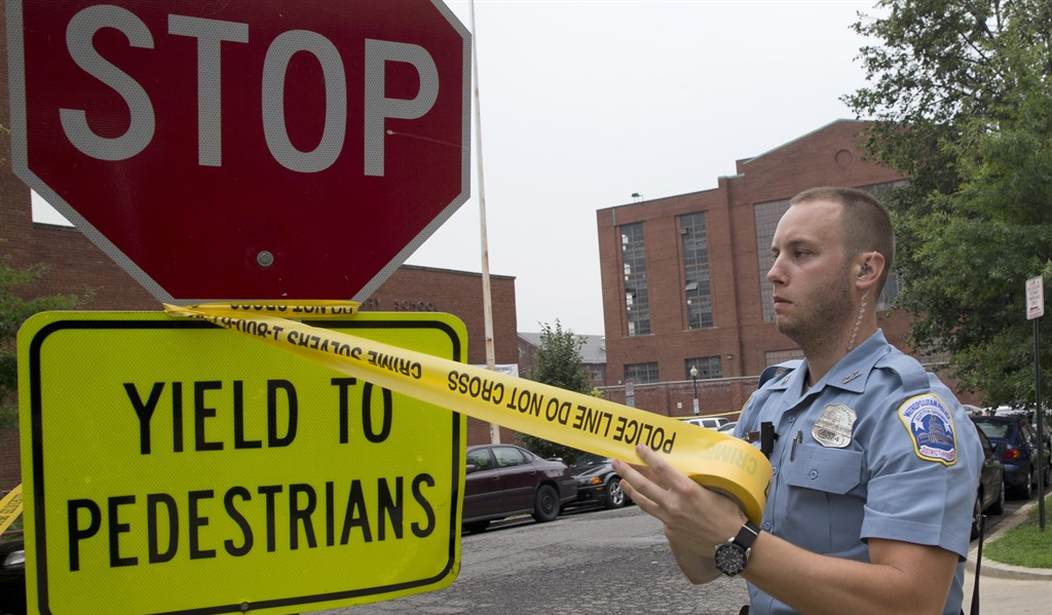
As Townhall covered extensively earlier this spring, Washington, D.C.'s City Council attempted to force through a rewrite of the criminal code governing the nation's capital that would have lessened penalties, downgraded serious crimes, and changed how the city carried out justice. The liberal D.C. Council passed its overhaul, then Mayor Muriel Bowser, a Democrat, vetoed the measure. The D.C. Council, however, overrode Bowser's veto in a nearly unanimous vote.
Congress, however, stepped in and used its authority to reject the new D.C. criminal code and — after botching his response to it and leaving more than 100 House Democrats out to dry on the vote — President Biden did not veto their resolution to strike down the D.C. Council's rewrite of the city's criminal code.
Even though law and order advocates might have been heartened that the D.C. Council's attempt to reduce penalties was unsuccessful, it turns out prosecutors in Washington, D.C. haven't been using existing laws to bring charges against most individuals who are arrested in the nation's capital.
As a March report from D.C. Crime Facts explains:
Prosecutors have enormous power in the criminal justice system. In DC, most of this power resides within the Superior Court Division of the United States Attorney’s Office (USAO) of the District of Columbia. They decide which cases to charge and how the government presents its evidence. In recent years, this division has declined to prosecute a growing share of MPD’s arrests so that now most arrests don’t result in charges:
In the most recent complete fiscal year (2022), USAO prosecutors “declined” 67% of all arrests; i.e. they reviewed the arrest and declined to press charges. This represents:
52% of felony arrests
72% of misdemeanor arrests
FY 2022 continued a trend of higher and higher declination rates that began in FY 2018 and continued under both Trump and Biden administration appointees
The USAO’s declination rate went from 31% in FY 2016 (Obama appointee) to 48% in FY 2020 (Trump appointee) to now 67% in FY 2022 (Biden appointee)
This increased declination rate is happening as the overall arrest rate is going down. Despite fewer arrests to review, prosecutors are still taking on a smaller share of them. As a result, the number of cases the USAO brings is down 68% from FY 2017.
The USAO isn’t “winning” a higher share of the much-smaller pool of cases they are taking on; suggesting that this trend isn’t simply them triaging the weakest cases
It wasn't always like this, however, as D.C. Crime Facts notes. "It was not that long ago that the vast majority of felony and misdemeanor arrests led to some kind of charge," the report explains. "Now a large majority of misdemeanors and even a slight majority of felony arrests simply result in no charge," amounting to "a massive policy change...that was made completely outside of the authority of Mayor Bowser, Chief Contee or the DC Council."
The fact that more than two-thirds of arrests don't lead to charges piqued the interest of The Washington Post, which reported the "startling statistic" on Wednesday. As the Post points out, the "increased number of declined cases has sparked frustration among city leaders who are already under a national microscope from members of Congress for their crime fighting efforts."
And, on Wednesday, the House Oversight Committee — led by Chairman James Comer (R-KY) — is holding part one of a hearing titled "Overdue Oversight of the Capital City."
🚨 TODAY 🚨
— Oversight Committee (@GOPoversight) March 29, 2023
Congress has sent a clear message to the D.C. Council: it’s time to make our nation’s capital safe again.
@RepJamesComer is holding a hearing to conduct oversight of DC, including crime, safety, and city management.
Watch 👇https://t.co/4ZKh2R4nMP
Witnesses who will be asked to explain the way D.C. is being run include D.C. Council Chairman Phil Mendelson, D.C. Council Member Charles Allen, D.C. Police Union Chairman Greggory Pemberton, and D.C. Chief Financial Officer Glen Lee.

Join the Conversation
VIP members get the ability to comment on articles.