





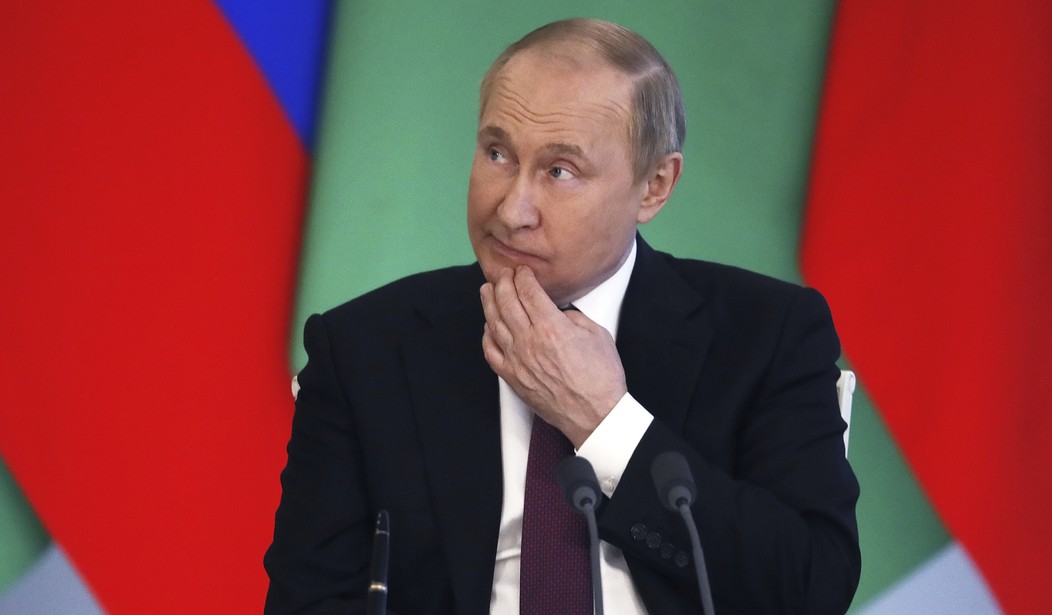
Amid Putin's long-running war against Ukraine, a new volley of what were initially identified by an American official as Russian missiles that missed their presumed intended target in Ukraine and landed Poland on Tuesday, a strike that killed at least two Polish citizens and left sizable craters where they landed. According to reports, the missiles hit a village, Przewodów, near Poland's border in an area where locals were drying grain.
JUST IN: Two missiles reportedly hit Przewodow #Poland located on border with #Ukraine. Comes as Russia pounded Ukraine with missiles today. Local radio reports 2 fatalities. Poland is a NATO member
— Joyce Karam (@Joyce_Karam) November 15, 2022
The strike initially raised the stakes of the war that's been raging since Putin's forces invaded Ukraine on February 24. Until now, other nations have provided training, support, and war machinery to the two countries in conflict, but have not gotten directly involved on behalf of Russia or Ukraine. But because Poland is a member of NATO, it could invoke Article 5 of the NATO charter if attacked, triggering the alliance's collective defense provision where "an attack against one Ally is considered as an attack against all Allies."
That would draw in the United States, Canada, France, Germany, Italy, and the rest of NATO's membership.
Being a NATO member, Poland could opt to invoke Article 5 of "collective defense" that an attack on one is an attack on all.
— Joyce Karam (@Joyce_Karam) November 15, 2022
If Russia is culprit, such move would take Ukraine war to a whole new level
The invocation of Article 5 does not necessarily mean that all NATO member countries would immediately deploy fighting forces to take on Russia, as allies "can provide any form of assistance they deem necessary to respond to a situation and "each ally is responsible for determining what it deems necessary in the particular circumstances."
BREAKING: US Intelligence official confirms to AP that “Russian missiles crossed into NATO member #Poland, killing two people.”
— Joyce Karam (@Joyce_Karam) November 15, 2022
This is quickly escalating. Poland’s PM is holding emergency meeting.
The United States intelligence community initially, following the missile strike, confirmed to The Associated Press that the missiles were Russian-fired and claimed at least two lives in Poland, again raising the specter that the free world could end up at war against Russia. In February, President Biden said that "the United States will defend every inch of NATO territory with the full force of American power," though Biden was not clear if he meant that against outright invasion by Russia or even in instances like the one that played out on Tuesday in Poland.
In Tuesday's State Department press briefing, officials were asked whether the Biden administration remained committed to the president's pledge. "I don't want to speculate about hypotheticals," the State Department replied. Not exactly a resounding statement of support.
In Poland, government spokesman Piotr Mueller told reporters that his country's leadership was holding an emergency meeting as a result of the "crisis situation."
This kind of development in Russia's war on Ukraine could provide the pretext needed to provoke some version of World War III by dragging NATO into the conflict via Article 5, but concrete action in response to the missiles' presumably accidental strike in Poland was slow to develop as the world awaited a response from Warsaw and/or NATO.
#BREAKING: Suspected missile hits village in Poland, killing 2 people pic.twitter.com/wAFbZBHjgH
— Amichai Stein (@AmichaiStein1) November 15, 2022
In some confusing remarks from President Biden later on Tuesday night in the United States but early in the morning in Bali, where Biden currently is on a foreign trip, he claimed "It's unlikely, in the minds of the trajectory, that it was fired from Russia."
JUST IN: Biden on reported strike in Poland that killed 2: "It's unlikely — in the minds of the trajectory — that it was fired from Russia." pic.twitter.com/AMRSmpSz1n
— Breaking911 (@Breaking911) November 16, 2022
What exactly "in the minds of the trajectory" means is up for interpretation, but it's notable that Biden would share his doubt that the projectile "was fired from Russia" and that it seemingly contradicted what Biden's own intelligence officials confirmed to The Associated Press.
By the early morning hours of Wednesday in the U.S., AP reported that U.S. officials said their "initial findings suggest" that the missile was fired by Ukrainian forces in an attempt to stop an incoming Russian missile.
WASHINGTON (AP) — US officials: Initial findings suggest missile that hit Poland was fired by Ukrainian forces at incoming Russian missile.
— Seung Min Kim (@seungminkim) November 16, 2022
Editor's Note: This story was updated to include Biden's latest statement on the explosion in Poland and contradictory claims from U.S. officials who initially confirmed the missile was Russian but later walked back that claim to say they believe it was a Ukrainian-fired defensive munition.
This is a developing story and may be updated further.


Join the Conversation
VIP members get the ability to comment on articles.