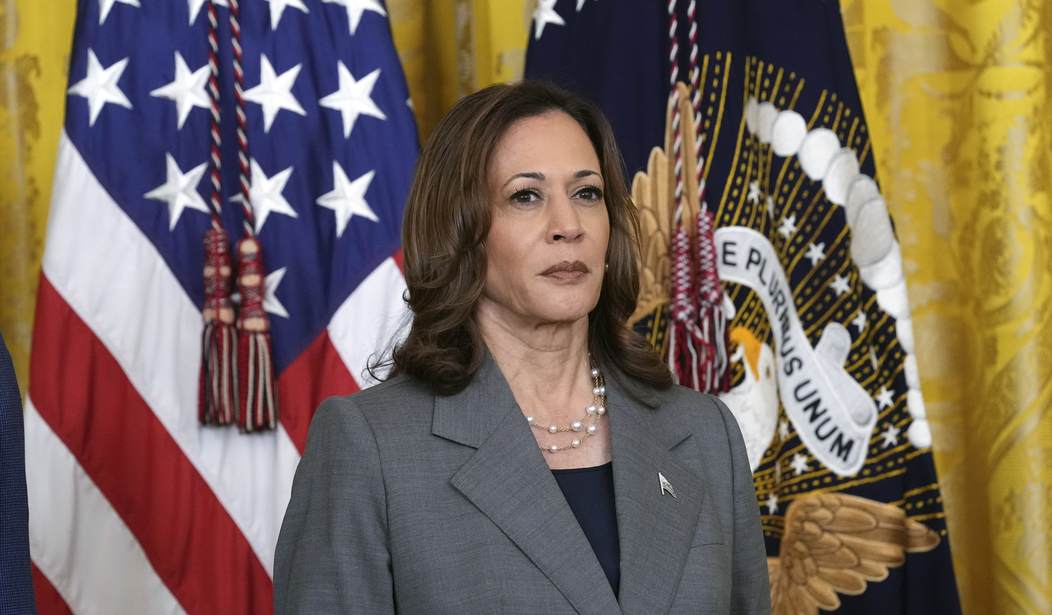

“Harris Has a Lot of Strength. Giving Interviews Isn’t One of Them,” the New York Times declared. And for the first, they are right.
However, the outlet’s explanation is far from the truth.
The NYT’s Rebecca Davis O’Brien claimed Vice President Kamala Harris struggles to carry a decent conversation with reporters because she has “a fear of saying the wrong thing” while doing “one-on-one televised interviews with journalists.”
O’Brien pointed out that Harris “tends to muddy clear ideas with words or phrases that do not have a precise meaning.” However, she dismissed critics who say the vice president is not prepared for interviews and lacks the knowledge to answer questions about her policies, where she often rambles into a word salad for minutes on end.
Reporters and fellow prosecutors who have known Ms. Harris over the years say that she has always been polite but cautious with the press, even in informal settings, a wariness that stems not from lack of preparation or curiosity but from a fear of saying the wrong thing.
She often winds her way slowly toward an answer, leaning on jargon and rehearsed turns of phrase, using language that is sometimes derided as “word salad” but might be better described as a meringue. These days, when Ms. Harris gives an interview, she hews to a set of well-rehearsed talking points, at times swimming in a sea of excess verbiage. Her first answer is often the most unsteady, a discursive journey to the point at hand. Like all politicians, she sometimes answers the question she would prefer to address, rather than the one actually asked of her — but not always artfully.
Outside of the liberal press fantasy world, others word describe Harris’ interviews as being fake and insincere.
An Economist/YouGov poll found that 48 percent of Americans believe Harris says what she thinks people want to hear, compared to 36 percent who believe the vice president actually believes what she says.
BBC spoke with swing state voters after Harris’ first sit-down interview on CNN, in which, by the end, they said they were unconvinced by her performance.
One person told the outlet that the interview “didn't do a whole lot to assuage my concerns,” adding that he wants to see Harris challenged in a press conference or a debate “without a teleprompter or rehearsed answers.”
Despite being coddled in most interviews, Harris fails to get her point across, leaving voters with more questions than answers.
Another voter said it would take a lot of time to convince him to vote for Harris because of “the lack of live interviews and answering questions,” saying that he still has “concerns about [Harris and Gov. Tim Walz (D-Minn.)] competency.”
Following Harris' MSNBC interview on Thursday, host Stephanie Ruhle defended the vice president from critics, saying she did not give "clear" and "direct" answers about specific policies “because she’s a politician.”
"It’s hard because many people feel like she’s just speaking in platitudes, she’s speaking about an economic vision and she’s not giving details," Ruhle said. "She’s got an 80-page detailed policy proposal, and do I think that she answers every single question and gives people exactly what she wants? She doesn’t. You know why? Because she’s a politician, and none of them do. They all speak in platitudes."