







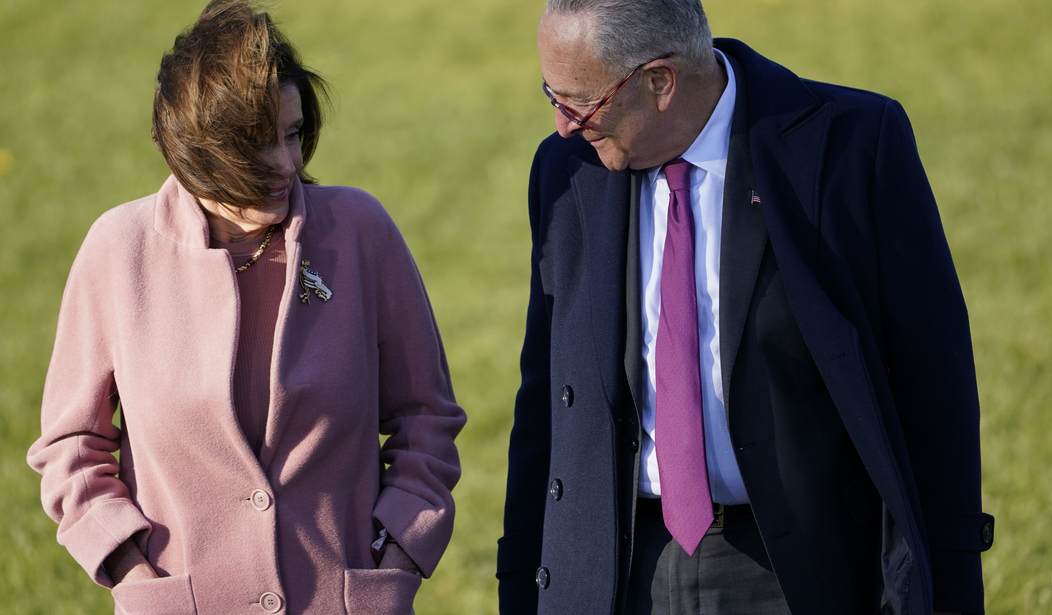
On Wednesday, Democratic leadership came to an agreement regarding the National Defense Authorization Act (NDAA), thus making it easier for the bill to advance. Initially, Senate Majority Leader Chuck Schumer (D-NY) insisted on tying the annual defense bill to U.S. Innovation and Competition Act, which has also been known as the Endless Frontier Act. However, after pushback, Schumer and House Speaker Nancy Pelosi (D-CA) struck a deal where the majority leader relented. Ultimately, the Senate voted on Wednesday night in favor of advancing the NDAA 84-15, as POLITICO reported.
The NDAA is an annual crucial defense bill, yet Schumer was trying to tie legislation, which, although it passed the Senate in June by 68-32, has had problems in the House.
Just as there has been bipartisan support for the bill, so has there been bipartisan concern for it. Many Republicans, particularly those on the Republican Study Committee (RSC) have warned that it involves "big spending, little results" and "leaves America vulnerable to Communist China." There are also concerns that it doesn't do enough to counter human rights abuses of the Chinese Communist Party (CCP).
When it comes to the bicameral agreement about the NDAA, a joint statement from Pelosi and Schumer is posted to the speaker's website:
“Today, we are pleased to announce that we have reached an agreement for the House and Senate to go to conference on the United States Innovation and Competition Act. Working with President Biden, the House and Senate have been crafting bipartisan legislation to bolster American manufacturing, fix our supply chains, and invest in the next generation of cutting-edge technology research. While there are many areas of agreement on these legislative proposals between the two chambers, there are still a number of important unresolved issues. After Senate Republicans made it clear they would block the inclusion of USICA on the NDAA, we have decided that the best way to get an agreement will be through the conference process. Therefore, the House and Senate will immediately begin a bipartisan process of reconciling the two chambers’ legislative proposals so that we can deliver a final piece of legislation to the President’s desk as soon as possible.”
Sen. Jim Inhofe (R-OK), who is the ranking member of the Senate Armed Services Committee indicated earlier in the day that they were prepared to vote against a procedural motion for the NDAA.
"We’re not ready for a motion to proceed until we know what we’re proceeding to,” Inhofe told reporters. “It’s just an unnecessary obstacle. … That’s what’s holding it up now. It’s Schumer doing something unprecedented in as long as I can remember," he told reporters.
While the statement blames it on "Senate Republicans [who] made it clear they would block the inclusion of USICA on the NDAA," they were not the only ones who were legitimately concerned. POLITICO's report from Wednesday pointed out some Democrats were worried as well:
Top House Democrats — who have not yet passed their own comprehensive version of the China bill — had expressed reservations about being forced to swallow the Senate legislation in its entirety as part of the annual defense legislation.
“The House has to have a voice,” House Foreign Affairs Chair Gregory Meeks (D-N.Y.) said in a brief interview Wednesday. “And the best way to have a voice is to pass something here. ... And hopefully [Schumer will] see that also and push back, and understand we’re not going to allow something to be just jammed down our throats.”
The bill had already been delayed, and, in fact, is one of many bills to have been delayed. And "as soon as possible" hardly indicates anything.
Sen. Schumer told reporters on Tuesday that "we aim to pass [the reconciliation spending bill] before Christmas."


Join the Conversation
VIP members get the ability to comment on articles.