





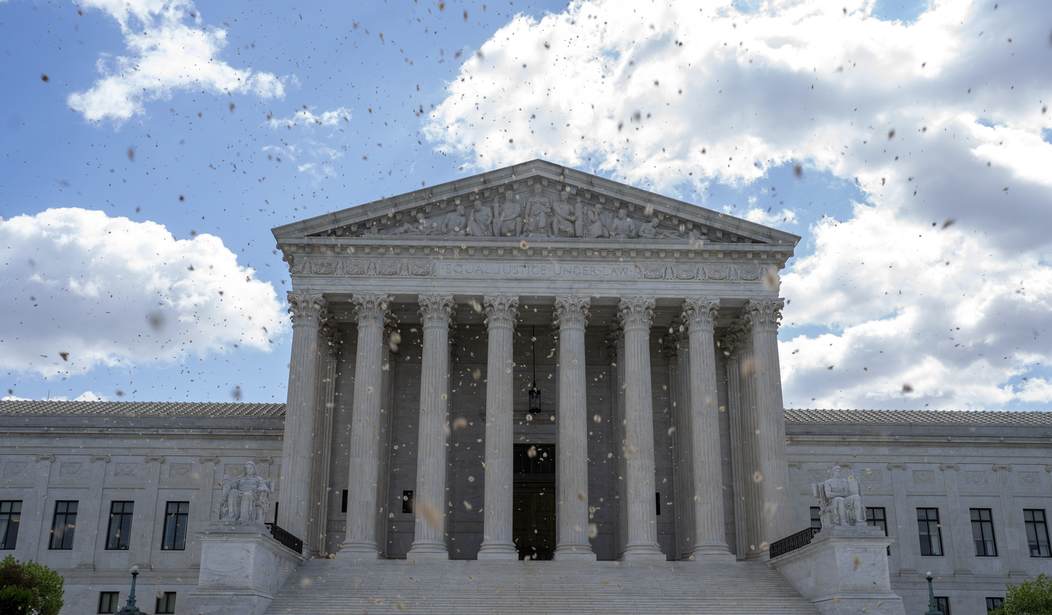
Yet another case of artistic freedom is arising out of Colorado. In this instance it's website designer Lorie Smith of 303 Creative. On Friday, Alliance Defending Freedom (ADF) petitioned the U.S. Supreme Court to take up her case after the U.S. Court of Appeals for the 10th Circuit ruled against her in a 2-1 decision.
Smith serves all people, including those who identify as LGBT, but she is against being compelled to create websites and graphics that would go against her religious beliefs, such as supporting a same-sex wedding. Further, she cannot even make clear on her website that she is only willing to create websites consistent with her beliefs.
In their petition to the Supreme Court, as well as in a Friday press release, ADF frequently references the dissenting opinion in that 10th Circuit decision, from Chief Judge Timothy Tymkovich. The judge called the decision "unprecedented" and "staggering" in scope.
Judge Tymkovich also said it was "remarkable" that the 10th Circuit took the "stance that the government may force [an artist] to produce messages that violate her conscience." And, while he was "loathe to reference Orwell, the majority’s opinion endorses substantial government interference in matters of speech, religion, and conscience."
A blog post by Sarah Kramer from the ADF website offers further information, which may sway the justices, specifically when it comes to conflicting court cases. Emphasis is original:
The question remains: Do creative professionals have the freedom to decide which messages they celebrate through their art?
So far, court decisions across the country have been mixed.
That’s why, after a truly puzzling decision from the U.S. Court of Appeals for the 10th Circuit , Lorie is asking the U.S. Supreme Court to weigh in. Today, ADF filed a petition with the Court asking it to hear Lorie’s case.
In July, the 10th Circuit ruled that Colorado’s law does, in fact, compel speech based on viewpoint. The court also admitted that the law creates a double standard: while religious artists are required to create messages celebrating same-sex marriage, secular artists have the freedom to decline to speak messages with which they disagree.
You would think this would be enough to strike down this law as unconstitutional.
But that’s not what happened.
Instead, the 10th Circuit ruled that the government can force Lorie to create and express messages and celebrate events that violate her faith. Essentially, the court ruled that the government can promote its favored ideology and force creative professionals to comply.
This directly conflicts with the 8th and 11th Circuits, as well as the Arizona Supreme Court , which have all ruled that the government may not force artists to speak in violation of their beliefs.
That’s why Lorie is asking the Supreme Court to sort this out.
ADF is petitioning the Court to answer questions such as "whether a public-accommodation law that authorizes secular but not religious exemptions is generally applicable," citing religious freedom cases such as Fulton v. City of Philadelphia and Employment Division v. Smith.
In 2016, ADF filed a lawsuit on Smith's behalf, challenging a Colorado law, their Anti-Discrimination Act. It's the same law that was used against another Colorado resident, Jack Phillips. Despite winning at the U.S. Supreme Court in a 7-2 decision in 2018 with Masterpiece Cakeshop, Ltd. v. Colorado Civil Rights Commission, Phillips is being sued by an activist attorney who insists that Phillips bake a cake celebrating a gender transition.
ADF Counsel Kristen Waggoner, who argued Phillips' case before the Supreme Court, is confident that the justices will take up the case to decide the issue.
"This case involves quintessential free speech and artistic freedom, which the 10th Circuit astonishingly and dangerously cast aside here,” she said during a Friday press call. "The government shouldn’t weaponize the law to force a web designer to speak messages that violate her beliefs."
Join the Conversation
VIP members get the ability to comment on articles.