



Continuing the energy talk from yesterday, check out these numbers. I wish I could take credit for this, but this piece was sent to my office this morning by the Office of the Republican Whip, Roy Blunt. This piece shows the differences between what Republicans would do to rein in gas prices on behalf of American energy consumers and what Democrats WILL NOT DO. The difference is becoming clearer and more pronounced by the day.
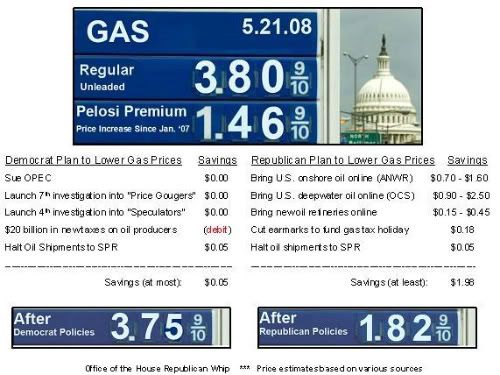
(Here are some details about the origin of the stats to compile this piece. Retail gasoline prices are the result of literally hundreds of factors, including crude oil supply, global demand, refinery capacity, regulation, taxes, weather, the value of the dollar, etc. Therefore it is impossible to say with certainty what one individual action will do to the overall price. However, based on what we know about the impact of crude oil supply and prices it is possible to develop some potential ranges of impact on gasoline prices for certain policy changes. For example, using the methodology employed by Speaker Pelosi and House Democrats that suspending shipments into the Strategic Petroleum Reserve (between 40-77,000 barrels of oil a day) would reduce gas prices by at least 5 cents, bringing ANWR online (at least one million barrels of oil a day) could impact gasoline prices by between 70 cents and $1.60.)














Join the conversation as a VIP Member