





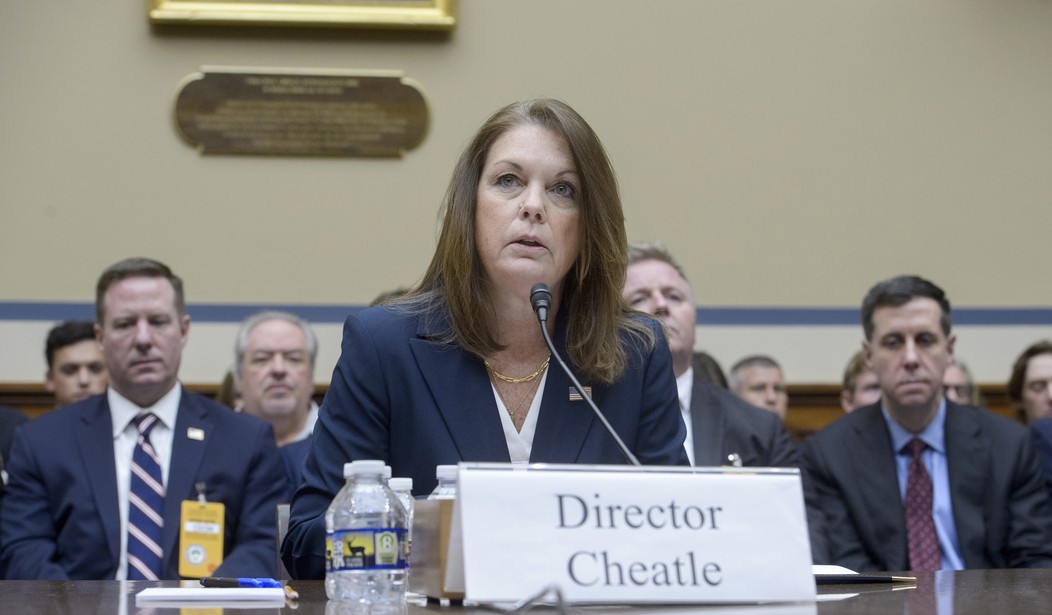
Sen. Ted Cruz (R-TX) and Rep. Darrell Issa (R-CA) want to know if there was a cover-up in the Biden White House’s cocaine-gate fiasco last July. This development comes as new allegations have resurfaced following the resignation of Secret Service Director Kimberly Cheatle following the Trump assassination attempt on July 13. There are allegations that Cheatle and other Secret Service officials pushed to have the cocaine destroyed. When that nudge was not heeded, there were reported retaliatory measures taken.
It's been reported that when a protectee’s detail finds illicit materials, they're disposed of. Yet, it was a uniformed officer who discovered the cocaine, with the initial concern that the powder was anthrax or some other agent, the officer sounded the alarm, bringing this circus to the media’s attention. The acting chief of the uniformed division was passed over for promotion in the wake of this event. Protocol from the evidence vault supervisor dictates that substances be preserved for at least several years. The probe into cocaine-gate barely lasted two weeks, with the agency essentially saying that it was too burdensome to get to the truth. The FBI didn’t lift fingerprints from the bag—there weren’t any—but DNA evidence was discovered, and a partial hit was found. That’s where the trail ends (via RealClearPolitics):
Sen. Ted Cruz and Rep. Darrell Issa are demanding answers from the Secret Service about a possible cover-up and a “troubling pattern of misconduct” surrounding the agency’s handling of cocaine discovered in the White House last summer.
The two Republican lawmakers, who serve in key Judiciary Committee roles in the Senate and the House, cited revelations from a RealClearPolitics article last week that former Secret Service Director Kimberly Cheatle and senior agency leaders sought to destroy the cocaine discovered in the White House last summer. Despite the push, leaders of the Forensics Services and the Uniformed Divisions rejected efforts to dispose of the evidence and presumably are keeping the bag of cocaine in a Secret Service evidence vault.
White and his supervisor, Glenn Dennis, as well as Richard Macauley, then-acting chief of the Uniformed Division, resisted pressure from Cheatle and others to destroy the evidence. Afterward, however, Macauley was passed over for the permanent position of Uniformed Division chief despite receiving agency accolades, RCP reported last week. The decision to bypass Macauley, a black man, raised eyebrows within the agency amid a Diversity, Equity and Inclusion push that Cheatle championed.
Cheatle chose a retired Secret Service top official to head the Uniformed Division instead of Macauley, raising concerns in the agency that passing over Macauley for the job was an act of retaliation. In 2018, Macauley was named the Secret Services Uniformed Division Officer of the Year. He would go on to serve one year, from February 2022 to January 2023, as deputy assistant sergeant at arms at the U.S. House of Representatives.
[…]
Those two agencies found that it was cocaine, not anthrax or another biothreat. While the FBI did not pick up fingerprints on the small bag of cocaine, it found some DNA material, according to three sources in the Secret Service community. The FBI also reportedly said the agency ran the DNA material against national criminal databases and “got a partial hit.”
The term “partial hit” is vague in this context, but in forensics lingo usually means that law enforcement found DNA matching a blood relative of a finite pool of people.
[…]
The two Republicans also asked Rowe and White to walk them through the “chain of custody” of the cocaine after it was discovered and to define what a “partial DNA hit” means in layman’s terms.
“Explain when the term is used and what it signifies, especially in comparison to a full DNA hit,” their letter says. “Did it reveal family members of the person who was in contact with the cocaine?”
The pair also questioned whether a Uniformed Division officer initially assigned to investigate the cocaine incident was removed from the job because he wanted to follow the normal investigative protocols, which led to disagreements with his supervisors, including Cheatle and Rowe.
[…]
Other questions Cruz and Issa asked include:
- What actions were taken to follow up on the DNA evidence found on the cocaine packaging? Were these actions consistent with standard investigative practices?
- Have any Secret Service employees reported concerns or misconduct related to this investigation? If so, what were these concerns and how were they addressed?
- What measures are being implemented to prevent similar issues in the future? Detail any changes to procedures or policies to ensure transparency and accountability.
Also, the fact that no surveillance footage could be used in this investigation is also suspect, given that this is arguably the most secure residence in the world. There are sensors and cameras everywhere, especially in the West Wing, where the cocaine was found, a stone’s throw away from the Situation Room.

Join the Conversation
VIP members get the ability to comment on articles.