





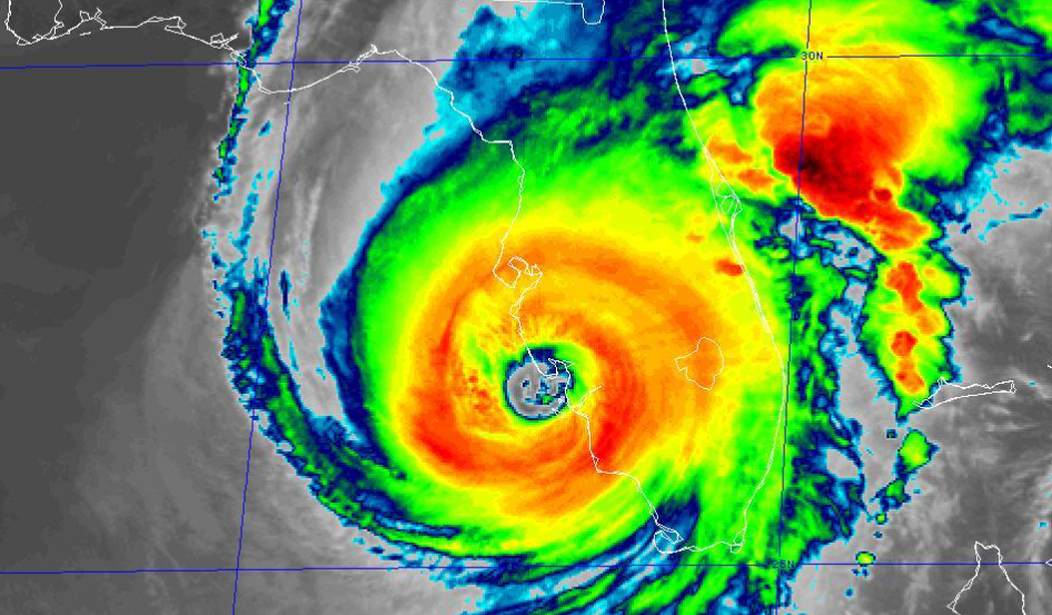
There are no solid reports regarding the total number of deaths from Hurricane Ian, which slammed into Florida this week, but it will be tragic, nonetheless. As of now, the soft count is at least nine. It won’t be like the aftermath of Hurricane Charley in 2004, which inflicted $16 billion in damages, leading to at least a dozen fatalities. Ian is going to be much more devastating.
Both Charley and Ian were category four storms when they made landfall, but the former was a smaller, faster-moving storm. Given its strength, Ian lumbered through, inflicting massive damage largely absent from Charley. Captiva and Sanibel islands got smashed, and the causeway to the latter was destroyed, which could cut its residents off from the mainland for weeks. The ferocious storm surge hit this area, only three feet above sea level, along with 120-plus mile-per-hour winds.
The aftermath of this storm is going to be “absolutely ugly.” The price tag for the damage is projected to be an estimated $40 billion, which comes off the heels of the Florida insurance market facing a deluge of lawsuits and pervasive roof-replacement fraud schemes (via Fox Business):
"While it's too early to tell what the damage projections will be, many of the insurance modelers are putting it at between $20 and $40 billion," Insurance Information Institute spokesperson Loretta Worters told FOX Business Thursday.
Hurricane Charley followed a similar path through Florida as Ian in 2004 and racked up $16 billion in property damage.
To date, the costliest storm has been Hurricane Katrina. Here are the top five:
Hurricane Katrina, 2005, $65 billion
Hurricane Ida, 2021, $36 billion
Hurricane Irma, 2017, $30.1 billion
Hurricane Harvey, 2017, $30 billion
Hurricane Sandy, 2012, $30 billion
No direct hits occurred in Florida over the past three hurricane seasons — until Ian.
Ian's arrival in Florida comes as the Sunshine State has seen turmoil in its insurance market due to a heavy number of lawsuits and fraudulent roof-replacement schemes.
According to the National Association of Insurance Commissioners (NAIC), Florida is the site of 79% of all homeowners insurance lawsuits over claims filed nationwide. However, Florida homeowners receive only 9% of all U.S. homeowners property insurance claims. Floridians For Lawsuit Reform estimates 130,000 property claim lawsuits will be filed in 2022, largely due to Florida’s favorable litigation environment.
If true, this will be the second costliest storm in US history, just behind Hurricane Katrina.



Join the Conversation
VIP members get the ability to comment on articles.