





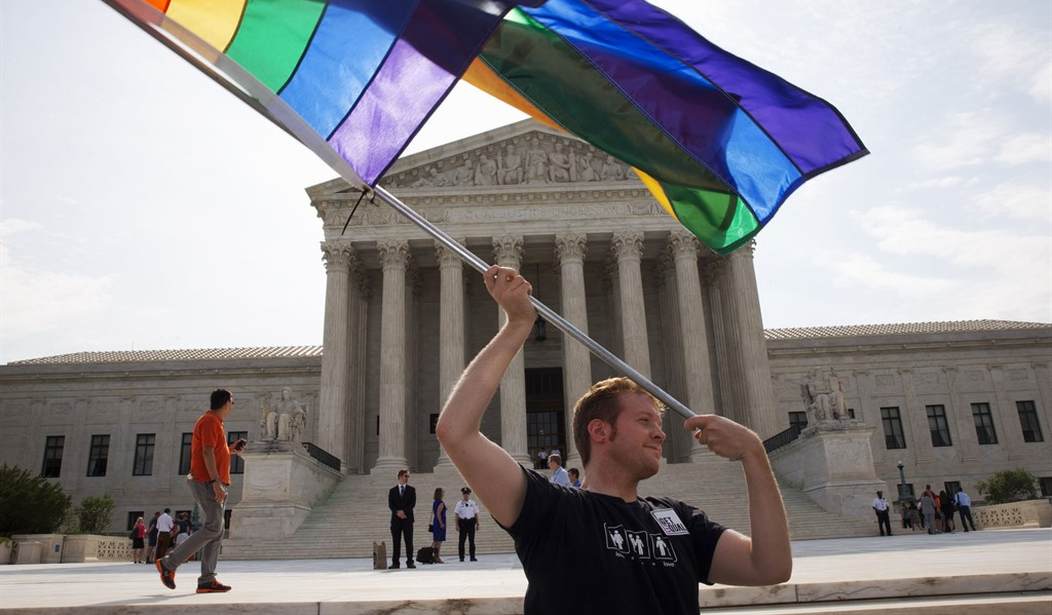
On Thursday, the Supreme Court of the United States (SCOTUS) handed down a decision surrounding a straight woman’s “reverse discrimination” case against her former employer.
The High Court ruled unanimously that the plaintiff, Marlean Ames, faced a higher hurdle to sue her former employer than if she’d been gay. The ruling states that members of a majority group do not need to show “background circumstances” in addition to normal requirements to prove a claim under Title VII of the Civil Rights Act of 1964, which protects Americans from employment discrimination based on race, religion, sex, national origin, etc.
SCOTUS rejected a lower court’s ruling that Ames could not sue the Ohio Department of Youth Services because she’d failed to provide “background circumstances” showing the department was discriminating “against the majority.”
Ames, who worked for Youth Services for 20 years, sued because she’d been passed over for promotions and demoted in favor of gay colleagues (via The Hill):
Ohio’s Department of Youth Services hired Ames in 2004 and a decade later promoted her to become administrator of the Prison Rape Elimination Act (PREA).
In 2019, she interviewed for another job at the department but was not hired. Her gay supervisor suggested she retire, and days later, Ames was demoted with a significant pay cut. A 25-year-old gay man was then promoted to become PREA administrator. And months later, the department chose a gay woman for the role Ames unsuccessfully applied for.
A three-judge 6th U.S. Circuit Court of Appeals panel agreed Ames would’ve prevailed if she was a gay woman. But they ruled against her since she didn’t meet the additional requirement as part of a minority group.
“We conclude that Title VII does not impose such a heightened standard on majority-group plaintiffs,” Justice Ketanji Brown Jackson wrote for the court. "And nothing Ohio has said, in its brief or at oral argument, persuades us otherwise."
Xiao Wang, the director of the University of Virginia’s Supreme Court Litigation Clinic who argued before the justices on Ames’s behalf, was happy with the court’s decision.
“I think that this has been a long process and ultimately a journey,” Wang said in an interview with The Hill. “We’re really happy the Supreme Court ruled in our favor.”
Editor's Note: Despite the woke ideology of the radical left, the Supreme Court has ruled discrimination against the majority is unconstitutional. Discrimination is discrimination. Plain and simple.
Support Townhall as we continue to report on SCOTUS and defend our rights. Join Townhall VIP and use promo code FIGHT to get 60% off your membership.


Join the Conversation
VIP members get the ability to comment on articles.