





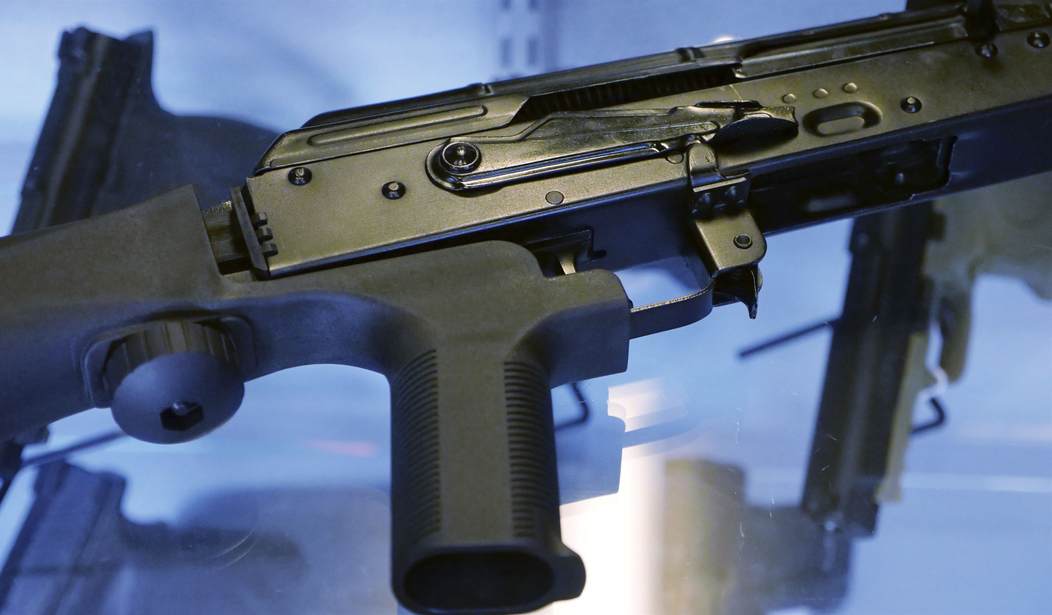
On Monday, the United States Supreme Court rejected a challenge to a federal ban on devices known as “bump stocks” that enable semi-automatic weapons to fire like machine guns, according to a report from Reuters.
The Supreme Court justices reportedly declined to review an appeal by a group of firearm dealers and individuals after a lower court rejected their argument that the bump stock ban violated the U.S. Constitution. The ban was first instituted during President Donald Trump’s term (via Reuters):
Trump's administration moved to reclassify bump stocks as machine guns, which are forbidden under U.S. law, in a rare firearms control measure prompted by a 2017 mass shooting in Las Vegas. The Supreme Court in 2019 declined to block the ban from going into effect. The justices last month rejected appeals by a Utah gun lobbyist and firearms rights groups of lower court rulings upholding the ban as a reasonable interpretation of a federal law prohibiting machine gun possession.
Bump stocks use a gun's recoil to bump its trigger, enabling a semiautomatic weapon to fire hundreds of rounds per minute to let it shoot like a machine gun. Trump pledged to ban them after a gunman used semiautomatic weapons outfitted with bump stocks in a shooting spree that killed 58 people at a country music festival in Las Vegas.
The Seattle Times noted that the Supreme Court rejected two other challenges involving the ban last month.
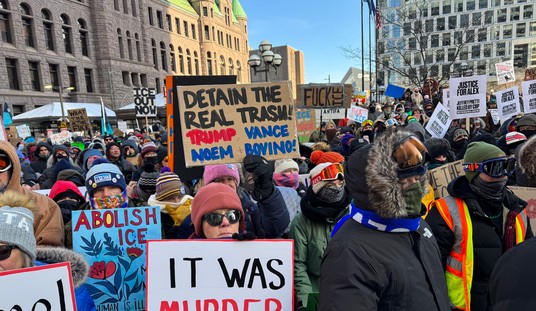
Over the summer, the Supreme Court justices struck down a New York gun law that required permit applicants to show “proper cause” for wanting to carry a firearm. Since then, lower courts have protected Second Amendment rights and cited the Court’s case that invalidated New York’s gun law.
Justice Clarence Thomas wrote the majority opinion in the case, New York State Rifle & Pistol Assn., Inc. v. Bruen, pointing out that the right to bear arms should not be subject to a different set of rules apart from the other rights detailed in the Bill of Rights:
The constitutional right to bear arms in public for self defense is not “a second-class right, subject to an entirely different body of rules than the other Bill of Rights guarantees.” We know of no other constitutional right that an individual may exercise only after demonstrating to government officers some special need. That is not how the First Amendment works when it comes to unpopular speech or the free exercise of religion. It is not how the Sixth Amendment works when it comes to a defendant’s right to confront the witnesses against him. And it is not how the Second Amendment works when it comes to public carry for self defense. New York’s proper-cause requirement violates the Fourteenth Amendment in that it prevents law-abiding citizens with ordinary self-defense needs from exercising their right to keep and bear arms. We therefore reverse the judgment of the Court of Appeals and remand the case for further proceedings consistent with this opinion.
After the ruling, a federal judge in Syracuse struck down key parts of a restrictive New York gun law that took effect in the wake of the Supreme Court's ruling. The law restricted who could carry a handgun in public, where handguns could be carried and where firearms could be purchased. The law explicitly prohibited guns in places deemed as "sensitive locations."
In addition, the Supreme Court vacated gun law in Massachusetts that imposed a lifetime ban on purchasing handguns for anyone convicted of nonviolent misdemeanors involving the possession of guns. The law included the need for a license to purchase or possess a pistol.






Join the conversation as a VIP Member