





On Wednesday, Instagram’s CEO, Adam Mosseri, clashed with senators in a congressional hearing over the social media platform’s dangers and negative impact on young users. The lawmakers also called for stricter government oversight of the social media platform, which is owned by Facebook.
In the hearing, held by the Senate Commerce Subcommittee on Consumer Protection, Product Safety, and Data Security, lawmakers pressed Mosseri on internal documents disclosed by the Wall Street Journal that showed that Instagram had a negative impact on the mental health of some teenagers. Specifically, the internal research showed that the app worsened body-image issues and escalated anxiety and depression in teen girls.
In the hearing, which lasted two-and-a-half hours, Sen. Mike Lee (R-UT) revealed that his office created a fake Instagram account posing as a 13-year-old girl. After the fictional “13-year-old-girl” followed a female celebrity, the content recommended by the app “went dark fast.”
“It changed and it went dark fast,” Lee said in the hearing, saying the app began suggesting content “that promotes body dysmorphia” and the “sexualization of women.”
As I covered in September, Instagram scrapped their widely-publicized project, “Instagram Kids” after the documents obtained by WSJ were disclosed. “Instagram Kids” was designed to combat the “problem seen across our industry: kids are getting phones younger and younger, misrepresenting their age, and downloading apps that are meant for those 13 or older.” Mosseri reiterated in the hearing that Instagram is only permitted for children 13 and over.
Tennessee Sen. Marsha Blackburn (R), ranking member of the subcommittee, said she felt “frustrated,” with Instagram, as parents “continue to hear from you [Instagram] that change is coming, that things [on Instagram] are going to be different.”
“Guess what? Nothing changes. Nothing,” she said.
Mosseri pushed back, saying that “we [parents and Instagram] have the same goal. We all want teens to be safe online.”
Sen. Amy Klobuchar (D-MN) responded, said that “we [parents and Instagram] are in diametrically opposed goals – the goals of parents out there and the goals of your company.”
Mosseri, who was a figurehead at Facebook until 2018, then told the lawmakers that “we [Instagram] do not want any content that promotes eating disorders on our platform. We do our best to remove it.” He also refuted claims that Instagram is “addictive.”
.@SenBlumenthal: "Instagram is addictive..."
— CSPAN (@cspan) December 8, 2021
Instagram CEO Adam @mosseri: "Respectfully, I don't believe the research suggests that our products are addictive..."
Blumenthal: "We can debate the meaning of the word addictive..." pic.twitter.com/a13lDrYIV7
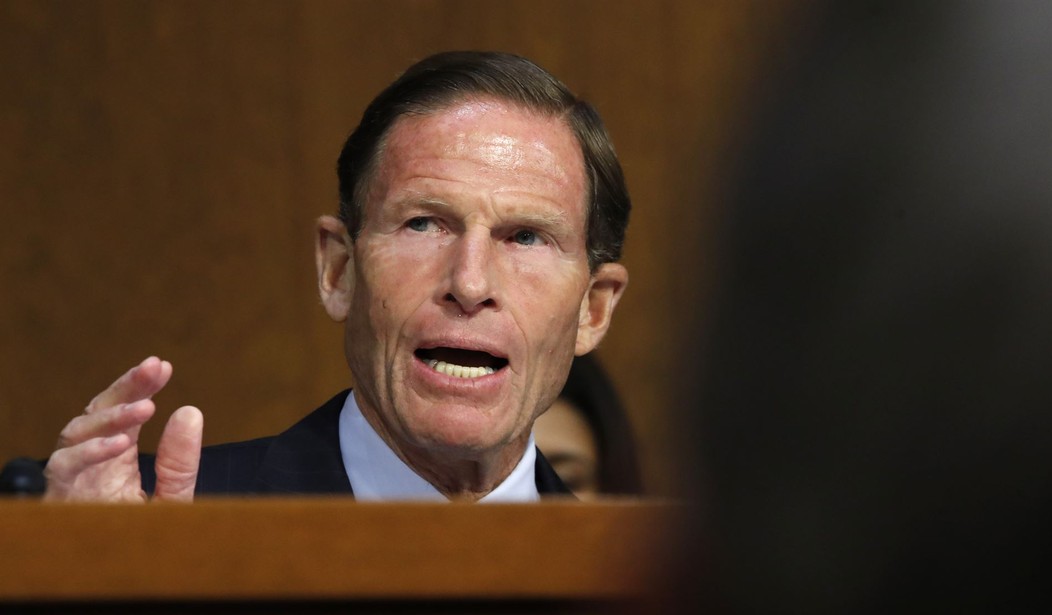
“The time for self-policing and self-regulation is over,” Democratic Sen. Richard Blumenthal (CT), subcommittee chair, said. During the hearing, he pointed out that he is working with Blackburn to create legislation to require social media platforms to share more social media algorithms and data sets.
“Self-policing depends on trust. Trust is gone,” Blumenthal added. “What we need now is independent researchers, objective, overseers – not chosen by Big Tech but from outside – and strong vigorous enforcement of standards that stop the destructive, toxic content that now too often is driven at kids.”


Join the Conversation
VIP members get the ability to comment on articles.