







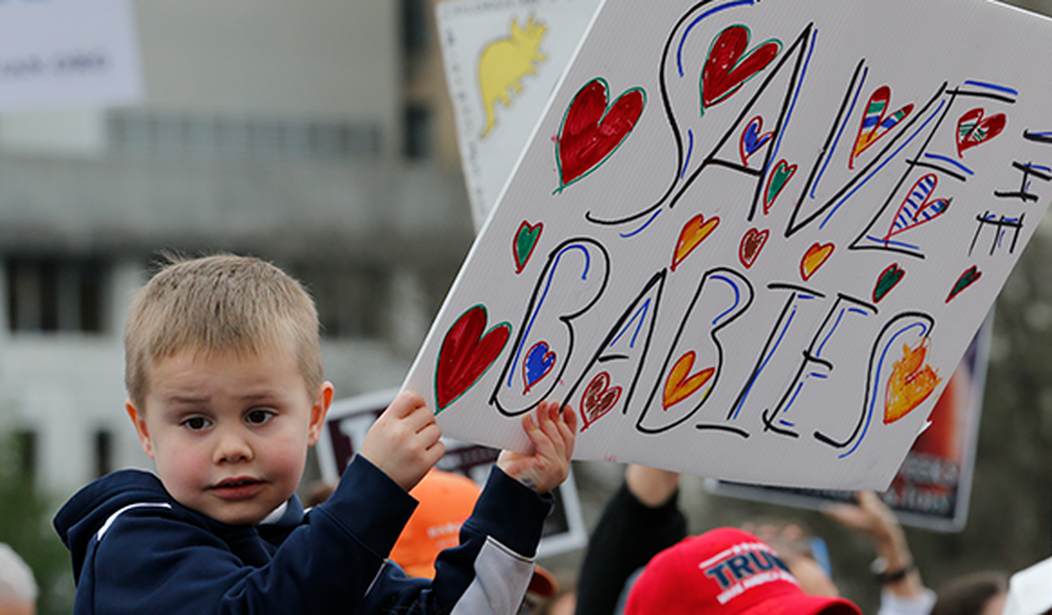
Legislation that protects the unborn by prohibiting abortion procedures after a fetal heartbeat is detected, known as the “heartbeat bill,” has become the law of the land in Texas after the United States Supreme Court kept mum despite requests from pro-abortion groups for the Court to block the law before it took effect.
The law, which was passed and subsequently signed by Gov. Greg Abbott on May 19, does not offer exceptions for women who become pregnant from incest or rape. The law bans abortions at approximately six weeks, as that is the general time frame when fetal heartbeat becomes detectable. This makes Texas’ new law one of the strictest statewide abortion laws in the country.
Additionally, the measure allows private citizens to pursue legal action against anyone who provides an abortion, helps someone access an abortion, or clinical staff who assist an abortion after the six-week threshold. There is one exception in the bill that allows for abortions later in pregnancy, strictly for “medical emergencies.”
In a filing with the Supreme Court, Texas officials responded to an emergency appeal requested by abortion providers and advocacy groups. Texas officials described their claims as “hyperbolic” and said “they have not shown that they will be personally harmed by a bill that may never be enforced against them by anyone.”
Pro-abortion advocates claim the bill takes aim at the landmark Supreme Court decision Roe v. Wade, jeopardizing their ability to carry out abortions nationwide. Critics of the law also say that women will seek late-term abortions out-of-state due to the strict legislation. Planned Parenthood, specifically, claimed that 85% of abortions occur in Texas after six weeks — meaning a significant majority of lives taken by Planned Parenthood abortions in Texas will no longer be permitted.
The Left's reaction has been apoplectic.
BREAKING: With no emergency action from SCOTUS to block the law yet, Texas’s radical 6 week abortion ban is now in effect. Know this: No matter what, we aren’t backing down and we are still fighting. Everyone deserves access to abortion. #BansOffOurBodies #SB8 #TXDeservesBetter
— Planned Parenthood (@PPFA) September 1, 2021
BREAKING: The Supreme Court has not responded to our emergency request to block Texas’ radical new 6-week abortion ban, SB8. The law now takes effect.
— ACLU (@ACLU) September 1, 2021
Access to almost all abortion has just been cut off for millions of people. The impact will be immediate and devastating.
Confusingly, Missouri Democrat Rep. Cori Bush tweeted her worries for "queer...folks" who she thinks will be "disproportionately harm[ed]" by the heartbeat law.
I’m thinking about the Black, brown, low-income, queer, and young folks in Texas. The folks this abortion health care ban will disproportionately harm.
— Cori Bush (@CoriBush) September 1, 2021
Wealthy white folks will have the means to access abortion care. Our communities won’t.
The Supreme Court refused to stop a Texas abortion law from going into effect. The law DIRECTLY VIOLATES the precedent of Roe v. Wade. SCOTUS just signaled state governments that they no longer need to obey Supreme Court precedent. What’s next Texas? Separate-but-equal schools?
— Glenn Kirschner (@glennkirschner2) September 1, 2021
Texas isn’t passing an abortion ban.
— Leah Torres, MD (@LeahNTorres) September 1, 2021
Texas is passing a reproductive coercion law.
Government sanctioned reproductive coercion. Different side of the forced sterilization coin.
This is fascism. This is eugenics. This is tyranny. This is the destruction of democracy in The USA.
Texas has banned abortion for millions of people, and the Supreme Court has done nothing to stop it — effectively overturning Roe v. Wade.
— Kathy Hochul (@GovKathyHochul) September 1, 2021
This is wrong and it won’t happen here in New York under my watch. We will continue to fight for the reproductive rights and health of all.
Pro-life proponents of the bill heralded the victory.
PRO-LIFE VICTORY!
— March for Life (@March_for_Life) September 1, 2021
Texas becomes the first state to implement a Fetal Heartbeat Law, saving thousands of unborn lives. https://t.co/KsKuTtXy6y
It's past midnight now in Texas. The Heartbeat Law has gone into effect. Every child with a detectable heartbeat is legally protected from being killed by abortion.
— Lila Rose (@LilaGraceRose) September 1, 2021
Thinking of all the inestimably precious lives that will be spared today & their new lease on life
An amazing day
An abortion-centered Supreme Court case, Dobbs v. Jackson Women’s Health Organization is supposed to be heard by the high court this fall. Dobbs could change the course of abortion access nationwide, potentially overturning previous Court-enacted policies like Roe v. Wade and Planned Parenthood v. Casey. As many states, like Texas, have taken action to implement restrictions on abortion, it could be historic to see how Dobbs unfolds.


Join the Conversation
VIP members get the ability to comment on articles.