





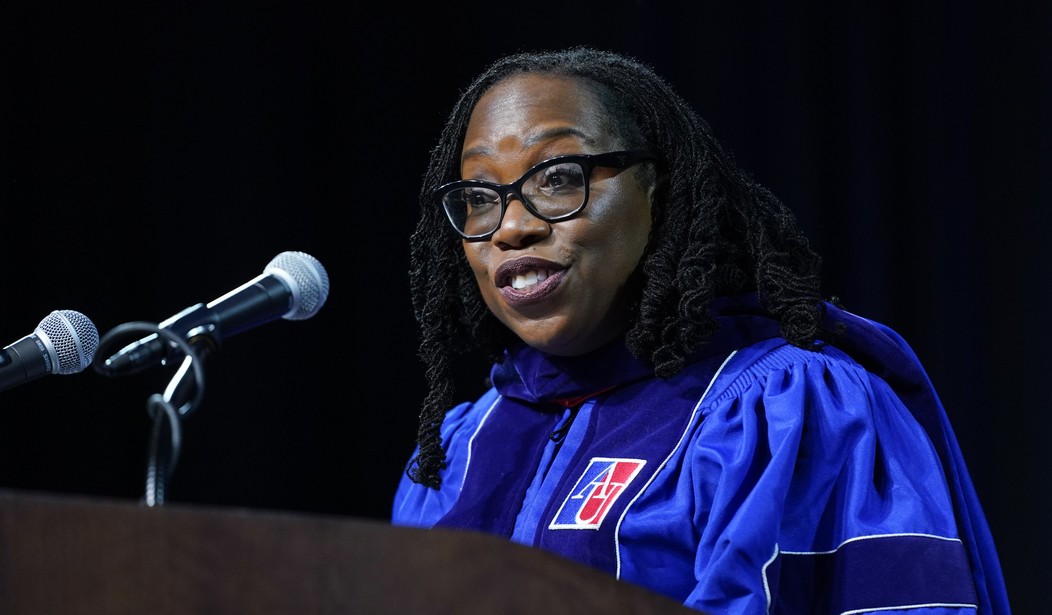
In her first interview since joining the High Court, Supreme Court Justice Ketanji Brown Jackson expressed her concern about the recent presidential immunity decision.
“I was concerned about a system that appeared to provide immunity for one individual under one set of circumstances, when we have a criminal justice system that had ordinarily treated everyone the same,” Jackson told CBS News’s Norah O’Donnell.
Justice Ketanji Brown Jackson appears surprised the Constitution deals with potential criminality by the president differently than ordinary American citizens:
— Tom Elliott (@tomselliott) August 28, 2024
"I was concerned about a system that appeared to provide immunity for one individual, under one set of circumstances,… pic.twitter.com/m6HEPXNyxs
The “one individual” is the leader of the free world, who cannot be hamstrung by rogue jackwagon prosecutors while dispatching official duties. Presidential immunity is a sound concept, of benefit to both parties. https://t.co/LkWP7VVXRk
— Mark Davis (@MarkDavis) August 28, 2024
The comments were made in response to a question about the court’s 6-3 decision handed down on July 1 granting broad immunity to former President Donald Trump.
“The President enjoys no immunity for his unofficial acts, and not everything the President does is official,” wrote Chief Justice John Roberts in the majority opinion. “The President is not above the law. But Congress may not criminalize the President’s conduct in carrying out the responsibilities of the Executive Branch under the Constitution. And the system of separated powers designed by the Framers has always demanded an energetic, independent Executive. The President therefore may not be prosecuted for exercising his core constitutional powers, and he is entitled, at a minimum, to a presumptive immunity from prosecution for all his official acts. That immunity applies equally to all occupants of the Oval Office, regardless of politics, policy, or party.”
In her dissent, Jackson claimed “the court has now declared for the first time in history that the most powerful official in the United States can (under circumstances yet to be fully determined) become a law unto himself.”
On Tuesday, Special Counsel Jack Smith filed a superseding indictment in the January 6 case against Trump, prompting critics to caution the justice against making "extrajudicial statements" in news interviews.
Dear Justice Ketanji Brown Jackson:
— 🇺🇸 Mike Davis 🇺🇸 (@mrddmia) August 28, 2024
This issue of presidential immunity is very likely to come back before the Supreme Court following Jack Smith's superseding indictment today.
You probably shouldn't make extrajudicial statements about it.
See Canon 4:https://t.co/KUOFqDY4jX https://t.co/12zb82mg8y
The interview with the justice comes ahead of the release of her new memoir, "Lovely One," next week.

Join the Conversation
VIP members get the ability to comment on articles.