
Less than one minute after federal law enforcement agents showed up at the front door of Bryan Malinowski’s home two months ago, the Little Rock airport director was fatally shot.
As his family’s attorney Bud Cummins explained to the Select Subcommittee on the Weaponization of the Federal Government on Wednesday, Malinowski was a collector of coins, cards, and other items. Six years ago, his father gave him his gun collection, sparking a new interest. On weekends, he would attend shows where he’d buy, sell, and trade them, which is legal without a federal firearms license if one is a collector or hobbyist, the attorney explained.
“At some point, the ATF suspected that Bryan Malinowski may have crossed a very murky line, and he was no longer a hobbyist. Because of that, ATF concluded he was required to buy a $200 FLL… before he sold any more guns,” Cummins said.
On March 19, ten carloads of agents with the Bureau of Alcohol, Tobacco, Firearms and Explosives showed up to execute a search warrant for “dealing with firearms without a license” and “unlawful acquisition of a firearm.”
At 6:02 a.m. that morning—more than an hour before sunrise—the heavily armed agents who arrived covered the doorbell camera. Cummins described the loud banging down of the door waking them up, so fearing for his wife’s safety, Malinowski grabbed a pistol and left the bedroom to see what was going on.
The attorney said it also appears ATF agents “killed electricity to the house,” making it difficult to see anything.
Presuming the agents to be home invaders, shots were fired. Malinowski was hit in the head, dying two days later, and an agent was injured.
“I would suggest that the tactics that were used in the Malinowski search would be incompetent and reckless if it was a very serious crime,” Cummins said. “It’s even much more offensive because this is not a serious crime that they suspected. It’s probably the lowest level crime that would even be drug into a United States attorney’s office.”
According to the warrant, ATF alleged that Malinowski sold 150 firearms between May 2021 and February 2024, six of which ended up being used in crimes.
The Biden ATF unnecessarily executed a search warrant in March 2024 and killed Arkansas firearm owner Bryan Malinowski.
— Weaponization Committee (@Weaponization) May 22, 2024
Bud Cummins represents Malinowki’s widow. Watch his powerful testimony detailing this horrific raid. pic.twitter.com/niUB5wc9qE
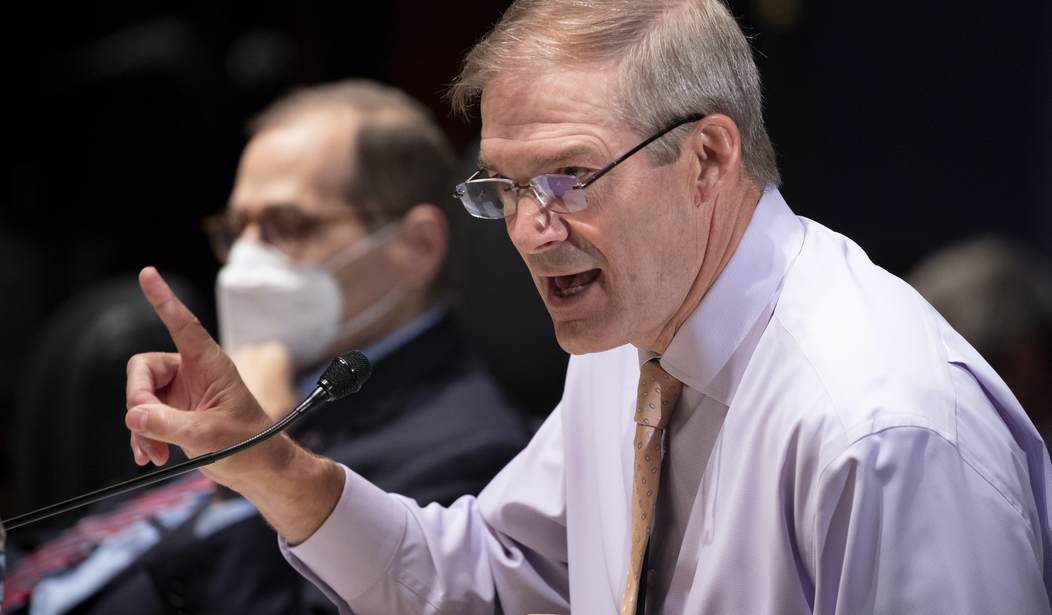
Chairman Jim Jordan (R-OH) wondered what the agents were trying to hide since none of them were wearing body cameras per ATF policy.
“This is the weaponization of government if I’ve ever seen it,” he said.
Attorney for Bryan Malinowski, a Little Rock airport exec who was killed in an ATF raid testified before the House Judiciary Committee.@Jim_Jordan: “Cover up the doorbell, no body-cams, what are they trying to hide?”pic.twitter.com/IAHuQypTsb
— Daily Caller (@DailyCaller) May 22, 2024
No warning, no body cams, no knock. @RepGregSteube exposes the failures and negligence of the Biden ATF in executing the warrant that ultimately led to the death of Bryan Malinowski. pic.twitter.com/BN7k179GtI
— Weaponization Committee (@Weaponization) May 22, 2024
“Somebody is dead because the ATF decided to execute a warrant in the most unprofessional, irresponsible, and dangerous way.”
— Weaponization Committee (@Weaponization) May 22, 2024
🎥 : @RepArmstrongND underscores the reckless actions by Biden’s ATF that needlessly took the life of Bryan Malinowski. pic.twitter.com/wZdytDV1VB
During a separate House Judiciary Committee hearing on Thursday, Jordan asked ATF Director Steven Dettelbach directly.
“Why did you put the tape on the doorbell camera? Why did you cut the lights? And why didn’t [the agents] wear the bodycams? And what are you trying to hide?”
"The reason that we called for the investigation is we’re not trying to hide anything. The reason I’m not going to talk about what’s going on in that investigation is to respect its independence," he responded. “Out of fairness, there’s a reason for the Department of Justice policy that’s existed for so many decades, about not commenting on pending matters."