


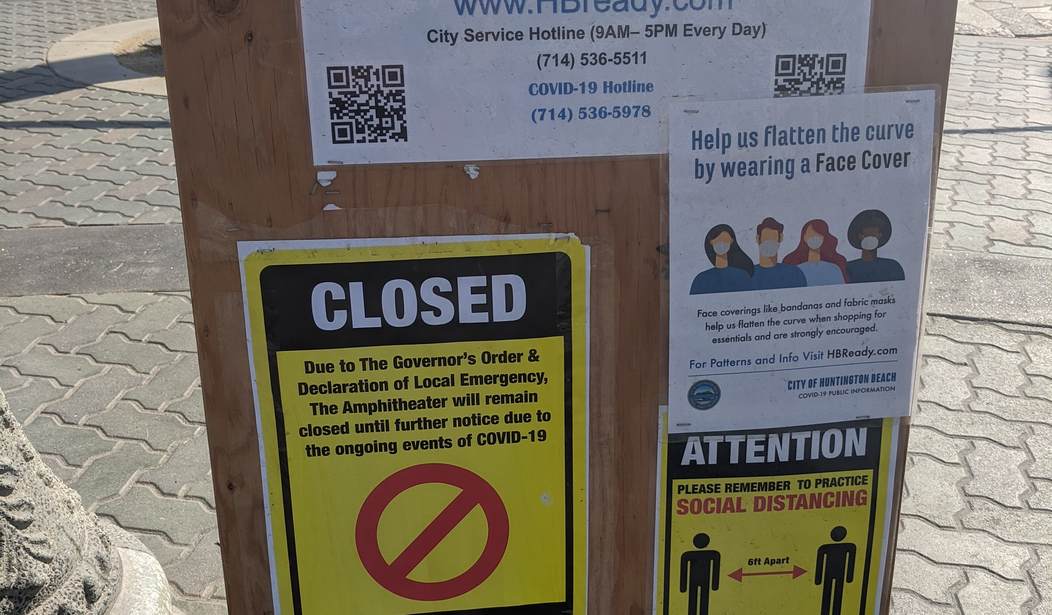
A Johns Hopkins University study found the original Covid-19 lockdown in the spring of 2020 had “little to no” effect on mortality.
The meta-analysis looked at interventions such as school and business closures, travel bans, and efforts to limit gatherings to determine if there is empirical evidence to support lockdowns.
According to the study, “lockdowns have had little to no effect on COVID-19 mortality,” and in the U.S. and Europe, “only reduced COVID-19 mortality by .2% on average.”
One intervention that had “some effect” in terms of reducing Covid-19 mortality by 10.6 percent was the closing of non-essential businesses, “which is likely to be related to the closure of bars," the three researchers from Denmark, Sweden, and the United States write.
What the lockdowns did do is have “enormous economic and social costs.”
Researchers also pointed out other unintended consequences of lockdowns, such as rising unemployment, reduced schooling, an increase in domestic violence incidents, and surging drug overdoses.
From May 2020 to April 2021, the U.S. recorded 100,306 drug overdose deaths, a 28.5% increase from the 78,056 deaths that were recorded in the previous 12-month period, according to CDC data.
A study from the National Commission on COVID-19 and Criminal Justice last year found that domestic violence incidents increased 8.1% in the U.S. after lockdown orders were issued.
About 97% of U.S. teachers said that their students have experienced learning loss during the coronavirus pandemic, according to a Horace Mann survey last year.
The unemployment rate peaked nationwide at 14.8% in April 2020, but declined to 3.9% in December, which is still slightly higher than the 3.5% rate it was at in February 2020. (Fox News)
Recommended
The researchers conclude that “lockdown policies are ill-founded and should be rejected as a pandemic policy instrument.”













Join the conversation as a VIP Member