





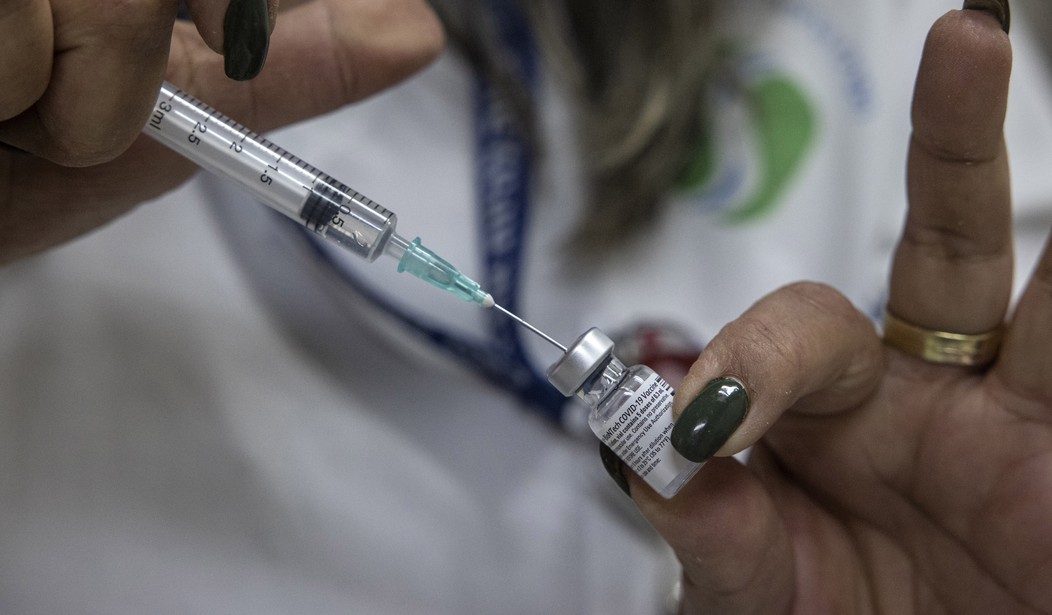
President Biden announced this week that booster shots will be available beginning in September and encouraged Americans to get another jab eight months after their second shot. “It will be easy,” he said.
But not all scientists believe that was the right call and are sounding the alarm about what they believe was a “rash” announcement “based on weak evidence,” reports Kaiser Health News.
For staters, it has completely changed the messaging on the efficacy of the vaccines.
“I think we’ve scared people,” said Dr. Paul Offit, director of the Vaccine Education Center at Children’s Hospital of Philadelphia and an advisor to the National Institutes of Health and the Food and Drug Administration.
“We sent a terrible message,” he said. “We just sent a message out there that people who consider themselves fully vaccinated were not fully vaccinated. And that’s the wrong message, because you are protected against serious illness.” […]
“Arguably, I think that the federal government is simply trying to stay ahead of the curve,” said Dr. Joshua Barocas, associate professor of medicine at the University of Colorado. But, he said, “I have not seen robust data yet to suggest that it is better to boost Americans who have gotten two vaccines than invest resources and time in getting unvaccinated people across the world vaccinated.” (KHN)
According to the Centers for Disease Control and Prevention, a little over half the U.S. population is fully vaccinated.
Some scientists also expressed concern about the perception of what the vaccines are meant to do.
“They’re not a force field. They don’t repel the virus from your body. They train your immune system to respond when you become infected … with the goal of keeping you out of the hospital,” Jennifer Nuzzo, an epidemiologist at the Johns Hopkins Bloomberg School of Public Health, told KHN.
“It’s like we’re engaged in friendly fire against these vaccines,” she added. “What are we trying to do here? Are we just trying to reduce overall transmission? Because there’s no evidence that this is going to do it.”
Plus, there is strong evidence that two doses are still highly effective.
New New England Journal of Medicine study: the vaccines are still extremely effective against covid-19 after two doses. pic.twitter.com/xruvu8gHLH
— Ben Shapiro (@benshapiro) August 20, 2021
Fauci highlighted data showing that antibody levels decline over time and that higher levels of antibodies are associated with higher vaccine efficacy. But antibodies are only one component of the body’s defense mechanisms against infection.
When the antibodies decrease, the body compensates with a cellular immune response. “A person who has lost antibodies isn’t necessarily completely susceptible to infection, because that person has T-cell immunity that we can’t measure easily,” said Dr. Cody Meissner, a specialist in pediatric infectious diseases who sits on the FDA’s vaccine advisory panel.
John Wherry, director of the Penn Institute of Immunology at the University of Pennsylvania, recently published a study finding that the two-dose vaccines provoked a strong response by the immune system’s T cells, which researchers said could be a more durable source of protection. Wherry is working on a second study based on six months of data.
“We’re seeing very good durability for at least some components of the non-antibody responses generated by the vaccines,” he said.
For protection against serious disease, “really all you need is immunological memory, and these vaccines induce immunological memory and immunological memory tends to be longer-lived,” Offit said. Federal scientists also are studying T-cell response, Fauci said. (KHN)
Additionally, the scientists told KHN the Biden administration jumped the gun on the announcement.
[Biden’s plan for boosters] does not yet have the blessing of a CDC advisory panel, and the FDA has not authorized boosters for all adults. […]
Typically, any distribution of shots would occur after the CDC’s Advisory Committee on Immunization Practices developed recommendations. But with the Biden administration’s announcement about boosters, public health experts worry the message suggests the outcome is preordained.
“They’ve left them no choice,” said Dr. Nicole Lurie, a former senior Health and Human Services official in the Obama administration and U.S. director of the Coalition for Epidemic Preparedness Innovations, the global epidemic vaccines partnership. “If there’s no booster program, FDA gets blamed, and that’s not appropriate.” (KHN)
Francis Collins, director of the National Institutes for Health, has argued "if you wait until you see real trouble starting, you've waited too long" and said they "want to be a step ahead of it."
Still, not all scientists are convinced.
Vincent Racaniello, a professor of microbiology and immunology at Columbia University, told The Washington Post the announcement “doesn’t make any sense to me at all.”
“I think it’s way premature because the science doesn’t say that we need to have a booster right now. It could be a year or two, depending on the data," he added.

Join the Conversation
VIP members get the ability to comment on articles.