







President Biden wants a $2.3 trillion “infrastructure” plan but less than 6 percent of that would actually go toward infrastructure in the traditional sense of the word. While Republicans have been vocal about the bill’s reality, they got an unlikely ally in spreading the message that the plan is nothing more than a Democrat spending wishlist.
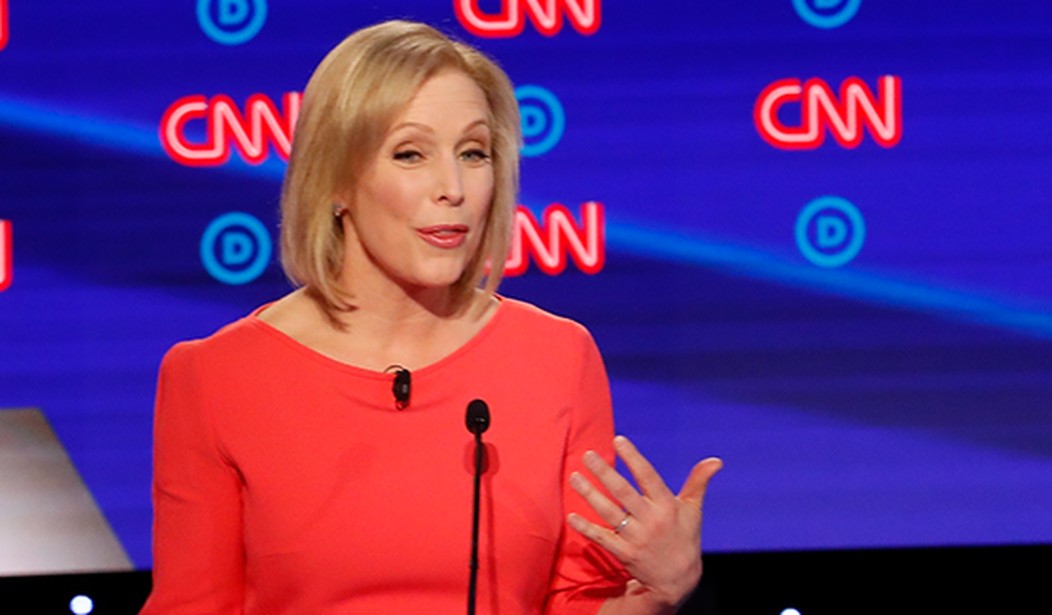
On Wednesday, Sen. Kirsten Gillibrand tweeted: "Paid leave is infrastructure. Child care is infrastructure. Caregiving is infrastructure."
Paid leave is infrastructure.
— Kirsten Gillibrand (@SenGillibrand) April 7, 2021
Child care is infrastructure.
Caregiving is infrastructure.
Critics on Twitter mercilessly mocked the senator over the tweet.
LOL. You can't just change the meaning of words because you want to. pic.twitter.com/2VGHYPP9Jk
— Lee C Eldridge (@LeeCEldridge) April 7, 2021
Sleeping with individuals other than one's spouse is monogamy.
— Gad Saad (@GadSaad) April 7, 2021
Sleeping with men when you are a man is heterosexuality.
A penis is a type of vagina.
Pregnancy is virginity.
Virginity is promiscuity.
Language can be so liberating when we are unshackled by shared semantics.
Unicorns are infrastructure.
— Ben Shapiro (@benshapiro) April 7, 2021
Love is infrastructure.
Herpes is infrastructure.
Everything is infrastructure. https://t.co/GhEVac1rzM
Bacon is infrastructure. https://t.co/ciB4UOPPW6
— Retired Orrin G. Hatch (@RetiredOrrin) April 8, 2021
We are all infrastructure now. https://t.co/nA7NwSYCeU
— Justin Amash (@justinamash) April 7, 2021
Protecting Cuomo is infrastructure?? https://t.co/EBYVfHTXf5
— New York GOP (@NewYorkGOP) April 7, 2021
Abortion is infrastructure.
— Ted Cruz (@tedcruz) April 7, 2021
Gun control is infrastructure.
Forced unionization is infrastructure.
Whatever the Left wants is infrastructure.
You know what’s not? Roads & bridges.
ONLY 5% OF BIDEN’s “INFRASTRUCTURE” BILL IS ROADS & BRIDGES. ???? https://t.co/jgP3ZEwGCy
So what ISN'T infrastructure? https://t.co/jfbnsCbP0F
— Governor Kristi Noem (@govkristinoem) April 7, 2021
No, Senator.
— Keith Olbermann (@KeithOlbermann) April 7, 2021
These are all vital needs. I would argue they are as important as nuts and bolts and grids and networks.
But when you drain a word of it’s meaning, you damage its impact, your cause, and the value of language. https://t.co/s3IGyzHKXr
Republicans like Senate Minority Leader Mitch McConnell have been blasting the "infrastructure' plan, arguing it's a Trojan horse hiding huge tax hikes on the American people. “It’s called infrastructure, but inside the Trojan horse it’s going to be more borrowed money, and massive tax increases on all the productive parts of our economy," he said last month.
“Repairing roads, bridges, and highways is more the talking point than the actual point of the President’s plan," House Budget Committee Republican Leader Jason Smith said in a press release.
Only 9% of the Democrats' "COVID relief" bill actually went towards COVID relief. Now, less than 6% of their "infrastructure" bill goes toward actual infrastructure. They're using this to pass far-left agenda items at Americans' expense. Read more here: https://t.co/9aobHaIqrU
— Gary Palmer (@USRepGaryPalmer) April 7, 2021
-Less than 6 percent ($115 billion) for roads and bridges
-43 percent more is spent on mass transit and rail ($165 billion) than for roads and bridges
-Less than 2 percent ($42 billion) for waterways, locks, dams, ports, and airports
-Less than 5 percent ($100 billion) for broadband
-74 percent more is spent on subsidies for electric vehicles ($174 billion) than for broadband.
-Meanwhile, most of the bill consists of non-infrastructure provisions such as:
-$400 billion for expansion of Medicaid
-$213 billion for housing and to increase federal control of local housing markets
-$100 billion of additional funding for schools without requiring them to reopen
-$50 billion for a new office at the U.S. Department of Commerce
-$35 billion for climate science, innovation, and R&D
-$10 billion for a new “Civilian Climate Corps”
-Overturns right-to-work laws in 27 states



Join the Conversation
VIP members get the ability to comment on articles.