





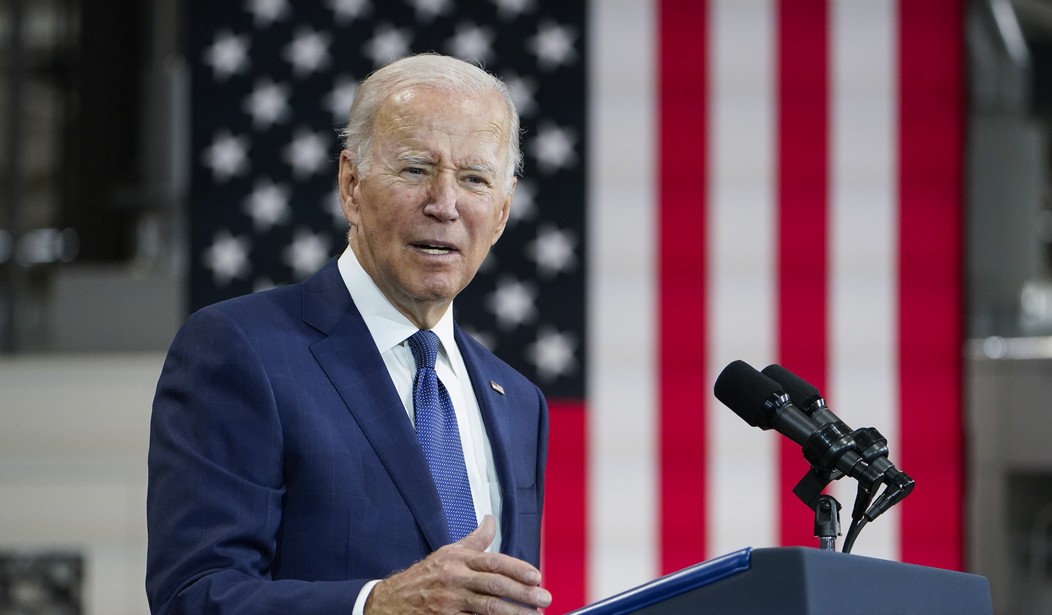
During the 2020 presidential election, President Joe Biden vowed to end fossil fuels. Upon his entry to the Oval Office on January 20, 2021, Biden swiftly started delivering on his promise by ending construction on the Keystone XL pipeline and declaring a forced "transition" to unreliable alternative energy.
Biden promised to “transition away from the oil industry,” and on his first day as president he blocked the Keystone XL pipeline & started rejecting all permits to drill for oil on federal land.
— David Hamilton, FBISD School Board Trustee (@Hamilton4TX) October 20, 2022
The pain at the pump & rampant inflation are direct results of his war on U.S. oil. pic.twitter.com/PHwILzK5lo
But during the White House briefing Wednesday, Press Secretary Karine Jean Pierre was asked whether the administration plans to implement a ban on petroleum products. She confirmed the idea is under consideration.
"How serious is the administration considering a ban on U.S. petroleum products?" a reporter asked.
"Everything is on the table. I don't have anything right now to preview," Jean-Pierre said. "Clearly, our focus today is to make sure that we deliver on the President's promises to continue to lower gas prices for the American people."
Reporter: "How seriously is the admin considering a ban on U.S. Petroleum products?"
— Greg Price (@greg_price11) October 19, 2022
Jean-Pierre: "Everything is on the table." pic.twitter.com/RsDUOdqvMS
This type of ban would eliminate the vast majority of goods and services in the United States.
Petroleum products include transportation fuels, fuel oils for heating and electricity generation, asphalt and road oil, and feedstocks for making the chemicals, plastics, and synthetic materials that are in nearly everything we use. Of the approximately 7.21 billion barrels of total U.S. petroleum consumption in 2016, 47% was motor gasoline (includes ethanol), 20% was distillate fuel (heating oil and diesel fuel), and 8% was jet fuel.


Join the Conversation
VIP members get the ability to comment on articles.