





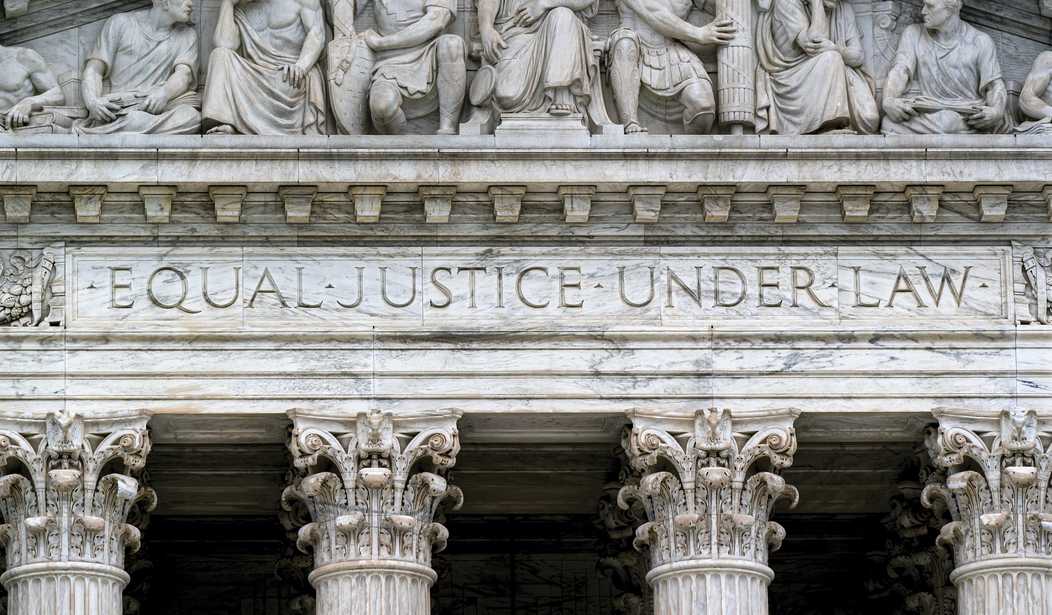
The Supreme Court ruled 6-3 Tuesday morning that government tuition assistance programs cannot discriminate against religious schools. The opinion is from Carson v. Makin, a case out of Maine.
"Maine has enacted a program of tuition assistance for parents who live in school districts that do not operate a secondary school of their own. Under the program, parents designate the secondary school they would like their child to attend—public or private—and the school district transmits payments to that school to help defray the costs of tuition. Most private schools are eligible to receive the payments, so long as they are 'nonsectarian,'" the majority opinion, written by Chief Justice John Roberts, states. "The question presented is whether this restriction violates the Free Exercise Clause of the First Amendment."
"The Free Exercise Clause of the First Amendment protects against 'indirect coercion or penalties on the free exercise of religion, not just outright prohibitions,'" the opinion states. "A State’s antiestablishment interest does not justify enactments that exclude some members of the community from an otherwise generally available public benefit because of their religious exercise."
The Supreme Court STRIKES DOWN a Maine education program that provides tuition assistance for students to attend some private schools but excludes schools that provide religious instruction. SCOTUS says the exclusion of religious schools is unconstitutional.
— SCOTUSblog (@SCOTUSblog) June 21, 2022
Recommended
The ruling is being celebrated as a win for school choice.
New SCOTUS ruling is a win for school choice! https://t.co/t72VTZws09
— Beth Van Duyne (@Bethvanduyne) June 21, 2022
A huge decision.
— Mr. 'Murica (@MrBeardedTruth) June 21, 2022
Let's start funding students, not systems! https://t.co/7Ll9PIQ6Ff
BREAKING: U.S. Supreme Court just ruled in a 6-3 decision that preventing school choice families from taking their children's taxpayer-funded education dollars to religious private schools violated the Free Exercise Clause of the 1st Amendment.
— Corey A. DeAngelis (@DeAngelisCorey) June 21, 2022
This is huge! https://t.co/RiUXClbnJe
— Luke Macias (@lukemaciastx) June 21, 2022







Join the conversation as a VIP Member