





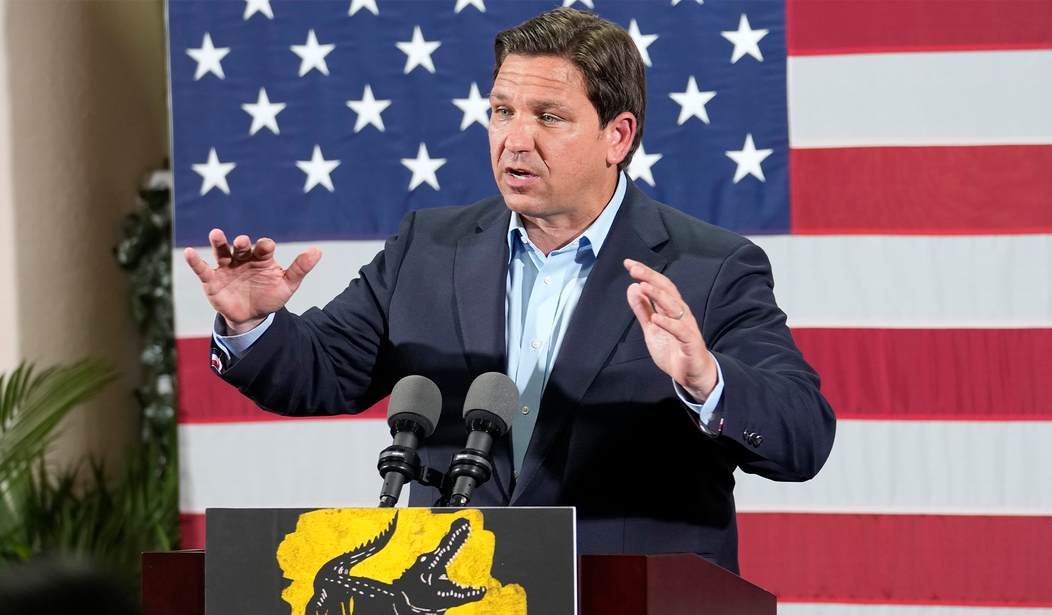
HIALEAH GARDENS, Fla. — Governor Ron DeSantis (R) hosted a roundtable on Tuesday to discuss what can be done when the mainstream media slanders the average American at a time when trust in the institution is at an all-time low.
The liberal biases of the mainstream media are well-known, but what often lacks from the conversation is what can be done about it to hold them accountable when they produce defamatory stories. DeSantis noted he has a lager platform to push back against shoddy journalism but the regular Floridian does not.
"We’ve seen over the last generation legacy media outlets increasingly divorce themselves from the truth and instead try to elevate preferred narratives and partisan activism over reporting the facts," said DeSantis. "When the media attacks me, I have a platform to fight back. When they attack everyday citizens, these individuals don’t have the adequate recourses to fight back. In Florida, we want to stand up for the little guy against these massive media conglomerates."
Participants included Nick Sandmann, who was made famous by the media after they accused him of racism during a March for Life, and former Secretary of the Board of the Virginia Citizens Defense League Dennis O’Connor.
Attorneys Devin Freedman and Libby Locke, both of whom have clients suing CNN for defamation, said due to how judges and the standard for lawsuits against the press are high due to the First Amendment, lawsuits are costly and can take a long time.
Freedman said in his client's case, they discovered CNN has retention policy for materials relating to their stories for 60 days, so if you do not sue right away, important documentation that could be used for a lawsuit can be gone.
Recommended

"One of the things that would help us in this space, is potentially legislation that would require them to keep this documentation for a specific period of time so that when they come out and they say these things that are alleged to be defamatory, we can prove our cases," Freedman explained.
Governor DeSantis' proposal for improving ethics in media: "When you smear somebody, you know it's false, and you didn't do your homework, you're gonna have to be held accountable for that" with a private right of action. pic.twitter.com/ZYoH3zpEab
— DeSantis War Room 🐊 (@DeSantisWarRoom) February 7, 2023
There was also discussion on having the Supreme Court relitigate New York Times v. Sullivan since the 1964 ruling added the need to prove publication created malicious material deliberately in order to be found guilty of libel. The attorneys said proving malice is extremely difficult.
In the meantime, states could craft laws that would both avoid being brought to court for going against New York Times v. Sullivan while creating specific statutes that are not solely aim at the media, but slander in general, to bring the issue to the Supreme Court.









Join the conversation as a VIP Member