







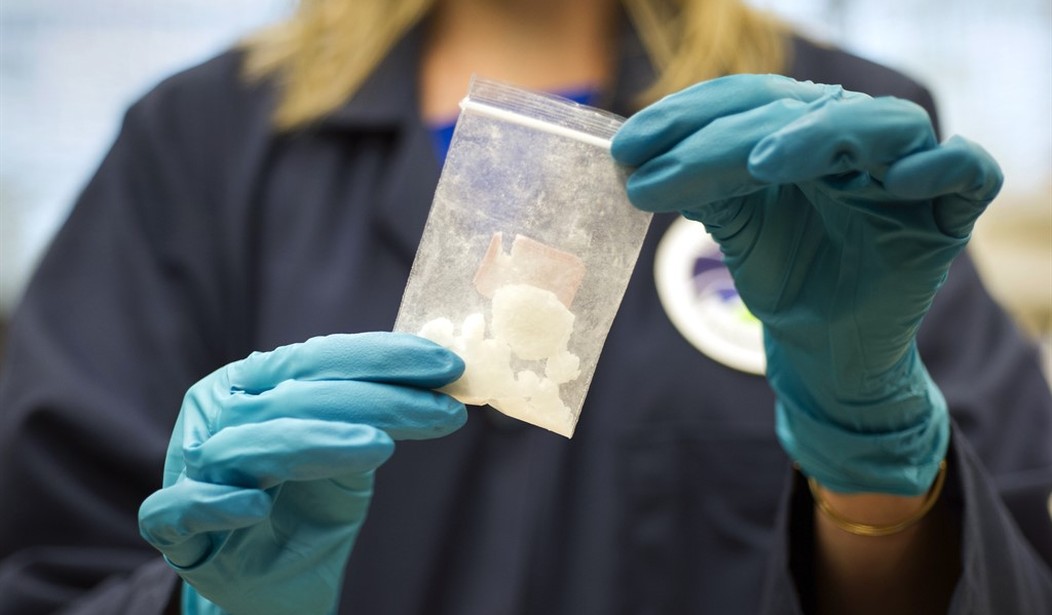
House Democrats on Wednesday blocked consideration of H.R. 6184, also called the Halt All Lethal Trafficking of Fentanyl Act, which was offered by Reps. Morgan Griffith (R-VA) and Kat Cammack (R-FL).
The bill would have permanently placed fentanyl-related substances into Schedule I of the Controlled Substances Act, making it illegal to sell the molecularly-altered fentanyl substance manufactured by criminals, instead of its normal classification as a Schedule II under the U.S. Drug Enforcement Administration.
Schedule I drugs, substances, or chemicals are "defined as drugs with no currently accepted medical use and a high potential for abuse." The emergency class-wide scheduling order for fentanyl-related substances is set to expire on February 18. Fentanyl and related drugs, trafficked through the U.S.-Mexico border, are currently the leading cause of drug overdose deaths in the United States. Mexican drug cartels, using substances imported from China, have largely switched over to producing and trafficking fentanyl because it is not limited to a growing season and it is easier to smuggle through the ports of entry and between the ports of entry along the southern border.
Griffith's bill would have granted researchers the ability to conduct studies on these substances.
"We recently learned from the CDC that between May 2020 and April 2021 more than a hundred thousand overdose deaths occurred in the United States – an increase of nearly 30 percent over the previous year...Because fentanyl has a proven medical use, it is considered a Schedule II narcotic, but elicit derivations of fentanyl, also called fentanyl-analogs or fentanyl-related substances, do not tend to demonstrate medical value," said Griffith.
FLOOR ALERT: @HouseDemocrats blocked @HouseGOP requests to consider @RepMGriffith's bill to keep fentanyl a controlled substance, a critical tool to stop illegal trafficking of fentanyl across Biden's open border & keep these deadly substances from claiming more American lives. pic.twitter.com/UcD3ETqbop
— House Rules Republicans (@RulesReps) February 2, 2022
In the first three months of fiscal year 2022, U.S. Customs and Border Protection (CBP) seized more than 2,700 pounds of fentanyl, almost more than was seized in all of fiscal year 2019, 2,804 pounds. During fiscal year 2021, which was marked by the ongoing border crisis, CBP seized a record-breaking 11,201 pounds of fentanyl.
Brandon Judd, president of the National Border Patrol Council, testified to members of Congress on Tuesday that due to Border Patrol agents being bogged down with processing family units and children who willingly give themselves up, they are unable to arrest the drug smugglers who are bringing in fentanyl between the ports of entry.



Join the Conversation
VIP members get the ability to comment on articles.