





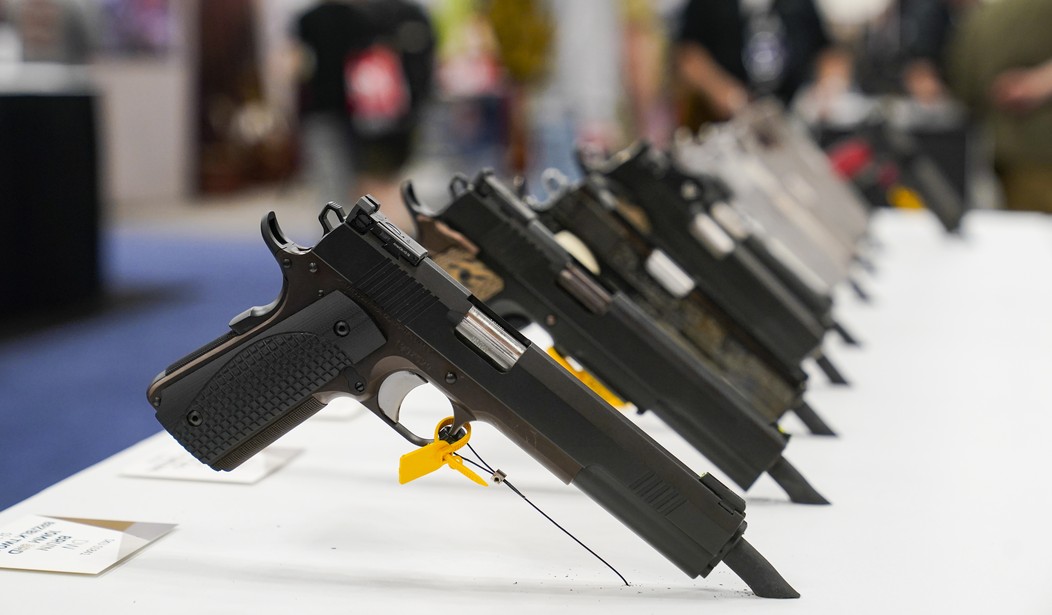
The Supreme Court will consider hearing a gun control case related to a federal ban on firearm possession by marijuana users.
The high court is reportedly expected to have a private discussion on whether it will take up the case of US v. Cooper on September 29. The law has been roundly criticized by gun rights advocates who argue that it is a violation of the Second Amendment.
The case centers on LaVance LeMarr Cooper, who was prosecuted for owning a firearm as a marijuana user, which made him a “prohibited person” under 18 U.S.C. § 922(g)(3), a federal criminal statute that bars certain people from owning firearms or ammunition.
This subsection targets those who unlawfully use controlled substances.
A police officer pulled Cooper over in Iowa during a traffic stop. They found a loaded Glock 20 in his vehicle. He did not have any felony convictions, but did have a misdemeanor conviction in 1996 for driving with a suspended license and marijuana possession.
Cooper later admitted to smoking marijuana on a regular basis — about three to four times per week. Prosecutors charged him with violating the federal statute. He waived his right to a jury trial and consented to a bench trial. This means he did not dispute that he owned a firearm while being a marijuana user.
The district court found him guilty on both counts and sentences him to over three years in prison for the offenses — even though he was not intoxicated at the time of the traffic stop.
The Eighth Circuit Court of Appeals in February vacated Cooper’s convicted and remanded the case. The panel rules that the lower court failed to properly apply the Supreme Court’s ruling in New York Rifle & Pistol Association v. Bruen in Cooper’s case.
The Bruen ruling mandates that all current and future gun control laws must be similar to restrictions enacted during the Founding Era.
The government argued that the court cannot excuse an individual who violates the statute, which applies to any drug user regardless of whether they pose an actual threat to public safety. The state further insisted that the statute aligns with historical traditions of disarming potentially dangerous people, such as “common drunkards” or those who are mentally ill and are dangerous.
The court rejected the notion that blanket bans on marijuana users are constitutional. Instead, it ruled that these cases should be taken on a case-by-case basis. “Keeping firearms out of the hands of drug users does not always violate the Second Amendment—but it can, depending on the individual,” the panel explained.
The “common drunkards” law was originally applied to militia members who were on duty. It did not apply to civilians. It addressed those found drunk “when under arms” during military exercises, guard duty, or other militia functions. Even in these cases, the individual was only disarmed and confined while they were actively intoxicated.
When the person sobered up, they were no longer confined, and they were allowed to have their guns.
The Fifth Circuit ruled in another case that sober, habitual marijuana users cannot be disarmed for past use and also acknowledged that the statute does not pass the Bruen test. Other courts in Alabama, Mississippi, Oklahoma, and Texas have issued similar decisions.
The Justice Department is actively defending the statute despite the Bruen ruling and his currently battling legal challenges in multiple states. The agency argues that those who habitually use marijuana and other drugs pose a heightened risk to public safety. It insists that Bruen still allows the government to disarm people who are “dangerous or irresponsible,” applying this label to anyone who uses drugs.
I hope the Supreme Court does decide to take up this case. The federal statute barring gun ownership among marijuana users clearly does not pass the Bruen test. The vast majority of marijuana users are not committing gun crime — a reality that anti-gunners won’t acknowledge.
Barring these individuals from exercising their right to keep and bear arms is as irrational as banning firearms because some people use them to commit crimes. The truth is that the Second Amendment says this right “shall not be infringed.” It does not say “shall not be infringed unless you like to light up a joint every now and again.”
Editor’s Note: The radical left will stop at nothing to enact their radical gun control agenda and strip us of our Second Amendment rights.
Help us continue to report on and expose the Democrats’ gun control policies and schemes. Join Townhall's VIP program and use promo code FIGHT to get 60% off your VIP membership.

Join the Conversation
VIP members get the ability to comment on articles.