





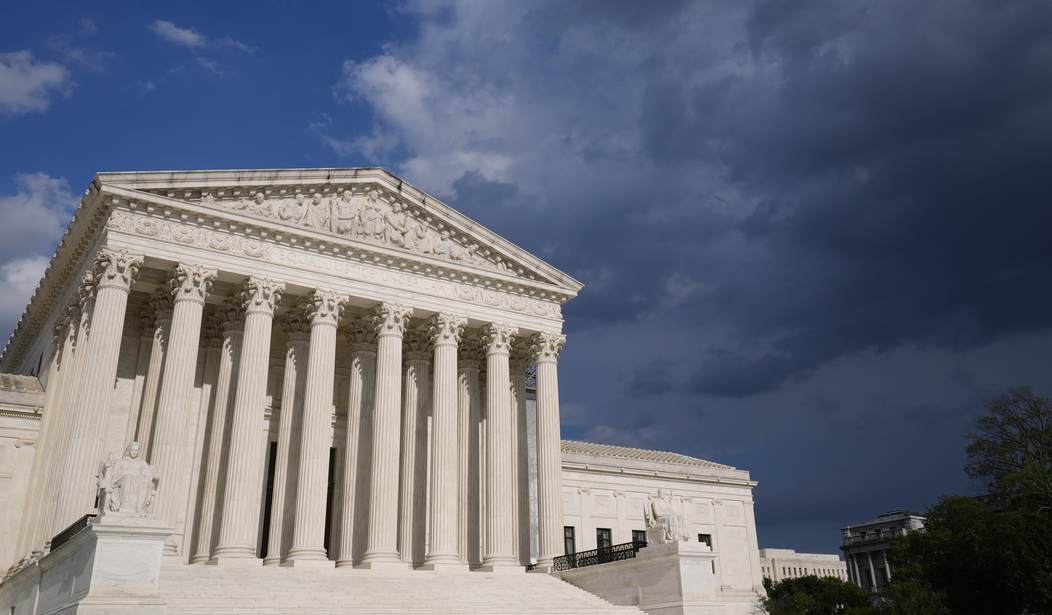
The Supreme Court on Thursday ruled in favor of the family of Ashtian Barnes, who was fatally shot by Houston Police officer Roberto Felix in 2016, meaning the family’s lawsuit will be allowed to proceed.
The shooting occurred after Felix pulled Barnes over during a traffic stop. He was driving a rental car that had been flagged for unpaid toll violations. Barnes had not incurred the tolls.
The officer claimed he smelled marijuana after asking for Barnes’ license and insurance. However, investigators found no drugs in the vehicle or on the suspect’s person. The vehicle began to slowly move forward, at which point the officer jumped onto the car’s door sill and fired two shots into the vehicle, killing Barnes. The family filed a civil rights lawsuit against the officer and Harris County, alleging excessive force and violations of the victim’s Fourth Amendment rights.
Lower courts ruled that the officer’s actions were justified because he was allegedly in danger. However, the Supreme Court vacated the ruling, ruling that courts must consider the totality of the circumstances surrounding a shooting instead of just the final seconds before an officer uses deadly force.
In its ruling, the Supreme Court targeted the Fifth Circuit’s “moment-of-threat” doctrine, which instructed lower courts to determine whether a police officer was in danger at the precise second deadly force was used. It means courts did not take into account actions officers may have taken leading up to the shooting that could have exacerbated the situation.
In this case, the Supreme Court decided that the lower court’s fixation on the two seconds before the shooting violated Fourth Amendment jurisprudence.
“The problem with the statement is apparent,” the Court wrote. “As we have explained, a court cannot thus ‘narrow’ the totality-of-the-circumstances inquiry, to focus on only a single moment.”
The Supreme Court argued that lower courts should look beyond “a two-second snippet of the encounter” and look at the full context of the officer and suspect’s actions.
By limiting their view to the two seconds before the shooting, the lower courts could not take into account anything preceding that final moment. So, for example, they could not consider the reasons for the stop or the earlier interactions between the suspect and officer.
The justices unanimously affirmed that the proper way to assess the constitutionality of police use of force is the “totality of the circumstances” standard instead of the “moment-of-threat” doctrine. This requires courts to look at all relevant facts known to the officer—including the severity of the suspected crime, the suspect’s conduct, and the officer’s actions.
The totality of circumstances can have “no time limit” and could even include events or circumstances that occurred earlier than the moment the officer used force. These details could influence how a reasonable officer might interpret a potential threat.
“There is no ‘easy-to-apply legal test’ or ‘on/off switch’ in this context,” the court’s opinion notes. “Rather, the Fourth Amendment requires, as we once put it, that a court ‘slosh [its] way through’ a ‘factbound morass.’”
The court further argued, “To assess whether an officer acted reasonably in using force, a court must consider all the relevant circumstances, including facts and events leading up to the climactic moment.”
The Supreme Court vacated the lower court’s judgment and remanded the case for reconsideration. Now, the lower courts will have to use the broader totality-of-circumstances standard. However, the Supreme Court did not rule on whether the shooting was justified.


Join the Conversation
VIP members get the ability to comment on articles.