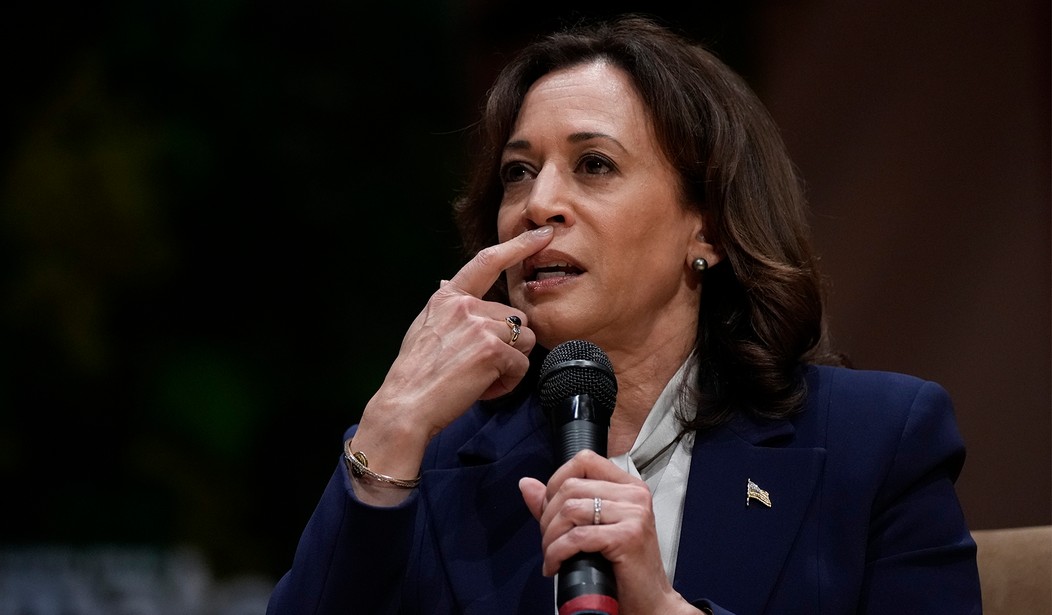

There are multiple electoral factors that would concern me if I were on the Trump campaign, including Democrats' aggressive, well-honed, and deeply-funded turnout and ballot operations. Republicans claim they've been closing that gap on this front, but the proof will be in the pudding. And while the GOP and their allies appear to have done a pretty nice job of registering new voters over the last few years, I still suspect Democrats are better situated to grind out a victory, if the election is decided by razor thin margins in a few states. There is also Trump's inability to focus on core messaging, too often opting for pointless or counter-productive distractions. On the other side of the equation, the Harris campaign should be sweating bullets over a few scenarios, including the more-than-plausible one in which Trump even slightly over-performs his polling-projected vote shares or margins, which is what happened in both 2016 and 2020. Past is not necessarily prologue, and this cycle could be different. There's no rule that Trump will always over-perform his polling, but the fact that he has done so twice -- both nationally and in most key states -- at the very least suggests it's a distinct possibility again.
As a frame of reference, in mid-to-late October of 2016, the RealClearPolitics average gave Hillary Clinton a seven-point national lead eight years ago. Around the exact same time in the 2020 cycle, the same polling average projected Joe Biden ahead by ten points. Clinton eventually won the so-called 'popular vote' by just two points, and lost the Electoral College. Biden went on to win the former metric by 4.5 points, but came within 44,000 votes across three states of losing the election. The polling average in Wisconsin, for instance, was off by seven points, and Trump lost it by a fraction of a point (rather than decisively, as was predicted). This year, Trump's national polling deficit to Kamala Harris stands at less than two points, and the rivals are tied across the major battlegrounds. Perhaps the pollsters have adjusted this time. Perhaps Trump voters are less 'shy,' and more willing to engage with pollsters. Or maybe we're headed for a repetition of a familiar pattern, in which case, Harris is significantly worse-positioned to win than either Clinton or Biden were. Here's how CNN's polling analyst described it recently:
🚨 CNN ANALYST: Let's say Donald Trump outperforms his polling by a single point - just one point. He gets 287 electoral votes. He gets Pennsylvania. That race has been consistently so tight. Whoever wins Pennsylvania, my guess is, is gonna be the next president. pic.twitter.com/0nWwrpT5aS
— Eric Daugherty (@EricLDaugh) September 15, 2024
Another worry for team Harris is that their task is to re-assemble the winning Biden coalition, even though a lot of polling has indicated some erosion or fraying at the edges. The (pre-debate) New York Times survey, for example, showed Trump running relatively strong among black and Hispanic voters, relative to last time. Any real drop-off for Kamala, that isn't offset somewhere, could prove electorally fatal to her campaign. Which brings us to a new poll published by the NAACP. The Hill's headline about the data would suggest positive results for Democrats: "Black voters, buoyed by Kamala Harris, more excited to vote in 2024 than in 2008," per the poll. The actual findings, though, don't look so hot for her campaign (also, the poll was in the field more than month ago, so they didn't put this out in a timely manner):
So I read this poll and it’s actually a disaster for Kamala Harris.
— Ryan James Girdusky (@RyanGirdusky) September 15, 2024
Obama won over 95% of the black vote.
The NAACP has Kamala winning 63% of the black vote, including only 49% of black men under 50. https://t.co/KO145tLeWs pic.twitter.com/W20a6gX2zj
More excited to vote than in 2008? First off, I'm skeptical about that for several reasons. But even if it's accurate, Harris is vastly underperforming Obama in terms of vote share among black voters, especially among younger black men. One out of every four black male respondents under the age of 50 told the NAACP's pollster that they intend to support Donald Trump. It should be seen as essential within the Republican Party and the Trump campaign to identify these voters, ensure that they're registered, and get ballots into their hands or other mechanisms to get them to participate. Trump needs minor shifts in just a handful of places to win back the White House. Can you imagine the impact even a modest over-performance among black voters would have in, say, Atlanta? Or Detroit? Or Philadelphia? Or Milwaukee. Those are some pretty important states. I'll leave you -- sigh -- with this:
Here’s Biden a few weeks ago blasting Trump for using the term “Black jobs.”
— Libs of TikTok (@libsoftiktok) September 13, 2024
Here’s Biden today using the same exact phrase.
.@JoeBiden @WhiteHouse @PressSec any comment? pic.twitter.com/YmSq0DY03d
Any comment from Michelle Obama?