






"Profanity is the attempt of a lazy and feeble mind to express itself forcefully."
"Profanity is the use of strong words by weak people."
"Profanity is a crutch for the conversationally handicapped."
"When a man uses profanity to support an argument, it indicates that either the man or the argument is weak - probably both."
~ Mark Twain

The use of coarse language in our media introduces serious issues in societal discourse. These questions merit attention: Does criticism of language condemn the critic to being a stuffy and stiff old fart who needs to loosen up? Does the use of explicitly coarse language and sexual innuendo add to our knowledge of the subject matter? Will the language promote the larger concerns of civil discourse? Are we better able to avoid “mental manipulation” by employing such language? Or put in reverse order, does the removal or censorship of coarse language, sexual innuendo, and “curse words”—see HBO’s Real Time With Bill Maher”—detract in any way from the subject matter at hand? And finally, do the MSM extend such tough and humorous street rhetoric to include criticism of all the popular myths and ideologies of our time, or is the line drawn ruling issues of race, sex, and class off limits? More pointedly, does the new freedom in expletives and course language open up new vistas of analysis, or does it effectively seal off such areas in favor of cheap linguistic thrills?
If the MSM, in their perfectly reasonable desire to survive and expand their sphere of influence, both within the mass media and in the mass society, must resort to pornographic language, pure and simple, to sell their wares, what distinguishes them from DailyKos?
Recommended
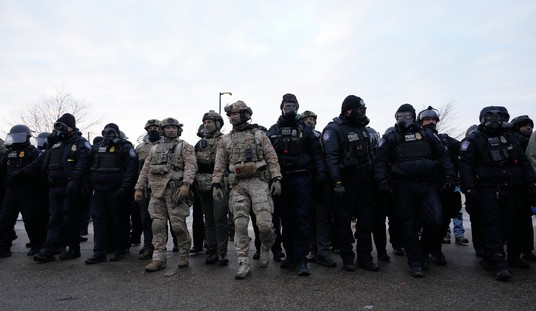
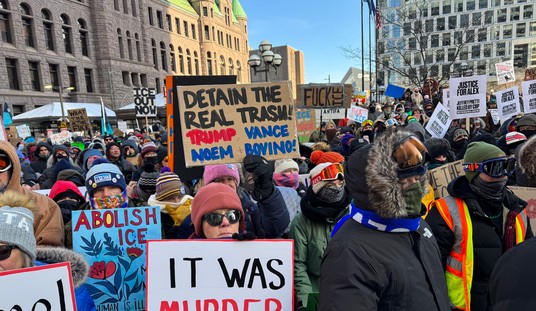
The problem is not only the implications of efforts to sell to a market through the use of shocking terms, but the potential impact on core societal discourse. Are we to suggest that if a high school teacher spoke about yesterday’s Tea Parties, he label them “Teabagging Parties” and/or “Teabaggers?” By the same token, if a student was to find himself in disagreement with the protest and wondered if the teacher participated, is the proper comment, “Sir, are you a Teabagger” (to the roars of the fellow students)?
I suspect that the uses of such rhetoric, far from having a liberating impact, in fact serve to curb dissent and discussion of serious issues. The use of such rhetoric forecloses discussion and rarely opens new avenues of thought. The history of thought, whether of radical, liberal, or conservative ideas, is conducted in a common linguistic discourse, and according to the rules of civil conduct, precisely in order to bridge the gap between ideas and to reach out to people in non-intrusive, non-menacing ways.
There is not a shred of evidence to indicate that the unrestrained use of taboo words and sexually implicit language is an indicator of a person of superior intellect or, still less, a person capable of ethical conduct conductive to a complex society. Indeed, I am not sure that such a claim could be made even for simple societies.
The extent to which the uninhibited use of certain terms is an advantage or a disadvantage to a community, society, or people choosing to watch CNN (Anderson Cooper) or MSNBC is determined by its explanatory powers, its ability to resolve empirical or ethical issues one must cope with on a daily basis. One derives the meaning of those who use such language by ignoring the course verbiage and seeking answers in the remaining part of the sentence or the emotive contents of the comment.
When the shock value of those who use coarse discourse wears off, through excessive usage if not in revulsion—and that will be soon enough—civil society will be left to wander about in the lower depths, with no light in sight.
[This is for my former roomie and close friend, Mikey K., who defends the merit and value inherent in explicit language]








Join the conversation as a VIP Member