


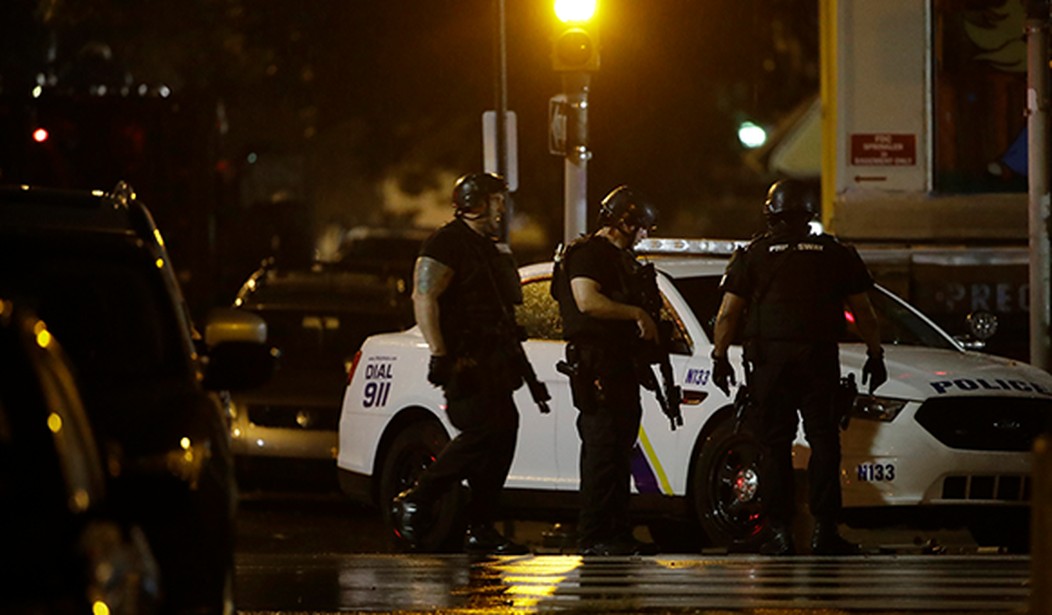
Police in Philadelphia, Pennsylvania on Tuesday suspended arrests for what they consider to be low-level offenses and violations late in the day.
The Fraternal Order of Police announced that they would not be making arrests for vandalism, prostitution, narcotics offenses, burglary, theft, economic fraud, stolen cars, and outstanding bench warrants following the closure of Philadelphia courts until at least April 1.
BREAKING: @phillypolice officers instructed to stop making arrests for following list of what are consider non-violent crimes. Here is the email sent to city police officers telling them to just obtain arrest warrants for now. @FOX29philly pic.twitter.com/GYl13T67uK
— Steve Keeley (@KeeleyFox29) March 17, 2020
Commissioner Danielle Outlaw made Philadelphia police commanders aware that such arrests would be delayed unless the officers involved felt that the offender was a danger to themselves or others. A statement released to police during Tuesday's roll call said, "if an officer believes that releasing the offender would pose a threat to public safety, the officer will notify a supervisor." The statement also outlined the protocol for maintaining safe social distances in the performance of duty while interacting with the public and each other.
The decision was made amid fears that the closed Philadelphia courts would prevent such offenders from receiving speedy justice, keeping them incarcerated without a hearing for an unknown amount of time. Concerns about overcrowding jails also factored into the decision. "The directive was released to keep officers safe during this public-health crisis," John McNesby, FOP president of Lodge 5 said. "Meanwhile, violent offenders will be arrested and processed with the guidance of a police supervisor."
Recommended
Full Philadelphia Police Commissioner’s directive here @FOX29philly pic.twitter.com/LjOIKmujcv
— Steve Keeley (@KeeleyFox29) March 18, 2020
Some felt that the choice was counterintuitive, considering the already heightened tension throughout the nation. Two not-for-profit bail funds had already posted bail for more than three dozen incarcerated individuals in light of the pandemic, giving them gift cards and transit passes as they were released from jail.
Some were critical of the decision not to enforce arrests for "low-level" offenses, citing a potential addition to an already chaotic time. "At a time when people are feeling very insecure, this seems like an incredibly bad idea," said journalist Noah Rothman.
The City of Philadelphia halts all arrests related to narcotics, theft, burglary, vandalism, prostitution, stolen cars, fraud, and existing bench warrants.
— Noah Rothman (@NoahCRothman) March 17, 2020
At a time when people are feeling very insecure, this seems like an incredibly bad idea. https://t.co/q0GA1h9xmZ
Los Angeles has released some prisoners early due to concern that the Wuhan coronavirus could invade the prison system and spread quickly. "Our population within our jails is a vulnerable population just by who they are, where they are located, so we're protecting that population from potential exposure," L.A. Sheriff Alex Villanueva said. The police department in Los Angeles also said that they will be making fewer arrests, but declined to qualify which offenses were exempt from incarceration.
New York City and other cities across the country have floated similar ideas of lessening criminal policing on the street in order to curb the spread of the virus within prison walls and avoid lengthy jail time without court hearings.
Cuyahoga County in Ohio, which includes Cleveland, the state's second-most populous city had also moved to release hundreds of inmates to avoid a potential Wuhan virus catastrophe in the jail system. A special session held by elected judges resulted in some cases being granted an expedited closure while some inmates were moved to state prisons and others were released.






Join the conversation as a VIP Member