





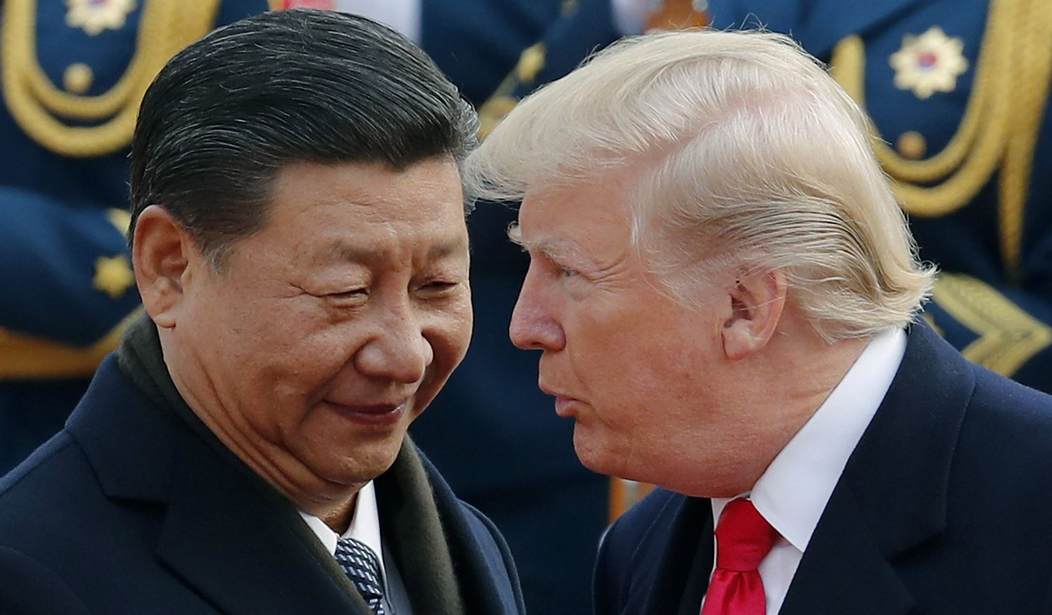
For the first time since taking office, President Trump held a phone call with Chinese leader Xi Jinping on Thursday. The call was first reported by Chinese state media, offering little to no details from the conversation. Since then, President Trump commented on the call in a Truth Social post. He said it was a productive phone call and revealed that a possible trade deal between the United States and China was discussed. Both countries will be sending negotiating parties to discuss the deal further. The U.S. is to be represented by Secretary of the Treasury Scott Bessent, Secretary of Commerce Howard Lutnick, and United States Trade Representative Jamieson Greer.
Today, when the President addressed the press in the Oval Office in his meeting with German Chancellor Friedrich Merz, President Trump revealed that both leaders extended an invitation to one another to visit their respective countries. Both accepted.
🚨🚨🚨Trump reveals Xi Jinping invited him to China, and he invited Xi to the U.S.
— Townhall.com (@townhallcom) June 5, 2025
"We've both accepted." pic.twitter.com/ZA5mTziVV5
This call comes shortly after the trade war between the U.S. and China escalated after Trump's reciprocal tariffs. In early April the President increased tariff rates on Chinese goods to 125% with China responding with similar increases. In early May, a 90-day truce was reached, and the tariff rate was reduced to 30% with a baseline tariff of 10% for both countries.
According to the Wall Street Journal "Xi had resisted getting on the phone with Trump as the Chinese leader wanted the White House to first dial down its pressure on Beijing, according to people close to China’s decision-making."
China has been accused by President Trump and other American politicians of a long history of abusing trade relations and threatening national security with key products manufactured in mainland China. Chinese state-backed groups have conducted cyber operations stealing intellectual property (IP) worth trillions from dozens of multinational companies. Furthermore, Chinese state policy extracts technology from Western companies and uses it to boost the profitability and rate of growth in associated Chinese firms. Those firms are backed by Chinese Communist Party subsidies and trade barriers. National security is of great concern, as well, with critical products for American defense being manufactured in China, or Taiwan, which is constantly threatened by China.

Join the Conversation
VIP members get the ability to comment on articles.