







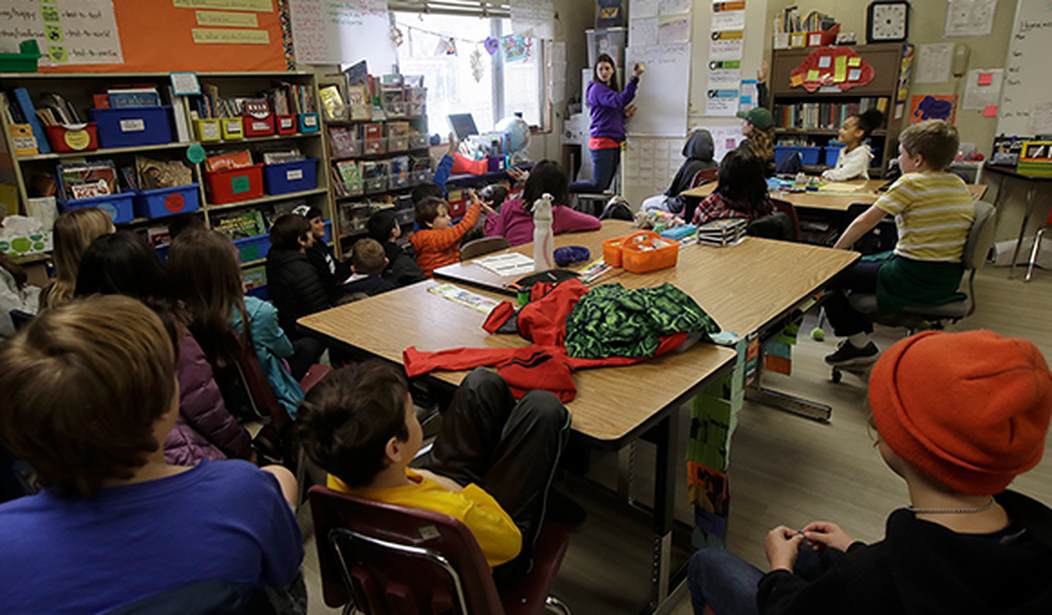
One of the biggest questions during the coronavirus outbreak at the moment is whether or not children will be back in their classrooms this fall. Some fear that it's too risky, that children won't know how to social distance, and that they will spread the virus to one another. But that fear is unwarranted, explained Dr. Scott Atlas on Fox News on Wednesday.
"If you believe in the science, the science says that 99.7 percent of deaths in the U.S. are in people over 15, 99.9 percent are in people over 24," Dr. Atlas, a former Stanford neurology chief, explained.
Also noteworthy is that the hospitalization rate for influenza is much greater than COVID-19 for children, according to the CDC.
So what is this really about?
If you don't open schools, you are a science denier
— Elizabeth Harrington (@LizRNC) July 15, 2020
99.97% deaths are over 15
99.9% are over 24
"It is proven children don't transmit the disease significantly to adults, even their own parents"
"You either believe in the science or not"
Dems are hysterical and hurting kids pic.twitter.com/tQOPCOqhVt
"There is virtually zero risk to children for getting something serious or dying from this disease," he continued. "Anyone who thinks schools should be closed is not talking about the risk to children. That's factually true. And they should say that. It has nothing to do with the children's risk."
The big fear, Dr. Atlas explained, is the risk to the teachers. Of course there are high risk educators, but 82 percent of K-12 teachers are under 55. Half of them are under 41. What's more, he said, the data shows that kids do not significantly transmit the disease to adults.
"You either believe in the science, or say you believe in the science and act contrary to the science," he said.
For teachers in the at risk category, they can wear masks and social distance or, if they're really concerned, stay home, Dr. Atlas suggested, saying that "there's no reason to lock up the children."
He's not the only one using science to push back against the movement to keep schools closed. The Wall Street Journal editorial board penned a similar argument.
The bigger risks for the kids, Dr. Atlas explained, will be for those who are forced to stay home in the fall.
Distance learning, he explained, has proven to be a "failure." 50 percent drop in math ability, 50 percent drop in reading ability.
Children won't just struggle with numbers and words, he explained. Without physically being at school, kids are missing out on critical social interactions such as maturation and learning to deal with group conflicts, things you "can't learn on a computer."
The Trump administration agrees. President Trump said this week that officials are only keeping schools closed for political reasons. He urged states to reopen in the fall and threatened to withhold federal funds from school districts who don't comply.

Join the Conversation
VIP members get the ability to comment on articles.