





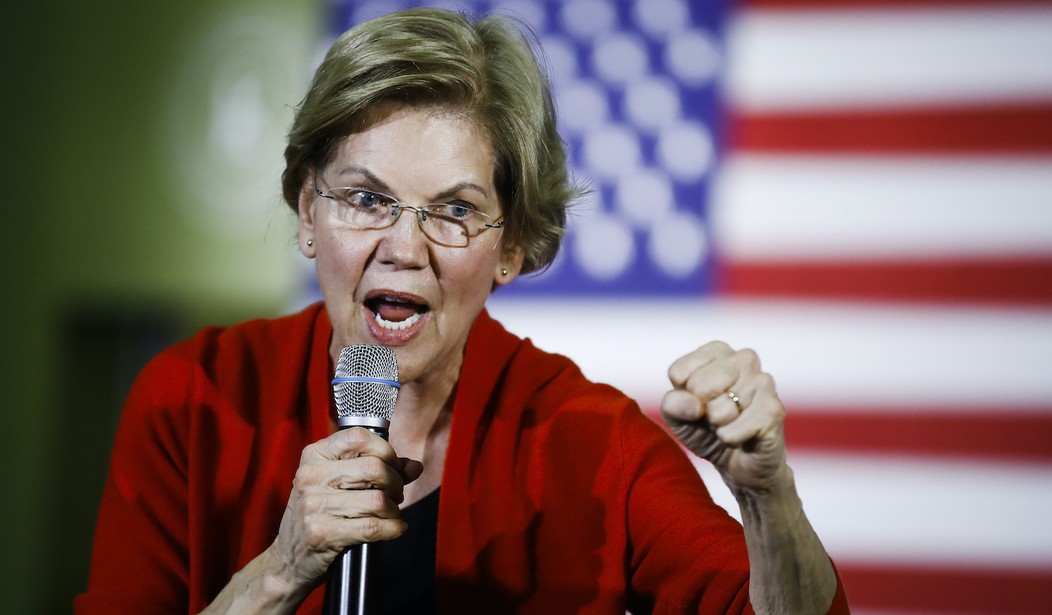
About 30 percent of Democrats could not rally around any one candidate until the eleventh hour, entrance polling reveals. The candidates have been around for months, sharing their best pitches, touring the country and engaging in some fiery debates. Yet for many caucusers it was a last minute decision.
Roughly 3 in 10 Democratic voters decided whom to support in the last few days before Monday’s caucuses, per latest entrance polls.
— Aaron Blake (@AaronBlake) February 4, 2020
That's higher than 2016 (16%) and 2008 (20%).
Seems logical to think the size of the field has something to do with it.
Does that bode well for the Democrats come November? There's nothing worse than a divided party ahead of a general election.
The top three contenders remain former Vice President Joe Biden, Sens. Bernie Sanders (VT), and Elizabeth Warren (MA), with South Bend, IN Mayor Pete Buttigieg and Minnesota Sen. Amy Klobuchar giving them a (distant) run for their money.
A few other interesting entrance polls: Most voters said it was more important for the eventual nominee be able to beat Trump in November than align with them on issues. The most important issue for voters, another CNN entrance survey revealed, is health care. Forty-one percent of the electorate had health care as their number one issue.
And the candidates couldn't be more divided on that. The ideas range from Biden's idea to maintain and build on Obamacare, to the radical Medicare for All plan promoted by Sens. Sanders and Warren.
CNN, reporting early results from the network entrance poll, says 35% of those interviewed say they are attending a caucus for the first time.
— Steven Shepard (@POLITICO_Steve) February 4, 2020
Shepard's added context revealed that voters are less enthused than the last few elections. In 2016, 44 percent of Democratic caucus-goers said it was their first caucus, and it was 57 percent in 2008, when Barack Obama was on the ballot.
The GOP caucus, meanwhile, was pretty straightforward.
Congratulations to the winner of the #IACaucus: @realDonaldTrump.
— Ronna McDaniel (@GOPChairwoman) February 4, 2020
He won Iowa big in 2016, and he's going to carry it again in November!







Join the conversation as a VIP Member