




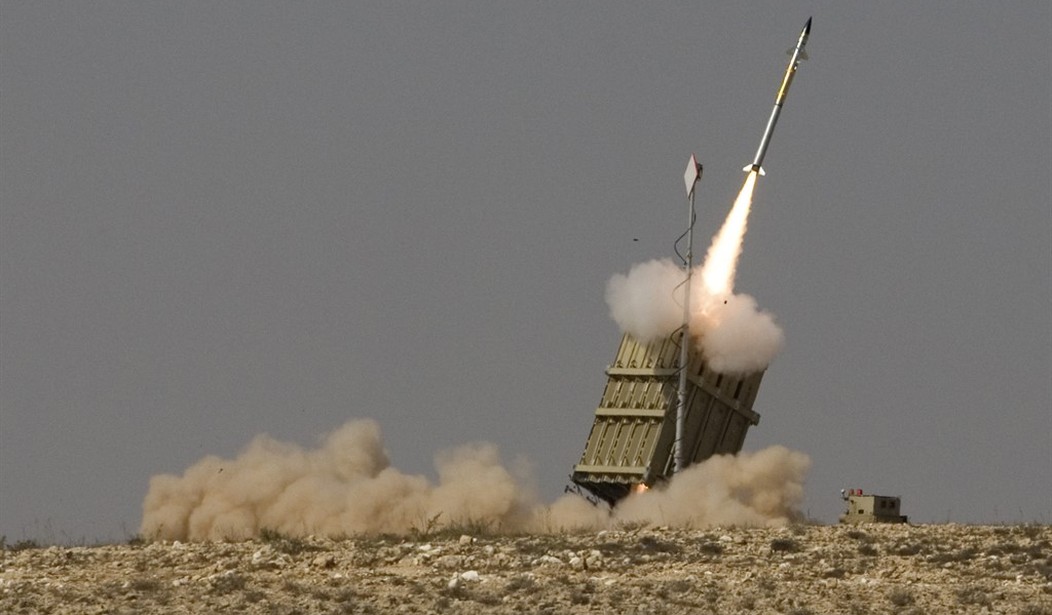
Israel's Iron Dome missile defense system is one effective piece of equipment. First employed in 2011, it's helped protect Israeli citizens from Hamas-launched rockets with a reported 85 percent accuracy rate.
I'll let Business Insider give the more technical explanation of the weapons system, which also details its cost-effectiveness:
Iron Dome can operate in all weather conditions and at any time; one launcher holds 20 intercept missiles at a given time. The system uses a radar to detect an incoming projectile. The radar tracks the projectile while also alerting the other system components — the battle management and weapons control (BMC) component and the launcher — of the incoming threat. It also estimates where incoming projectiles will hit and only focuses on those threats that will fall in the area the system is meant to protect. Rafael boasts that this strategic targeting makes the system extremely cost-effective.
The Israeli Defense Forces posted a video of the Iron Dome’s capabilities in February, with the message, “The best kind of missiles don’t target people, they save lives.”
Is it any wonder the US Army had its eyes on it? This week it was announced that the Army has purchased two Iron Dome systems, which will be built by Rafael and Raytheon.
Recommended

The Army was shifting around its pots of funding within its Indirect Fires Protection Capability (IFPC) program — under development to defend against rockets, artillery and mortars as well as unmanned aircraft and cruise missiles — to fill its urgent capability gap for cruise missile defense on an interim basis. Congress mandated the Army deploy two batteries by fiscal 2020 in the service’s fiscal 2019 budget.
Iron Dome could feed into an enduring capability, depending on how it performs in the interim, Youngman said during a separate interview shortly before the symposium.
Having witnessed the Iron Dome's success rate over the years, the U.S. Congress has funneled over $1 billion in support of its development.













Join the conversation as a VIP Member