


“[Justice] Holmes said it [the First Amendment] doesn’t mean you can shout 'fire' in a crowded theater,” Breyer told me. “Well, what is it? Why? Because people will be trampled to death. And what is the crowded theater today? What is the being trampled to death?”
The case Justice Breyer is referencing is Schenk v. United States, which -- as he surely knows -- was overturned in Brandenburg v. Ohio. The latter case distinguished between speech advocating violent action (protected) and speech that incited imminent lawless action ("fighting words" - prohibited).
So perhaps Justice Breyer is suggesting that burning a Koran in America is the equivalent of "fighting words," likely to incite an immediate, violent response. But it's an interesting position -- especially given that the SUpreme Court has held that burning the American flag is constitutionally protected in America.
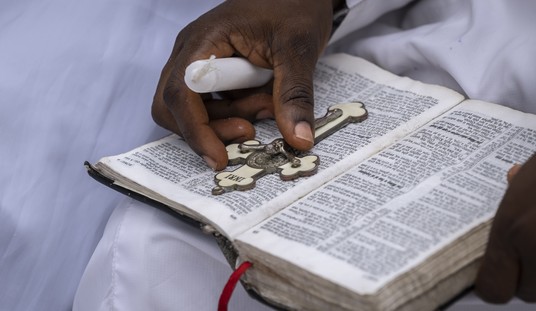
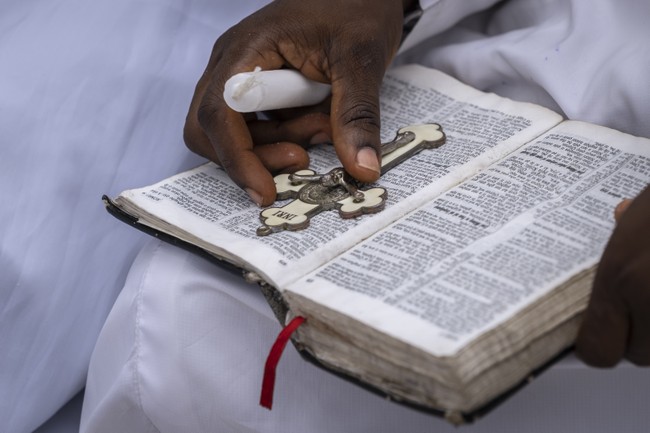
Someone ought to ask the Justice whether Bible burning is constitutionally protected. Although it's a disgusting and abhorrent act -- as flag burning is -- surely, if flag burning is seen as a form of speech and permitted, Bible burning would presumably be likewise constitutionally protected.
If Breyer holds that Bible burning would not be constitutionally protected, why is an act deeply offensive to just Jewish/Christian Americans forbidden while an act deeply offensive, presumably, to all Americans (flag-burning) permitted?
On the other hand, if Breyer states that Bible burning would be constitutionally protected, why would it be okay to burn the Bible and not the Koran? Could it have anything to do with the violent response of some Muslims to perceived slights versus the more peaceful reaction of Christians? And if so, what kind of free speech standard is it simply to prohibit expression of one particular viewpoint (expressed through Koran burning) because those who would take offense are more likely to turn violent? That, my friends, would constitute nothing more than intellectually inconsistent jurisprudence by fear.
I am not a huge fan of the idea that burning something -- flag, Bible, Koran -- is some noble act of free speech. It's actually juvenile and needlessly provocative. If you have a gripe with America, Judaism/Christianity, or Islam, act like an articulate human being and use words -- rather than actions -- to express it.
But all that being said, the Supreme Court has held that flag burning is the equivalent of speech -- and if that's the case, then the standard should apply across the board, without rewarding violent behavior on the part of certain classes of offended people.
A Strange Double Standard


Advertisement






Join the conversation as a VIP Member